







Question: A FF 1. a) Find the change in position between points 1 and 2, and then multiply this by the frame rate for the video,
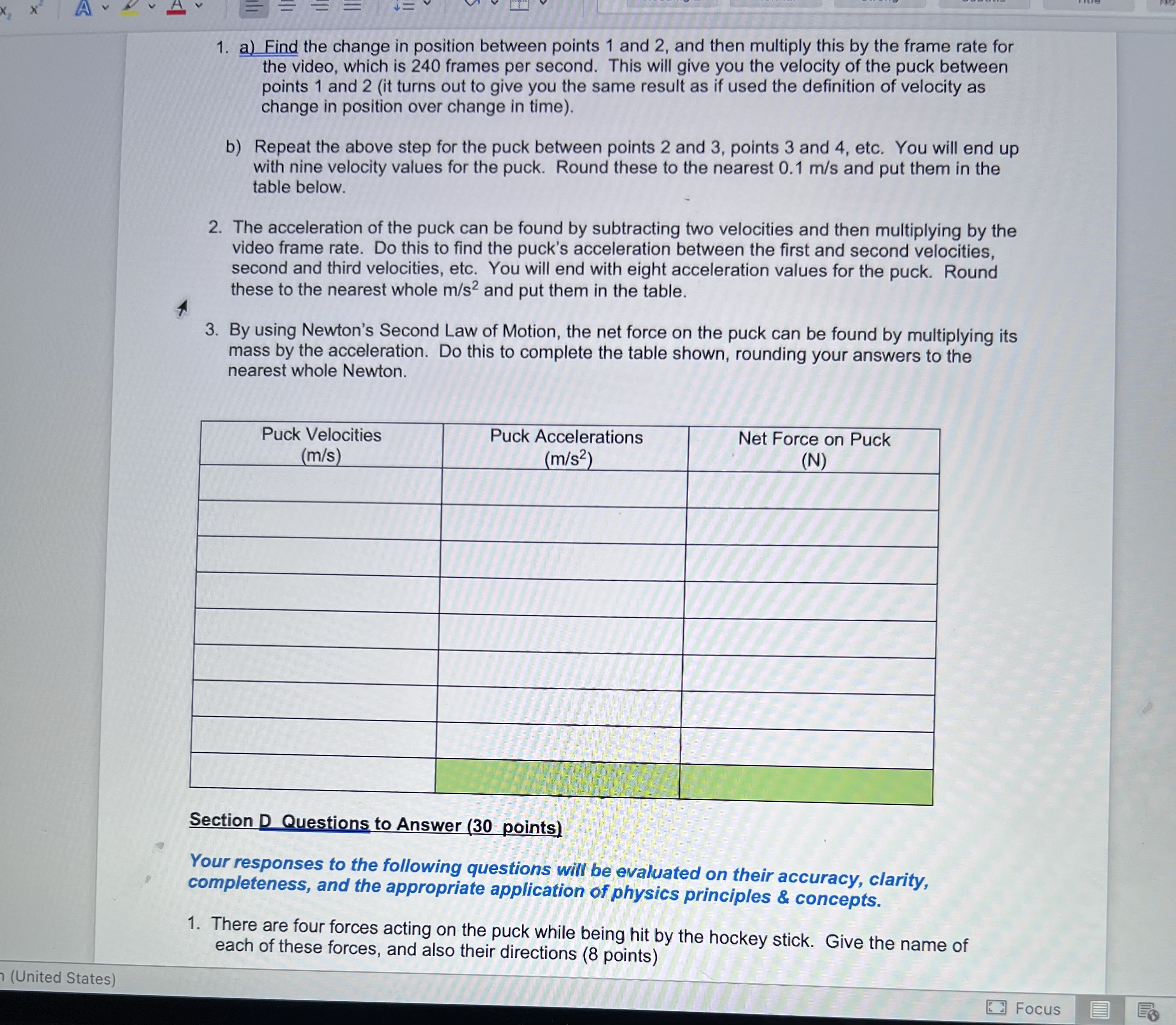
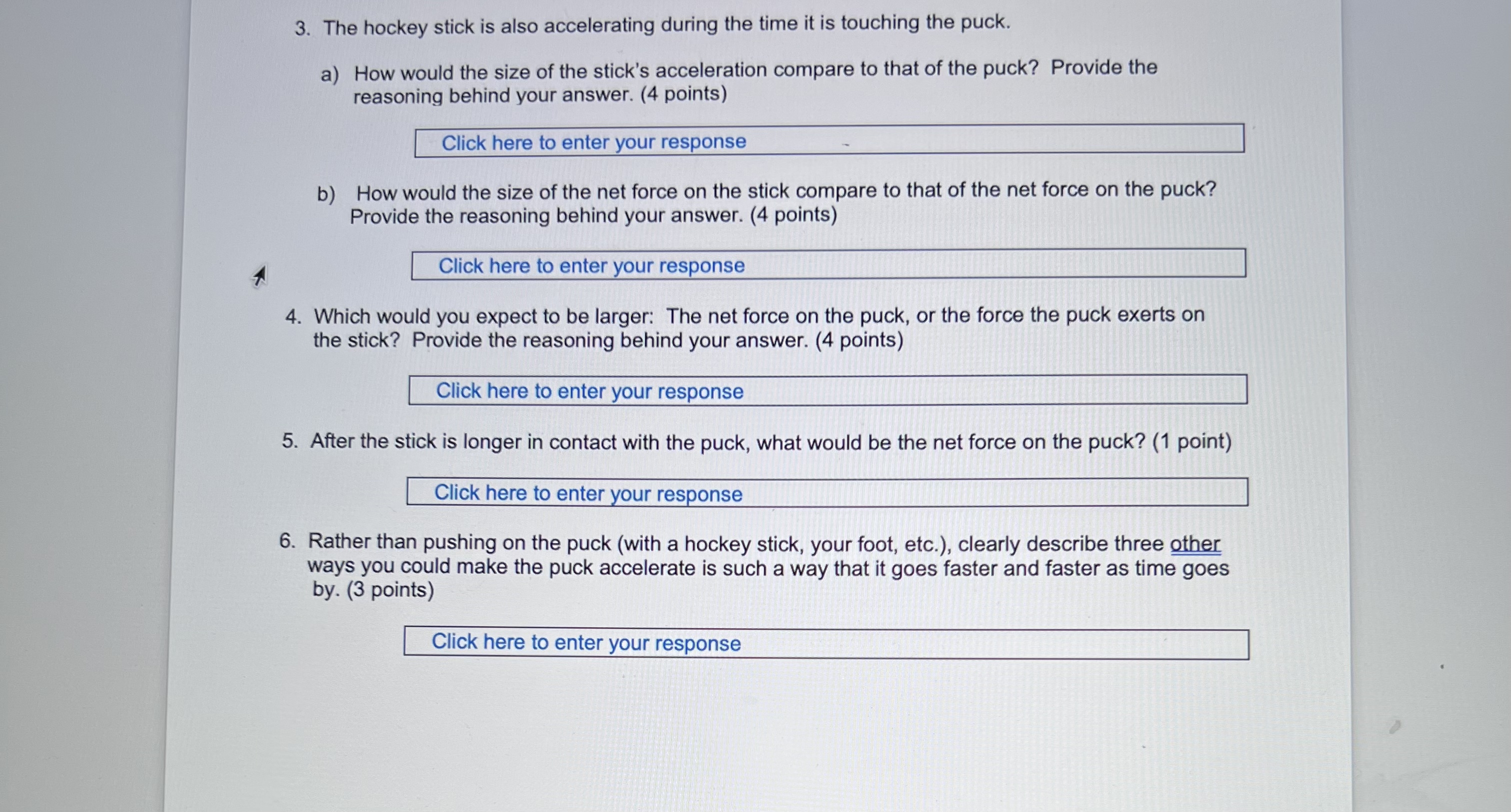
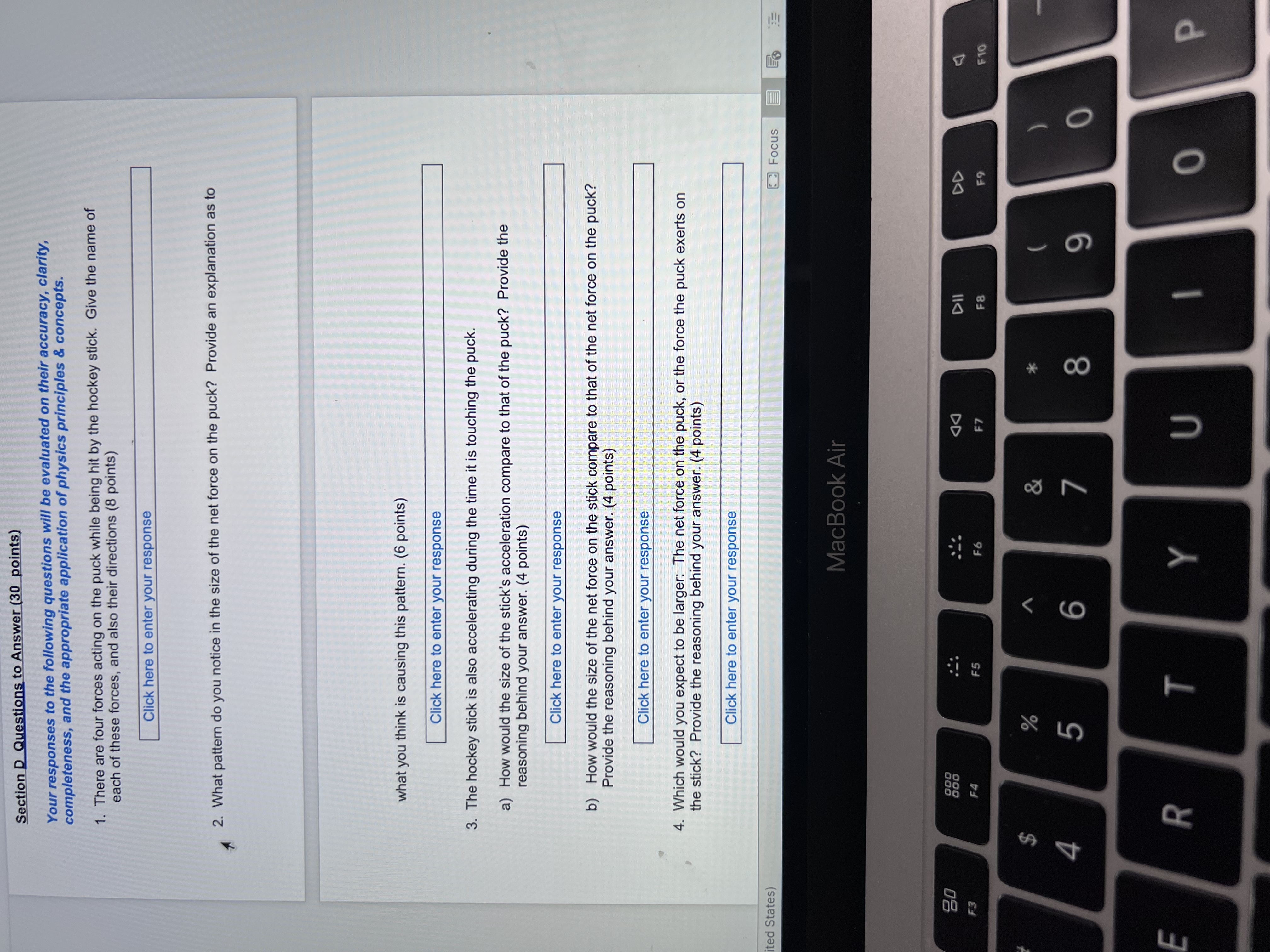
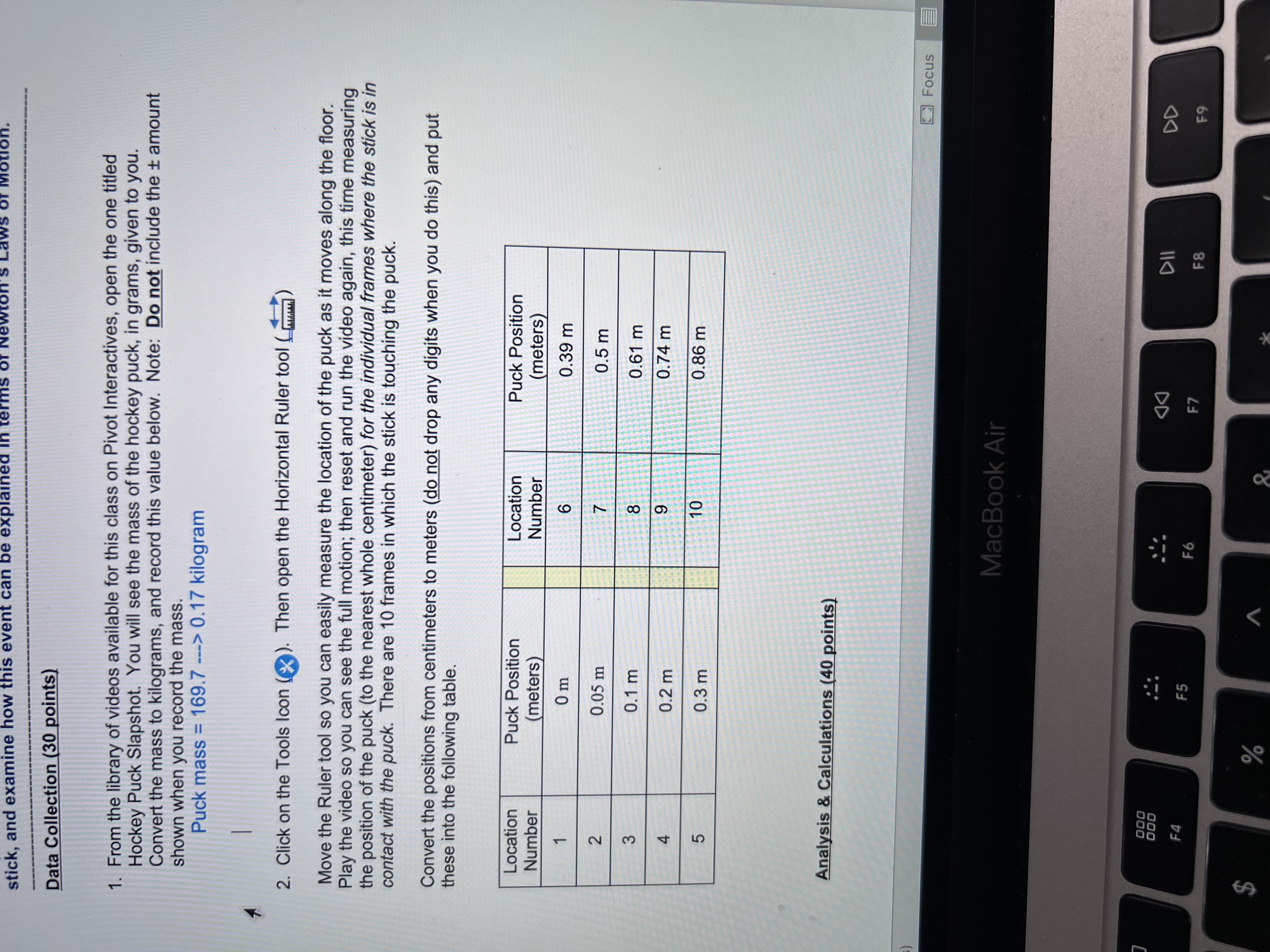
A FF 1. a) Find the change in position between points 1 and 2, and then multiply this by the frame rate for the video, which is 240 frames per second. This will give you the velocity of the puck between points 1 and 2 (it turns out to give you the same result as if used the definition of velocity as change in position over change in time). b) Repeat the above step for the puck between points 2 and 3, points 3 and 4, etc. You will end up with nine velocity values for the puck. Round these to the nearest 0.1 m/s and put them in the table below. 2. The acceleration of the puck can be found by subtracting two velocities and then multiplying by the video frame rate. Do this to find the puck's acceleration between the first and second velocities, second and third velocities, etc. You will end with eight acceleration values for the puck. Round these to the nearest whole m/s and put them in the table. 3. By using Newton's Second Law of Motion, the net force on the puck can be found by multiplying its mass by the acceleration. Do this to complete the table shown, rounding your answers to the nearest whole Newton. Puck Velocities Puck Accelerations Net Force on Puck (m/s) (m/s2 (N) Section D Questions to Answer (30 points) Your responses to the following questions will be evaluated on their accuracy, clarity, completeness, and the appropriate application of physics principles & concepts. 1. There are four forces acting on the puck while being hit by the hockey stick. Give the name of each of these forces, and also their directions (8 points) (United States) Focus3. The hockey stick is also accelerating during the time it is touching the puck. a) How would the size of the stick's acceleration compare to that of the puck? Provide the reasoning behind your answer. (4 points) Click here to enter your response b) How would the size of the net force on the stick compare to that of the net force on the puck? Provide the reasoning behind your answer. (4 points) Click here to enter your response 4. Which would you expect to be larger: The net force on the puck, or the force the puck exerts on the stick? Provide the reasoning behind your answer. (4 points) Click here to enter your response 5. After the stick is longer in contact with the puck, what would be the net force on the puck? (1 point) Click here to enter your response 6. Rather than pushing on the puck (with a hockey stick, your foot, etc.), clearly describe three other ways you could make the puck accelerate is such a way that it goes faster and faster as time goes by. (3 points) Click here to enter your responseSection D Questions to Answer (30 points) Your responses to the following questions will be evaluated on their accuracy, clarity, completeness, and the appropriate application of physics principles & concepts. 1. There are four forces acting on the puck while being hit by the hockey stick. Give the name of each of these forces, and also their directions (8 points) Click here to enter your response 2. What pattern do you notice in the size of the net force on the puck? Provide an explanation as to what you think is causing this pattern. (6 points) Click here to enter your response 3. The hockey stick is also accelerating during the time it is touching the puck. a) How would the size of the stick's acceleration compare to that of the puck? Provide the reasoning behind your answer. (4 points) Click here to enter your response b ) How would the size of the net force on the stick compare to that of the net force on the puck? Provide the reasoning behind your answer. (4 points) Click here to enter your response 4. Which would you expect to be larger: The net force on the puck, or the force the puck exerts on the stick? Provide the reasoning behind your answer. (4 points) Click here to enter your response ited States) Focus EO MacBook Air 80 DD DII DD F3 F4 F5 F6 F7 F8 F9 F10 % & * 4 5 6 8 9 O E R Y U 0 Pstick, and examine how this event can be expla Data Collection (30 points) 1. From the library of videos available for this class on Pivot Interactives, open the one titled Hockey Puck Slapshot. You will see the mass of the hockey puck, in grams, given to you. Convert the mass to kilograms, and record this value below. Note: Do not include the + amount shown when you record the mass. Puck mass = 169.7 ---> 0.17 kilogram 2. Click on the Tools Icon (X ). Then open the Horizontal Ruler tool ((..Man ) Move the Ruler tool so you can easily measure the location of the puck as it moves along the floor. Play the video so you can see the full motion; then reset and run the video again, this time measuring the position of the puck (to the nearest whole centimeter) for the individual frames where the stick is in contact with the puck. There are 10 frames in which the stick is touching the puck. Convert the positions from centimeters to meters (do not drop any digits when you do this) and put these into the following table. Location Puck Position Location Puck Position Number (meters) Number (meters) 1 0 m 6 0.39 m 2 0.05 m 7 0.5 m 3 0.1 m 8 0.61 m 4 0.2 m 9 0.74 m 5 0.3 m 10 0.86 m Analysis & Calculations (40 points) Focus MacBook Air DII DD F4 F5 F6 F7 F8 F9 %
Step by Step Solution
There are 3 Steps involved in it

Get step-by-step solutions from verified subject matter experts
 Study Help