







Question: A firm with a 10% WACC is evaluating two projects for this year's capital budget. After-tax cash flows are as follows: Time 0 Year 1
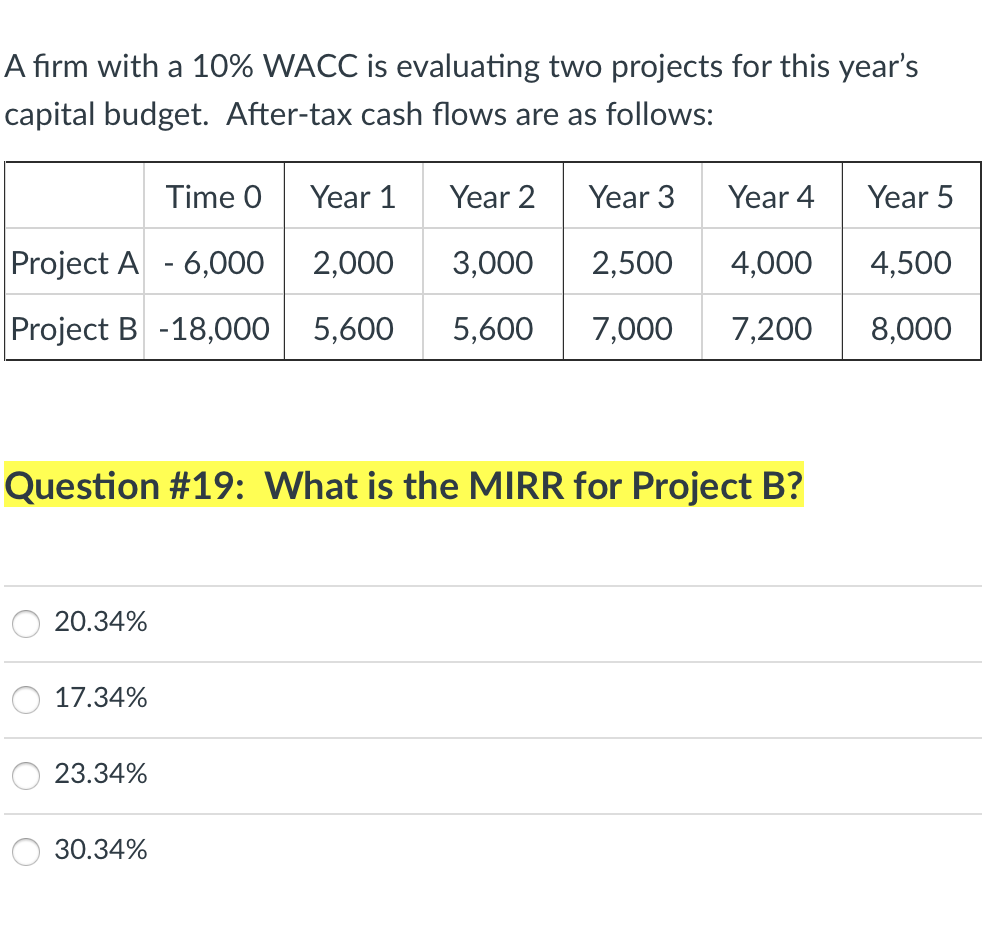
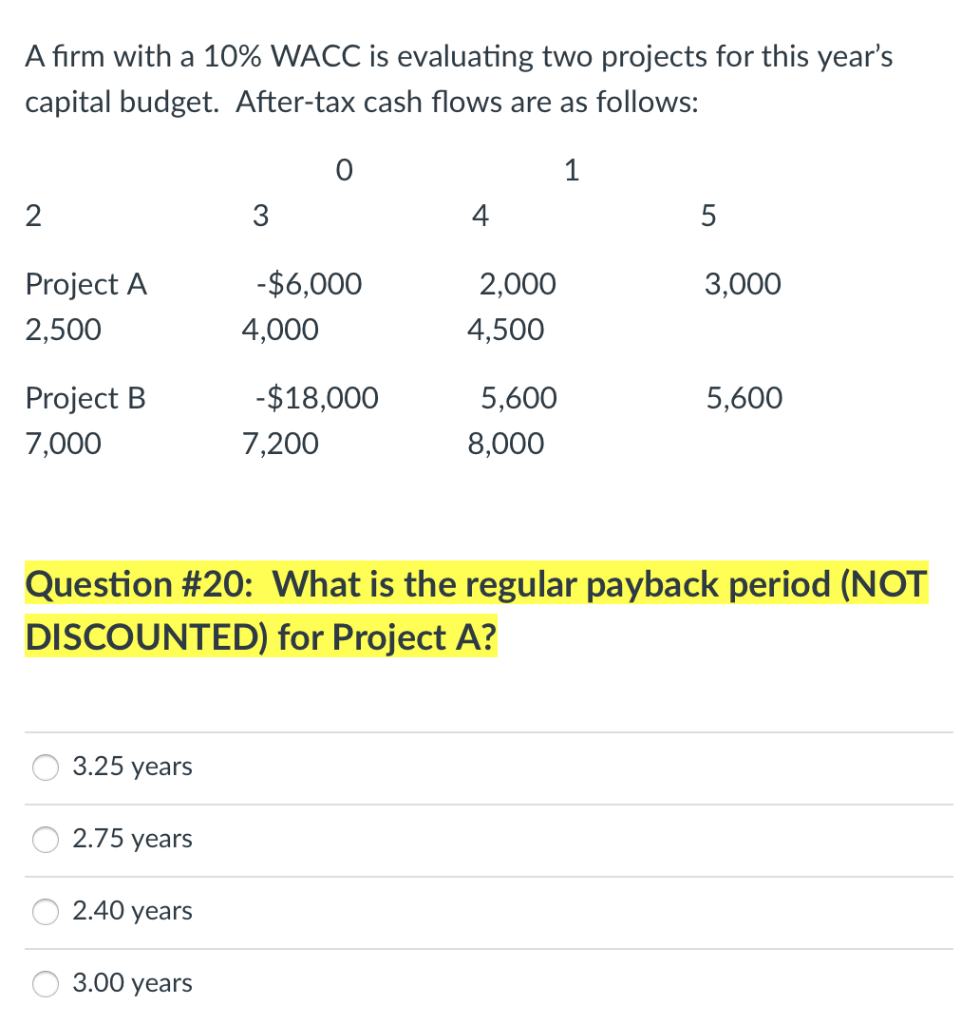
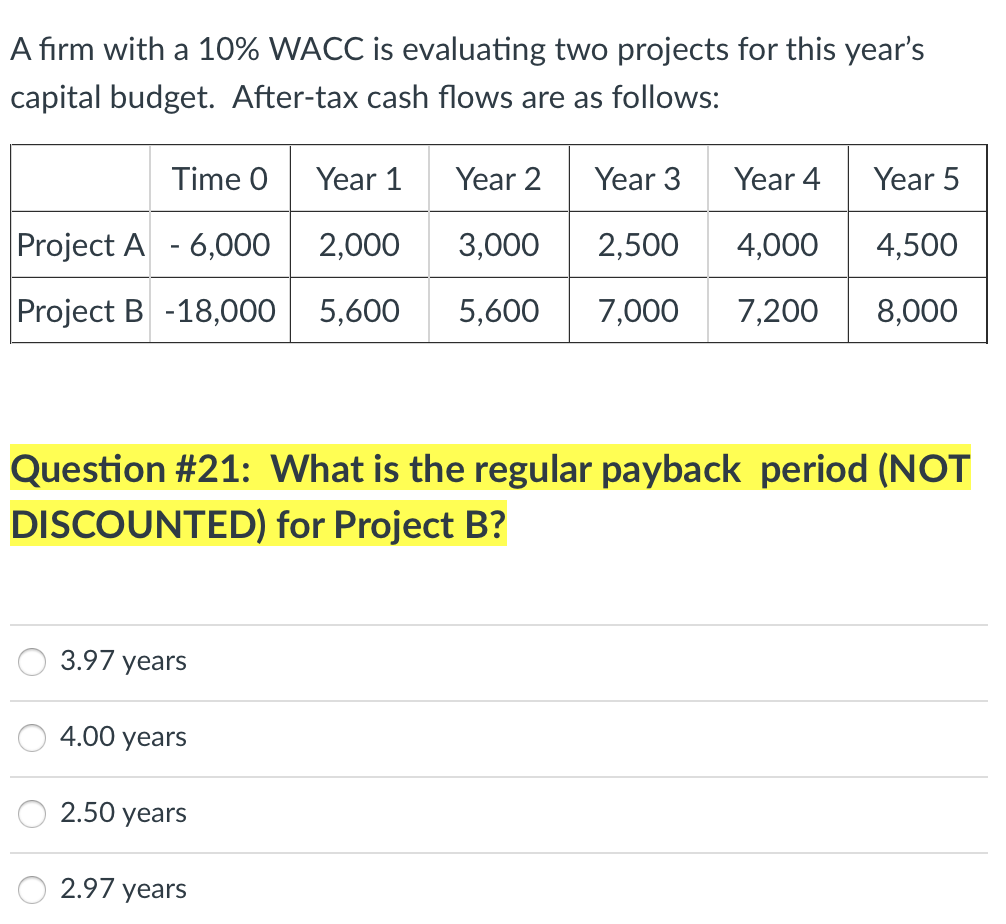
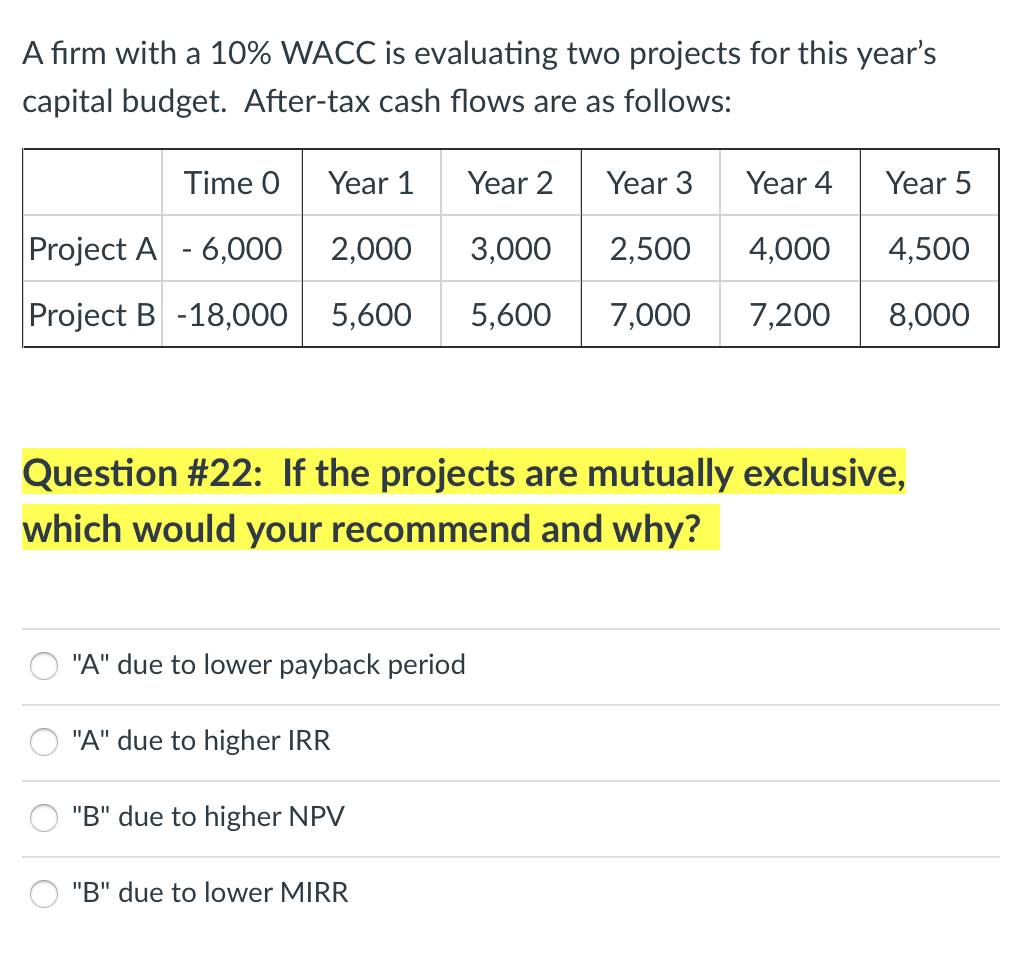
A firm with a 10% WACC is evaluating two projects for this year's capital budget. After-tax cash flows are as follows: Time 0 Year 1 Year 2 Year 3 Year 4 Year 5 Project A - 6,000 2,000 3,000 2,500 4,000 4,500 Project B -18,000 5,600 5,600 7,000 7,200 8,000 Question #19: What is the MIRR for Project B? 20.34% 17.34% 23.34% 30.34% A firm with a 10% WACC is evaluating two projects for this year's capital budget. After-tax cash flows are as follows: o 1 2 3 4 5 3,000 Project A 2,500 -$6,000 4,000 2,000 4,500 5,600 Project B 7,000 -$18,000 7,200 5,600 8,000 Question #20: What is the regular payback period (NOT DISCOUNTED) for Project A? 3.25 years 2.75 years 2.40 years 3.00 years A firm with a 10% WACC is evaluating two projects for this year's capital budget. After-tax cash flows are as follows: Time 0 Year 1 Year 2 Year 3 Year 4 Year 5 Project A - 6,000 2,000 3,000 2,500 4,000 4,500 Project B -18,000 5,600 5,600 7,000 7,200 8,000 Question #21: What is the regular payback period (NOT DISCOUNTED) for Project B? 3.97 years 4.00 years 2.50 years 2.97 years A firm with a 10% WACC is evaluating two projects for this year's capital budget. After-tax cash flows are as follows: Time 0 Year 1 Year 2 Year 3 Year 4 Year 5 Project A - 6,000 2,000 3,000 2,500 4,000 4,500 Project B -18,000 5,600 5,600 7,000 7,200 8,000 Question #22: If the projects are mutually exclusive, which would your recommend and why? "A" due to lower payback period "A" due to higher IRR "B" due to higher NPV "B" due to lower MIRR
Step by Step Solution
There are 3 Steps involved in it

Get step-by-step solutions from verified subject matter experts
 Study Help