







Question: A firm with a 13% WACC is evaluating two projects for this year's capital budget. After-tax cash flows, including depreciation, are as follows: 0 1
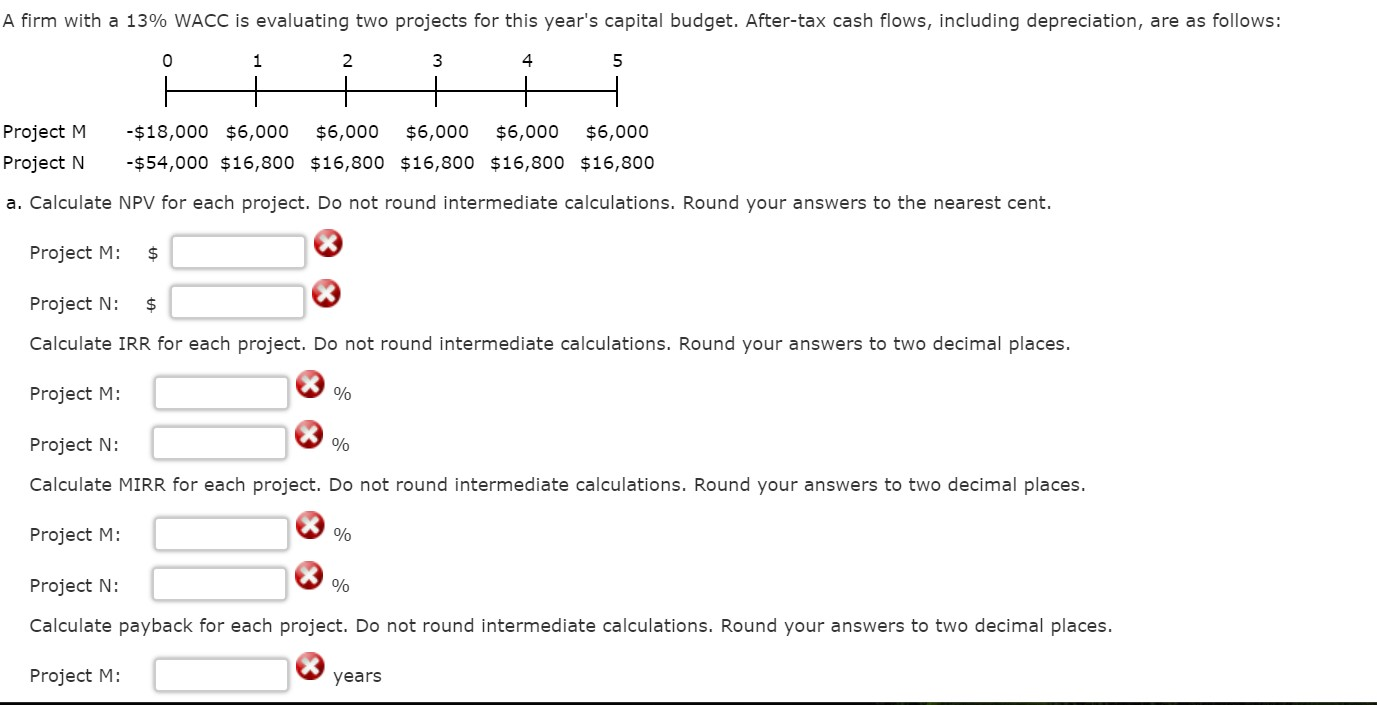
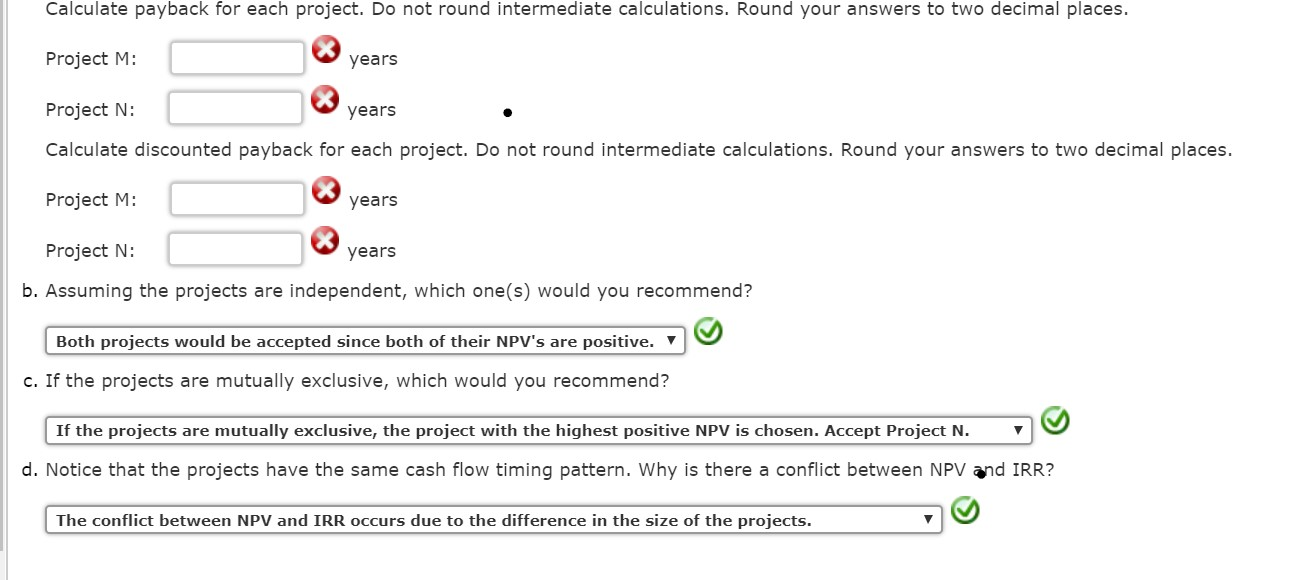
A firm with a 13% WACC is evaluating two projects for this year's capital budget. After-tax cash flows, including depreciation, are as follows: 0 1 2 4 5 Project M $6,000 -$18,000 $6,000 $6,000 $6,000 $6,000 Project N -$54,000 $16,800 $16,800 $16,800 $16,800 $16,800 a. Calculate NPV for each project. Do not round intermediate calculations. Round your answers to the nearest cent. Project M: $ Project N: $ Calculate IRR for each project. Do not round intermediate calculations. Round your answers to two decimal places. Project M: Project N: Calculate MIRR for each project. Do not round intermediate calculations. Round your answers to two decimal places. Project M: Project N: Calculate payback for each project. Do not round intermediate calculations. Round your answers to two decimal places. Project M: years Calculate payback for eaach project. Do not round intermediate calculations. Round your answers to two decimal places. Project M: years Project N: years Calculate discounted payback for each project. Do not round intermediate calculations. Round your answers to two decimal places. Project M: years Project N: years b. Assuming the projects are independent, which one(s) would you recommend? Both projects would be accepted since both of their NPV's are positive. c. If the projects are mutually exclusive, which would you recommend? If the projects are mutually exclusive, the project with the highest positive NPV is chosen. Accept Project N. d. Notice that the projects have the same cash flow timing pattern. Why is there a conflict between NPV and IRR? The conflict between NPV and IRR occurs due to the difference in the size of the projects. A firm with a 13% WACC is evaluating two projects for this year's capital budget. After-tax cash flows, including depreciation, are as follows: 0 1 2 4 5 Project M $6,000 -$18,000 $6,000 $6,000 $6,000 $6,000 Project N -$54,000 $16,800 $16,800 $16,800 $16,800 $16,800 a. Calculate NPV for each project. Do not round intermediate calculations. Round your answers to the nearest cent. Project M: $ Project N: $ Calculate IRR for each project. Do not round intermediate calculations. Round your answers to two decimal places. Project M: Project N: Calculate MIRR for each project. Do not round intermediate calculations. Round your answers to two decimal places. Project M: Project N: Calculate payback for each project. Do not round intermediate calculations. Round your answers to two decimal places. Project M: years Calculate payback for eaach project. Do not round intermediate calculations. Round your answers to two decimal places. Project M: years Project N: years Calculate discounted payback for each project. Do not round intermediate calculations. Round your answers to two decimal places. Project M: years Project N: years b. Assuming the projects are independent, which one(s) would you recommend? Both projects would be accepted since both of their NPV's are positive. c. If the projects are mutually exclusive, which would you recommend? If the projects are mutually exclusive, the project with the highest positive NPV is chosen. Accept Project N. d. Notice that the projects have the same cash flow timing pattern. Why is there a conflict between NPV and IRR? The conflict between NPV and IRR occurs due to the difference in the size of the projects
Step by Step Solution
There are 3 Steps involved in it

Get step-by-step solutions from verified subject matter experts
 Study Help