







Question: a . For batch number 5 above, briefly explain how the numbers in each of the columns was computed or derived. You may write a
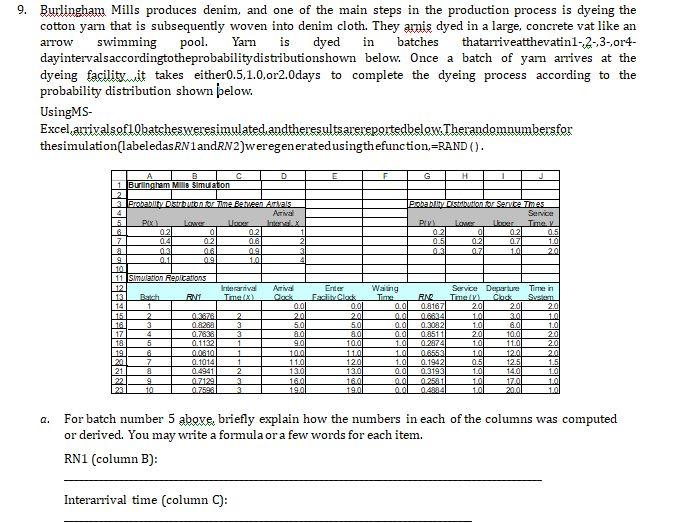
a. For batch number 5 above, briefly explain how the numbers in each of the columns was computed or derived. You may write a formula or a few words for each item.
RN1 (column B): ________________________________________________________________________________________________
Interarrival time (column C): __________________________________________________________________________________
Arrival clock (column D): ______________________________________________________________________________________
Enter facility clock (column E): _______________________________________________________________________________
Waiting time (column F): _____________________________________________________________________________________
RN2 (column G): _______________________________________________________________________________________________
Service time (column H): _____________________________________________________________________________________
Departure clock (column I): __________________________________________________________________________________
Time in System (column J): ___________________________________________________________________________________
b. What is the average time that a batch spends waiting before being dyed? (Be sure to show work/explain reasoning.)
c. What is the average time that a batch spends in the system? (Be sure to show work/explain reasoning.)
d. KeoJorani, the production manager at Burlingham,is skeptical of the numbers computed above in parts a and b. List two (2) reasons why Joranis skepticism is justified.
Please answer in a way I can copy to word or excel
Burlingham Mills produces denim, and one of the main steps in the production process is dyeing the cotton yarn that is subsequently woven into denim cloth. They arnis dyed in a large, concrete vat like an arrow swimming pool. Yarn is dyed in batches thatarriveatthevatin1-2,-3-,or4dayintervalsaccordingtotheprobabilitydistributionshown below. Once a batch of yarn arrives at the dyeing facility it takes either0.5,1.0,or2.0days to complete the dyeing process according to the probability distribution shown pelow. UsingMS- Excel arrivalsoflobatchesweresimulated, andtheresultsarereportedbelowi Therandomnumbersfor thesimulation(labeledas RN1 andRN2) weregeneratedusingthefunction, =RAND(). a. For batch number 5 above briefly explain how the numbers in each of the columns was computed or derived. You may write a formula or a few words for each item. RN1 (column B): Interarrival time (column C)Step by Step Solution
There are 3 Steps involved in it

Get step-by-step solutions from verified subject matter experts
 Study Help