



Question: A friend of mine taught me some basic rules on how to play the board game Ludo. Ludo is a board game for two to
A friend of mine taught me some basic rules on how to play the board game Ludo. Ludo is a board game for two to four players, in which the players race their four tokens from start to finish according to dice rolls (Wikipedia).
First, you have to roll a die. You move your token forward 1 to 6 squares as indicated by the die. Let us assume you are using a blue-colored token. You roll your dice and you move your blue-colored piece forward according to the number indicated by the dice. Let say, you throw a 5. This means that you will move your blue-colored token 5 squares. Once the token lands on a square, the following rules might apply.
If your piece stops on a square containing an opponent's piece, the opponent's piece is capture and returns to its home base.
If your piece stops on a blue square, you are allowed to move your piece directly to the next blue-colored square.
If your piece stops on a blue square that contains an opponent's piece, you will move your piece to the next blue-colored square and that opponent's piece will remain where it is.
When you throw a 6, you will move your token 6 places. Once your token lands on a square, the same three rules above still applies. After you have moved 6 places, you are granted another turn as a bonus
Question: Prepare a final limited entry decision table and decision tree for the game Ludo.
This is for knowledge management strategies subject, I need the answer for decision table and decision tree
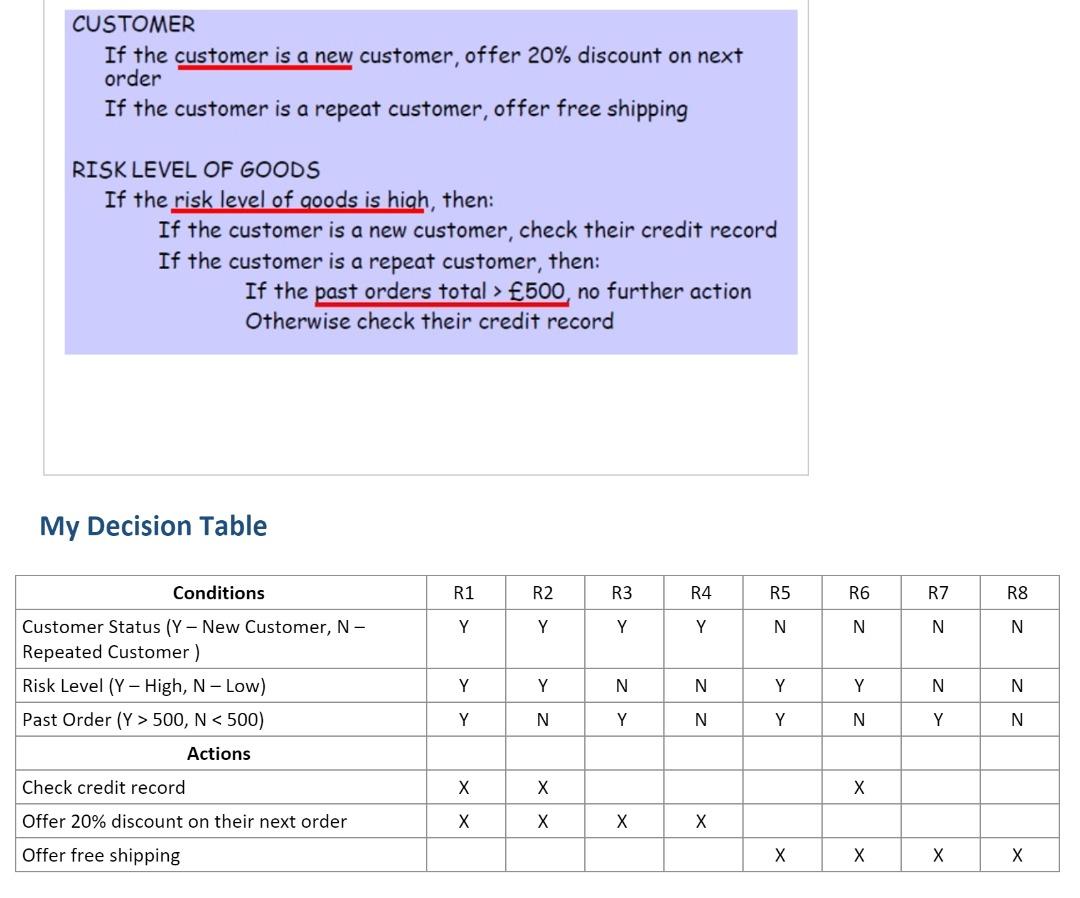
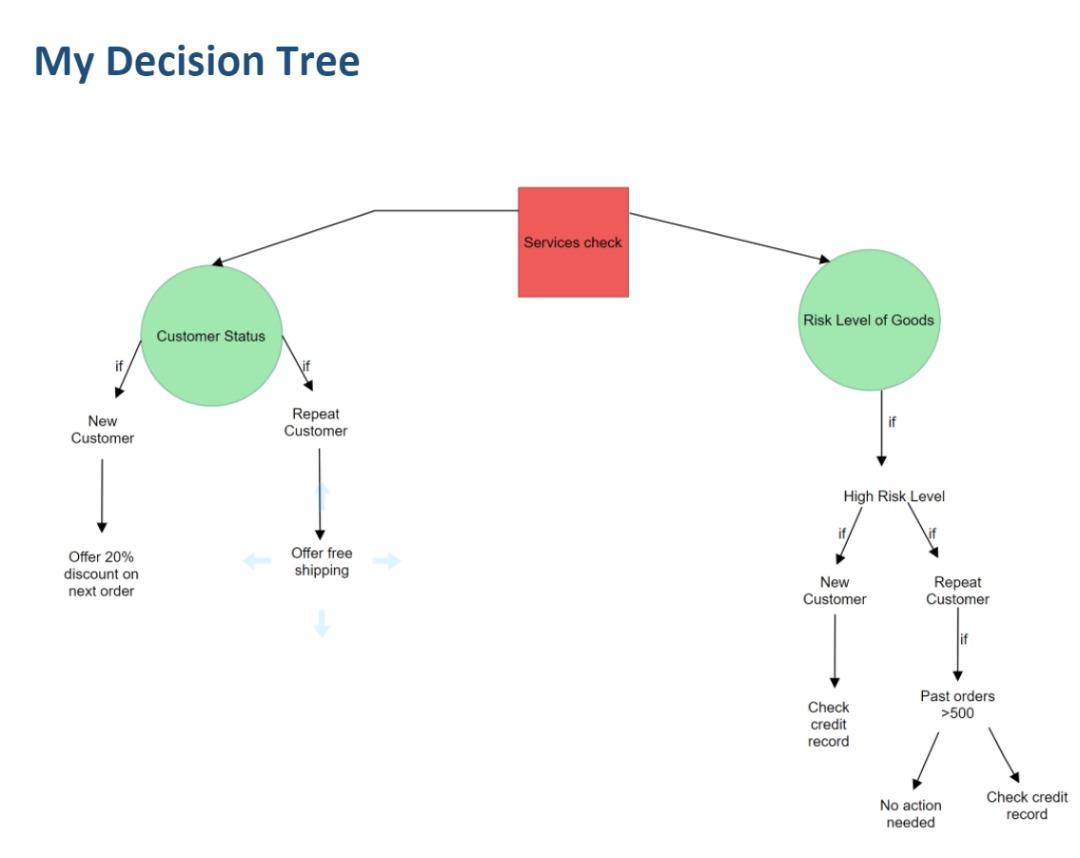
For an example can be followed like:
Step by Step Solution
There are 3 Steps involved in it

Get step-by-step solutions from verified subject matter experts