







Question: A function with multiple parameters specifies them in a(n) ________ a) semicolon separated list b) comma-separated list c) period-separated list d) backslash-separated list Answer: (4
- A function with multiple parameters specifies them in a(n) ________
a) semicolon separated list
b) comma-separated list
c) period-separated list
d) backslash-separated list
Answer:
- (4 points) To define a function with an arbitrary argument list, specify a parameter of the form:____
- !args
- #args
- *args
- ~args
Answer:
- (4 points) To assign a value to a global variable in a function, the global variable must be first declared in the function
- True
- False
Answer:
- (4 points) A statement in one function can access a local variable in another function
- True
- False
Answer:
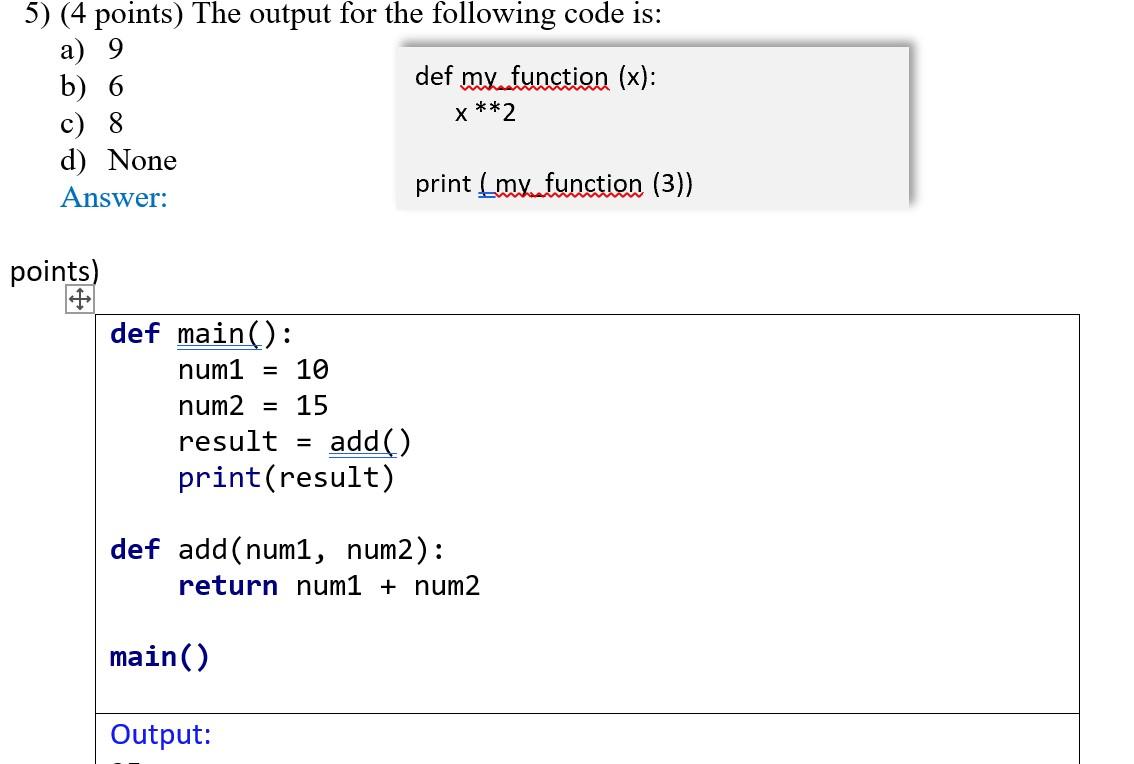
5) (4 points) The output for the following code is: a) 9 b) 6 def my function (x): c) 8 d) None Answer: print (my function (3)) X **2 points) def main(): num1 10 num2 = 15 result = add() print(result) def add(numi, num2): return num1 + num2 main() Output
Step by Step Solution
There are 3 Steps involved in it
1 Expert Approved Answer
Step: 1 Unlock

Question Has Been Solved by an Expert!
Get step-by-step solutions from verified subject matter experts
Step: 2 Unlock
Step: 3 Unlock
 Study Help