



Question: A local Pilates studio recently began offering a monthly subscription service for its patrons. Suppose a particular patron at this studio has the following willingness-to-pay
A local Pilates studio recently began offering a monthly subscription service for its patrons.
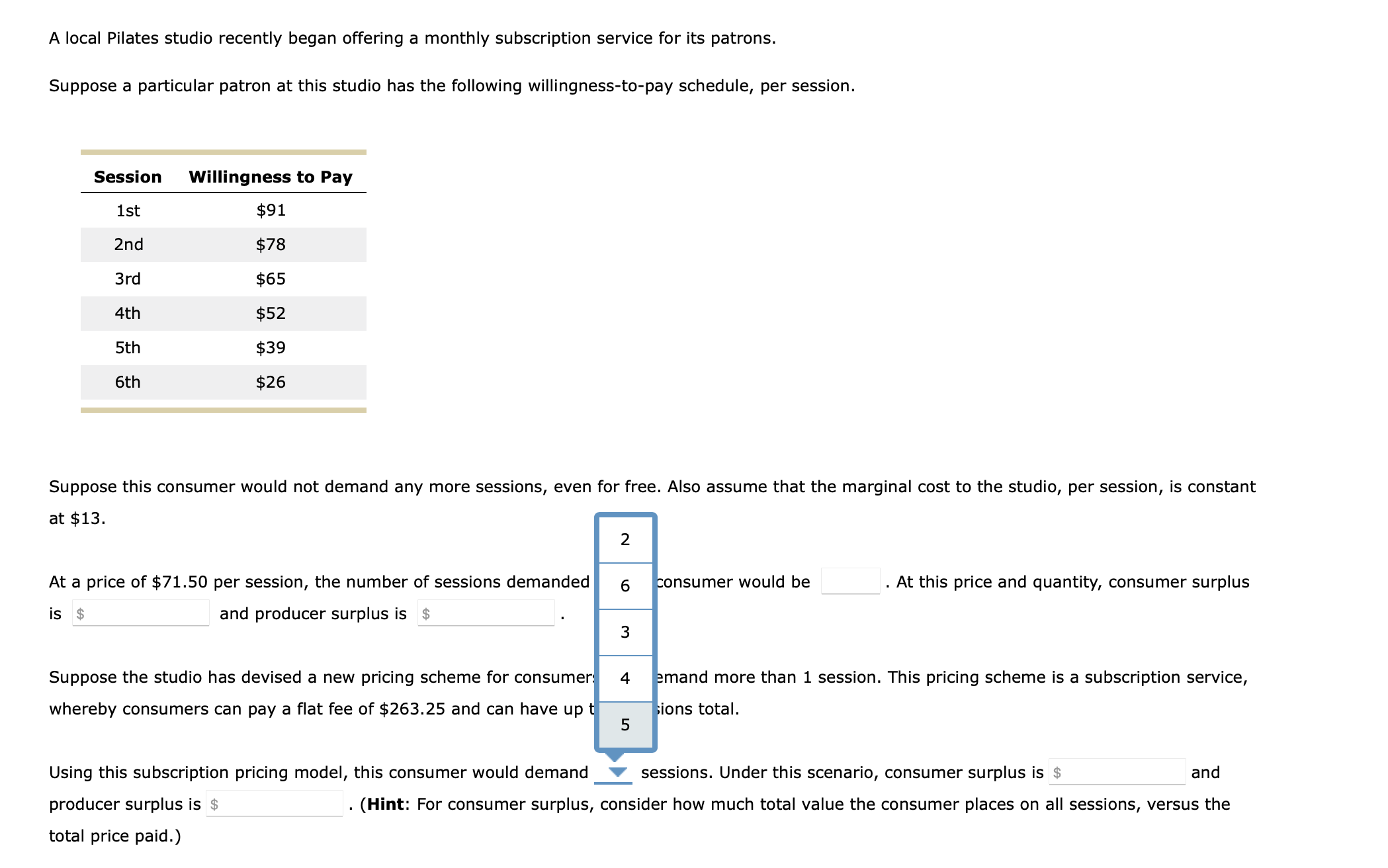
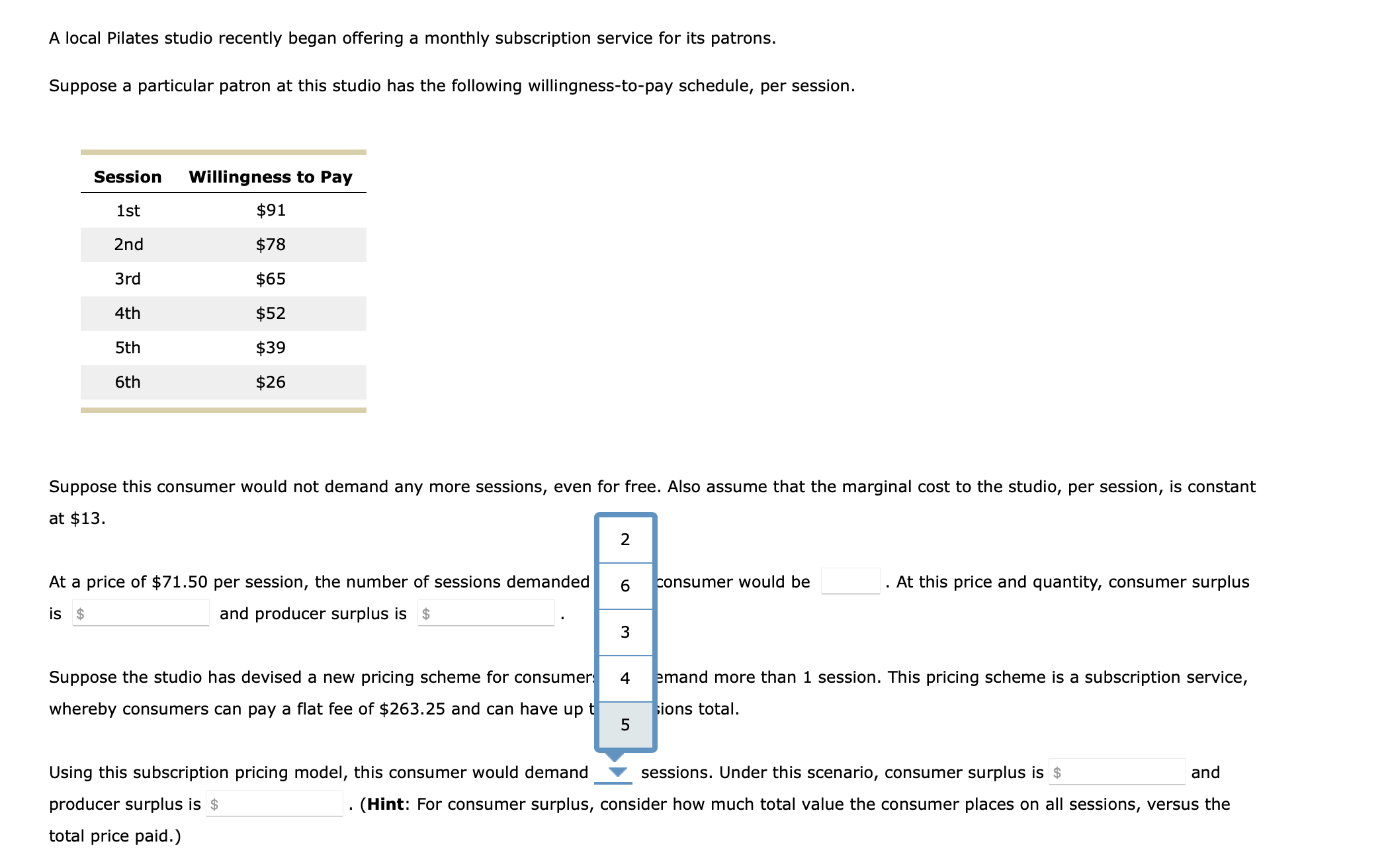
Suppose a particular patron at this studio has the following willingness-to-pay schedule, per session.
SessionWillingness to Pay1st$912nd$783rd$654th$525th$396th$26Suppose this consumer would not demand any more sessions, even for free. Also assume that the marginal cost to the studio, per session, is constant at $13.
At a price of $71.50 per session, the number of sessions demanded by this consumer would be. At this price and quantity, consumer surplus isand producer surplus is.
A local Pilates studio recently began offering a monthly subscription service for its patrons. Suppose a particular patron at this studio has the following willingness-to-pay schedule, per session. Session Willingness to Pay 1st $91 2nd $78 3rd $65 4th $52 5th $39 6th $26 Suppose this consumer would not demand any more sessions, even for free. Also assume that the marginal cost to the studio, per session, is constant at $13. At a price of $71.50 per session, the number of sessions demanded onsumer would be . At this price and quantity, consumer surplus is $ and producer surplus is $ Suppose the studio has devised a new pricing scheme for consumer mand more than 1 session. This pricing scheme is a subscription service, whereby consumers can pay a at fee of $263.25 and can have up ions total. Using this subscription pricing model, this consumer would demand V sessions. Under this scenario, consumer surplus is $ and producer surplus is s . (Hint: For consumer surplus, consider how much total value the consumer places on all sessions, versus the total price paid.)
Step by Step Solution
There are 3 Steps involved in it

Get step-by-step solutions from verified subject matter experts