







Question: A markup language is a language that annotates text so that the computer can manipulate the text. Most markup languages are human readable because the
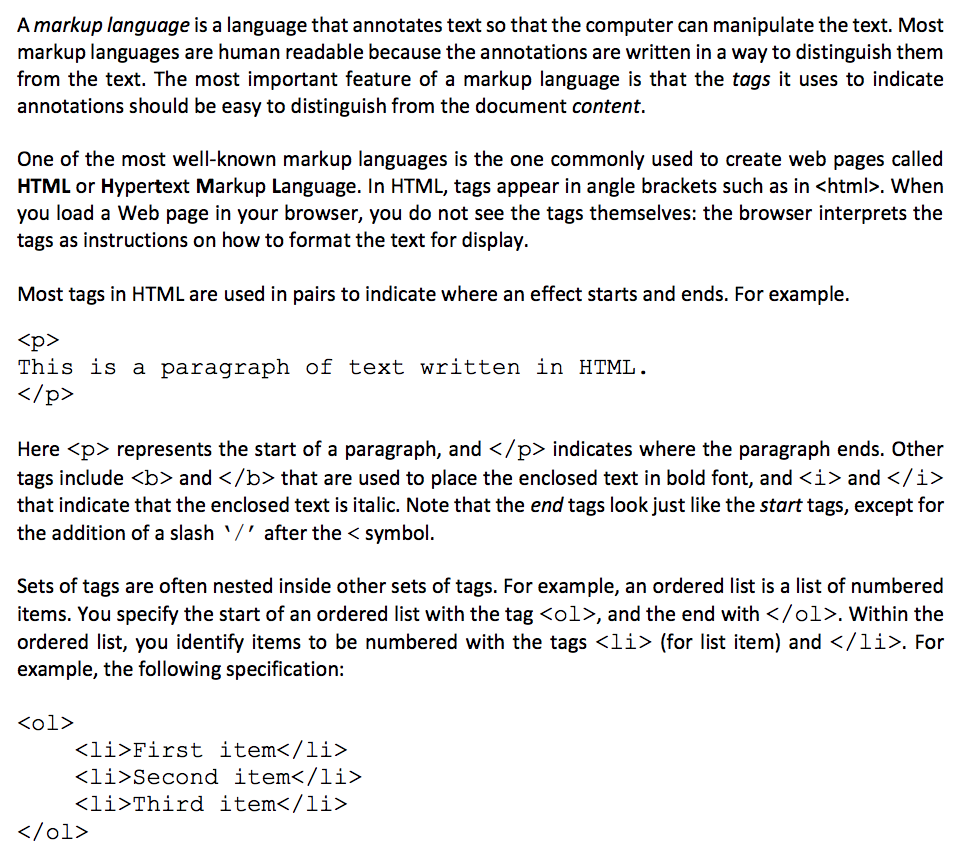
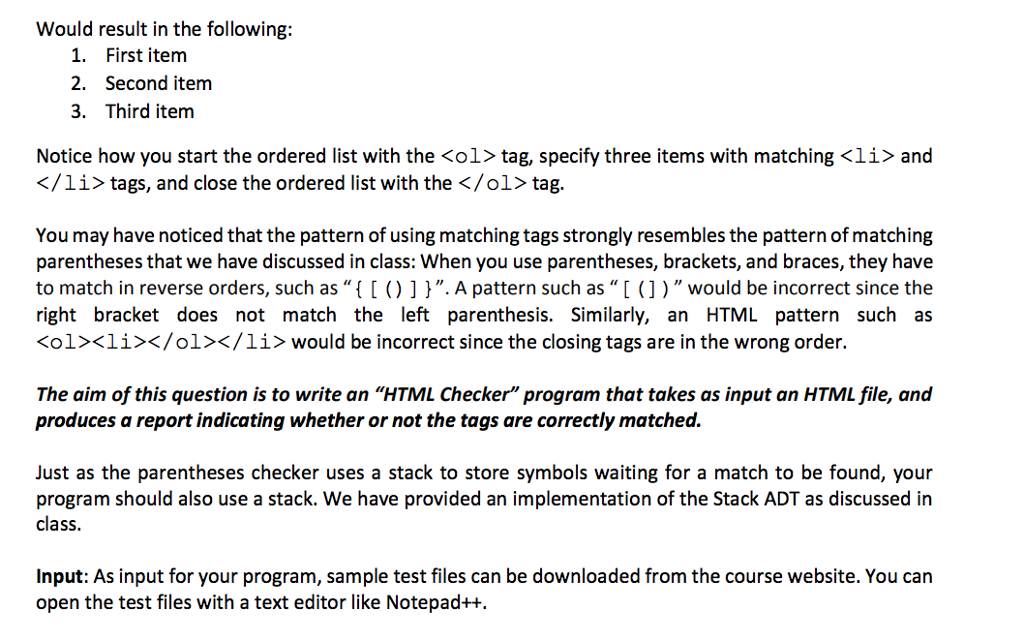
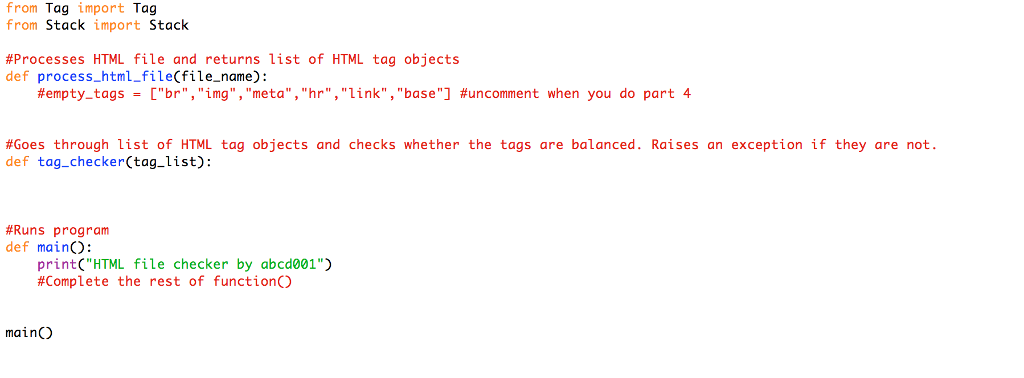
A markup language is a language that annotates text so that the computer can manipulate the text. Most markup languages are human readable because the annotations are written in a way to distinguish them from the text. The most important feature of a markup language is that the tags it uses to indicate annotations should be easy to distinguish from the document content. One of the most well-known markup languages is the one commonly used to create web pages called HTML or Hypertext Markup Language. In HTML, tags appear in angle brackets such as in . When you load a Web page in your browser, you do not see the tags themselves: the browser interprets the tags as instructions on how to format the text for display Most tags in HTML are used in pairs to indicate where an effect starts and ends. For example. SD> This is a paragraph of text written in HTM Here
represents the start of a paragraph, and
indicates where the paragraph ends. Other tags includeb and /b> that are used to place the enclosed text in bold font, and i and /i that indicate that the enclosed text is italic. Note that the end tags look just like the start tags, except for the addition of a slash'/' after the , and the end with . Within the ordered list, you identify items to be numbered with the tags
. For example, the following specification:
- First item
Step by Step Solution
There are 3 Steps involved in it

Get step-by-step solutions from verified subject matter experts
 Study Help