







Question: A mining cart is pulled up a hill at 18 km/h and then pulled back down the hill at 36 km/h through its original

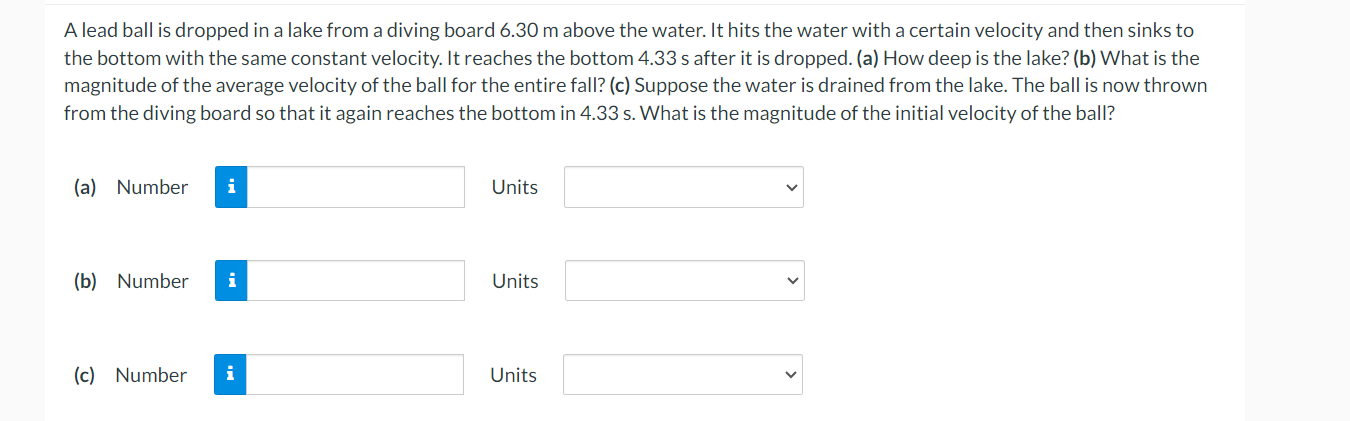
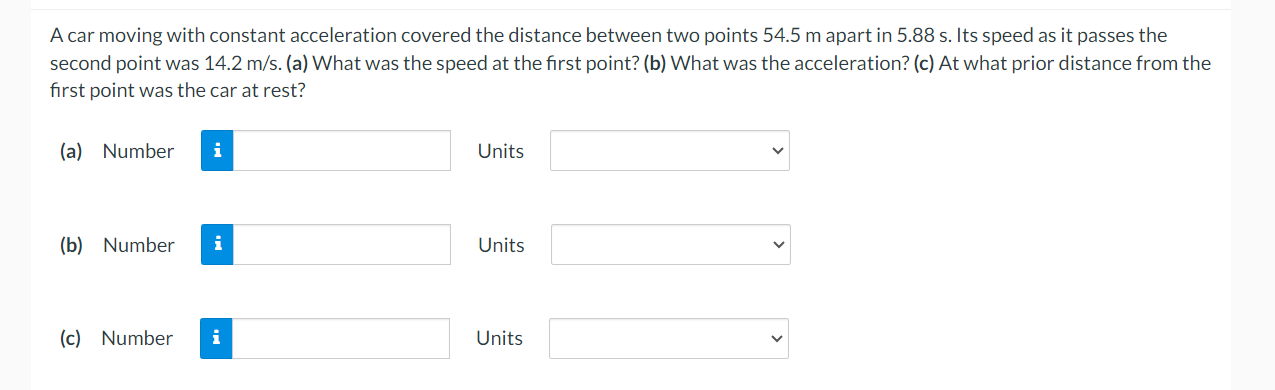
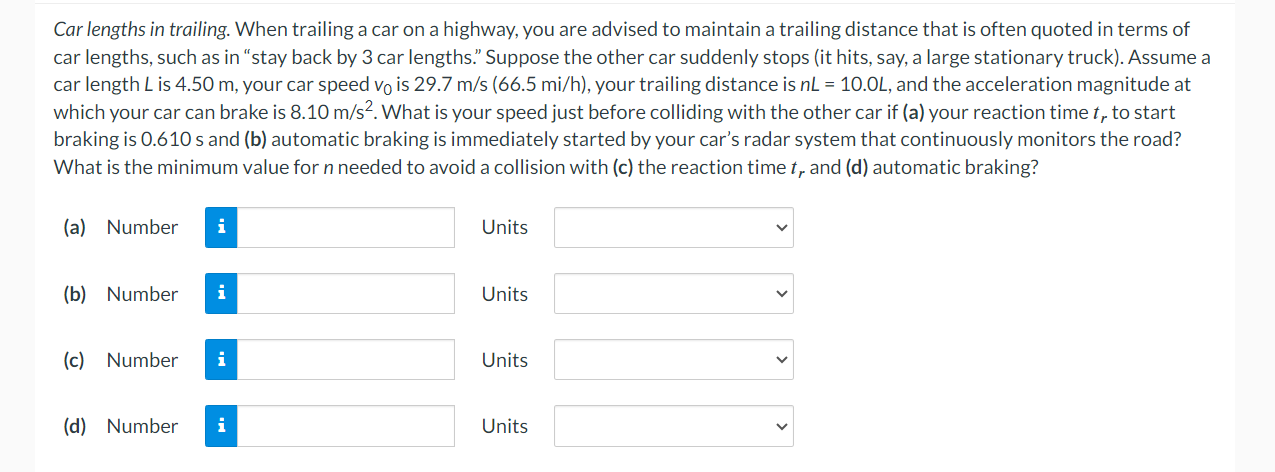

A mining cart is pulled up a hill at 18 km/h and then pulled back down the hill at 36 km/h through its original level. (The time required for the cart's reversal at the top of its climb is negligible.) What is the average speed of the cart for its round trip, from its original level back to its original level? Number i Units A lead ball is dropped in a lake from a diving board 6.30 m above the water. It hits the water with a certain velocity and then sinks to the bottom with the same constant velocity. It reaches the bottom 4.33 s after it is dropped. (a) How deep is the lake? (b) What is the magnitude of the average velocity of the ball for the entire fall? (c) Suppose the water is drained from the lake. The ball is now thrown from the diving board so that it again reaches the bottom in 4.33 s. What is the magnitude of the initial velocity of the ball? (a) Number i Units (b) Number i Units (c) Number i Units A car moving with constant acceleration covered the distance between two points 54.5 m apart in 5.88 s. Its speed as it passes the second point was 14.2 m/s. (a) What was the speed at the first point? (b) What was the acceleration? (c) At what prior distance from the first point was the car at rest? (a) Number i Units (b) Number i Units (c) Number Units Car lengths in trailing. When trailing a car on a highway, you are advised to maintain a trailing distance that is often quoted in terms of car lengths, such as in "stay back by 3 car lengths." Suppose the other car suddenly stops (it hits, say, a large stationary truck). Assume a car length L is 4.50 m, your car speed vo is 29.7 m/s (66.5 mi/h), your trailing distance is nL -10.0L, and the acceleration magnitude at which your car can brake is 8.10 m/s. What is your speed just before colliding with the other car if (a) your reaction time 1, to start braking is 0.610s and (b) automatic braking is immediately started by your car's radar system that continuously monitors the road? What is the minimum value for n needed to avoid a collision with (c) the reaction timet, and (d) automatic braking? (a) Number i Units (b) Number i Units (c) Number i Units (d) Number i Units An object falls a distance h from rest. If it travels 0.500h in the last 1.00 s, find (a) the time and (b) the height of its fall. (a) Number i Units (b) Number i Units
Step by Step Solution
There are 3 Steps involved in it

Get step-by-step solutions from verified subject matter experts
 Study Help