







Question: A naive array-based implementation of a queue causes a rightward drift problem. Rightward drift can cause a queue-full condition even when the queue contains few
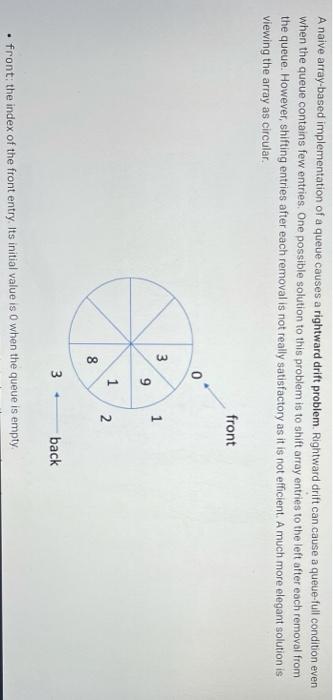
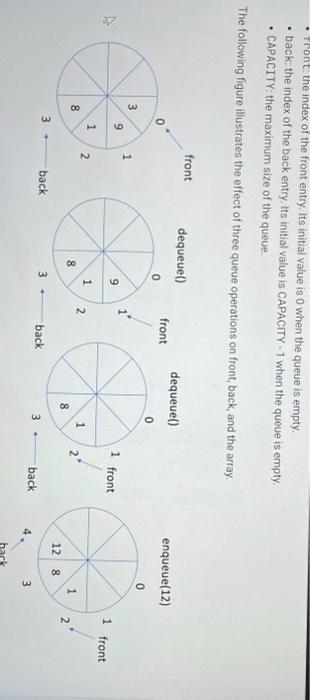
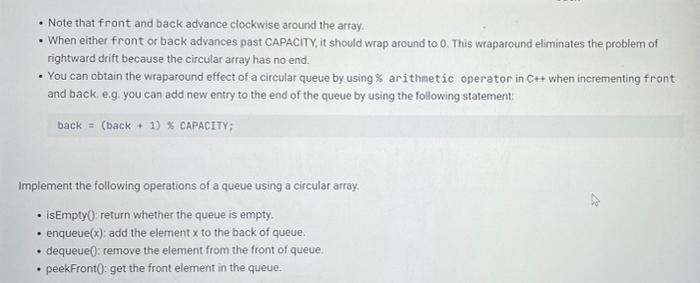
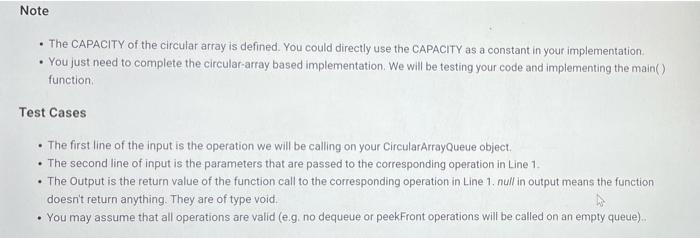
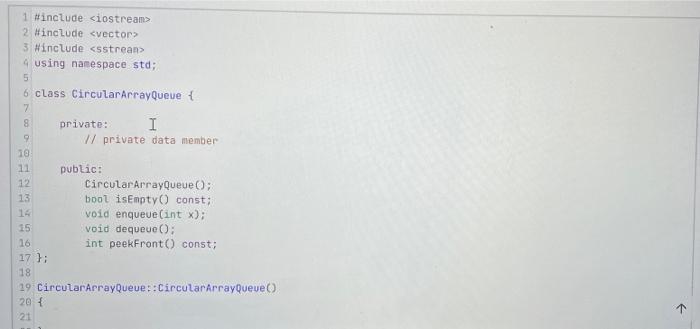
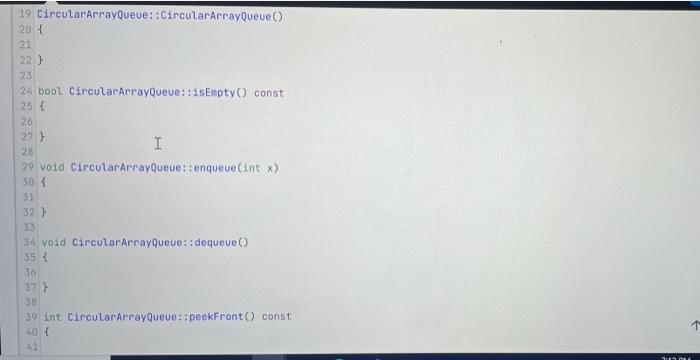
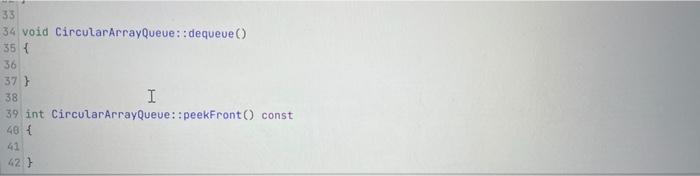
A naive array-based implementation of a queue causes a rightward drift problem. Rightward drift can cause a queue-full condition even when the queue contains few entries. One possible solution to this problem is to shift array entries to the left after each removal from the queue. However, shifting entries after each removal is not really satisfactory as it is not efficient A much more elegant solution is viewing the array as circular front 0 3 1 1 9 1 2 00 8 3 back . front: the index of the front entry. Its initial value is when the queue is empty Front the index of the front entry. Its initial value is when the queue is empty. back the index of the back entry. Its initial value is CAPACITY - 1 when the queue is empty CAPACITY: the maximum size of the queue. The following figure illustrates the effect of three queue operations on front, back, and the array. front dequeue() dequeuel) 0 front 0 0 0 enqueue(12) 0 3 1 9 1' 9 1 front 1 front 1 2 1 N 8 1 00 8 N 8 1 N 2 12 8 3 . back 3 back 3 back 4 3 . Note that front and back advance clockwise around the array. When either front or back advances past CAPACITY, it should wrap around to 0. This wraparound eliminates the problem of rightward drift because the circular array has no end. You can obtain the wraparound effect of a circular queue by using % arithmetic operator in C++ when incrementing front and back. e.g. you can add new entry to the end of the queue by using the following statement back = (back + 1) % CAPACITY Implement the following operations of a queue using a circular array . . isEmptyOs return whether the queue is empty. enqueue(x): add the element x to the back of queue. . dequeue(): remove the element from the front of queue peekFront: get the front element in the queue. . Note The CAPACITY of the circular array is defined. You could directly use the CAPACITY as a constant in your implementation You just need to complete the circular-array based implementation. We will be testing your code and implementing the main() function Test Cases The first line of the input is the operation we will be calling on your CircularArrayQueue object The second line of input is the parameters that are passed to the corresponding operation in Line 1 The Output is the return value of the function call to the corresponding operation in Line 1. null in output means the function doesn't return anything. They are of type void. You may assume that all operations are valid (e.g. no dequeue or peek Front operations will be called on an empty queue). 1 #include
Step by Step Solution
There are 3 Steps involved in it

Get step-by-step solutions from verified subject matter experts
 Study Help