



Question: A Negotiation Preparation Checklist Analyzing Your Perspective 1.What are the other sides interests? How important might each issue be to them? 2.What do I think
A Negotiation Preparation Checklist
Analyzing Your Perspective
1.What are the other sides interests? How important might each issue be to them?
2.What do I think their reservation point and BATNA may be? How can I find out more?
3.What does their BATNA mean in terms of their willingness to deal with me? Who has more power to walk away?
4.Is there a zone of possible agreement (ZOPA) between my reservation point?
5.What is my relationship history with the other party? How might our past relationship affect current talks?
6.Are there cultural differences that we should prepare for?
7.To what degree will we be negotiation electronically? Are we prepared for the pro's and con's of negotiating via email, teleconference...etc?
8.In what order should I approach various parties on the other side?
9.What is the hierarchy within the other sides team? What are the patterns of influence and potential tensions? How might these internal dynamics affect talks?
10.What potential ethical pitfalls should we keep in mind during the negotiation?
11.Who are my competitors for this deal? How do our relative advantages and disadvantages compare?
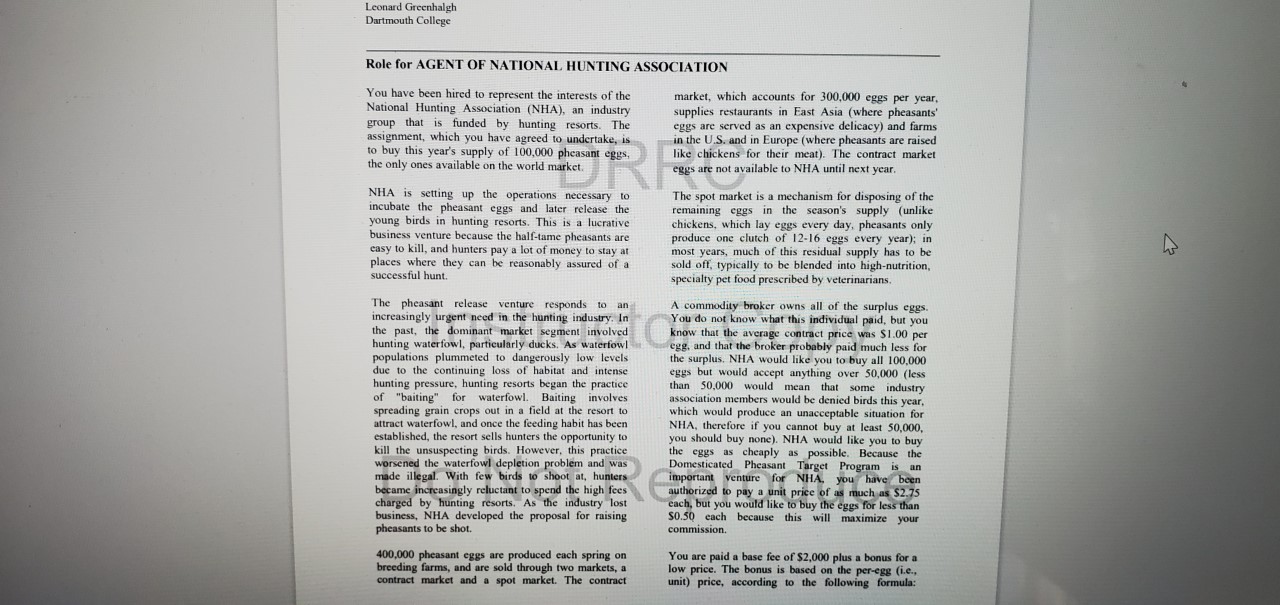
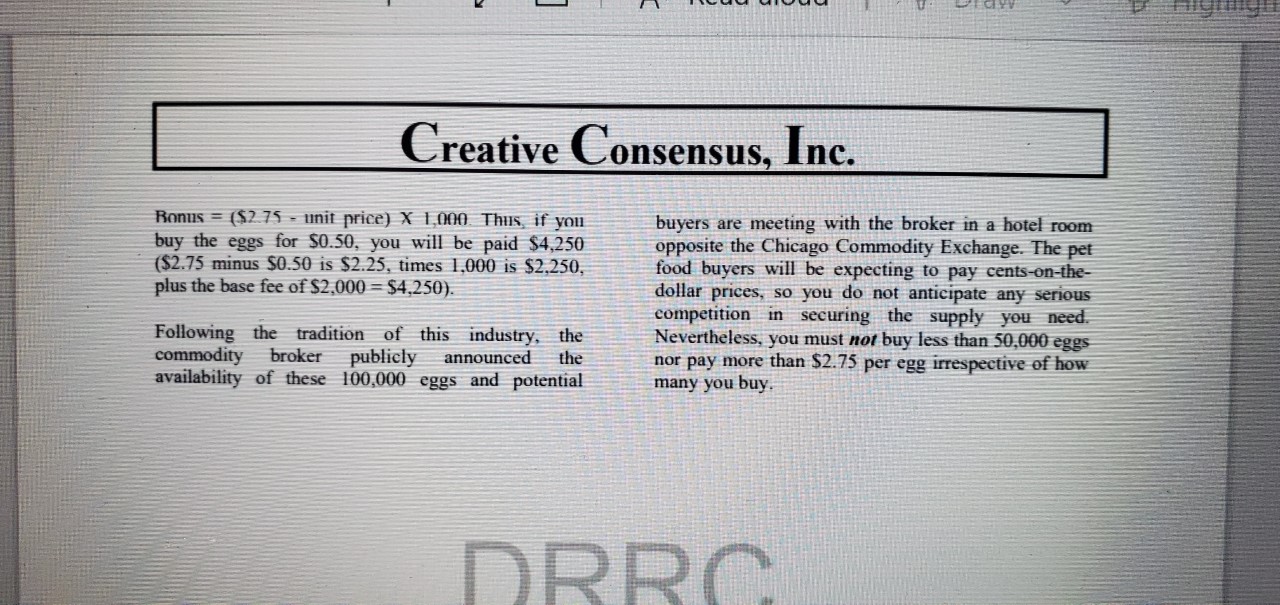
Leonard Greenhalgh Dartmouth College Role for AGENT OF NATIONAL HUNTING ASSOCIATION You have been hired to represent the interests of the National Hunting Association (NHA), an industry market, which accounts for 300,000 eggs per year. supplies restaurants in East Asia (where pheasants group that is funded by hunting resorts. The eggs are served as an expensive delicacy) and farms assignment, which you have agreed to undertake, is in the U.S. and in Europe (where pheasants are raised to buy this year's supply of 100,000 pheasant eggs, the only ones available on the world market. like chickens for their meat). The contract market eggs are not available to NHA until next year. NHA is setting up the operations necessary to The spot market is a mechanism for disposing of the incubate the pheasant eggs and later release the young birds in hunting resorts. This is a lucrative remaining eggs in the season's supply (unlike business venture because the half-tame pheasants are chickens, which lay eggs every day, pheasants only easy to kill, and hunters pay a lot of money to stay at produce one clutch of 12-16 eggs every year); in places where they can be reasonably assured of a most years, much of this residual supply has to be sold off, typically to be blended into high-nutrition, successful hunt. specialty pet food prescribed by veterinarians, The pheasant release venture responds to an increasingly urgent need in the hunting industry. In A commodity broker owns all of the surplus eggs. You do not know what this individual paid, but you the past, the dominant market segment involved hunting waterfowl, particularly ducks. As waterfowl know that the average contract price was $1.00 per populations plummeted to dangerously low levels egg, and that the broker probably paid much less for due to the continuing loss of habitat and intense the surplus. NHA would like you to buy all 100,000 hunting pressure, hunting resorts began the practice eggs but would accept anything over 50,000 (less of "baiting" for waterfowl. Baiting involves than 50.000 would mean that some industry spreading grain crops out in a field at the resort to association members would be denied birds this year, which would produce an unacceptable situation for attract waterfowl, and once the feeding habit has been established, the resort sells hunters the opportunity to NHA, therefore if you cannot buy at least 50,000, kill the unsuspecting birds. However, this practice you should buy none). NHA would like you to buy the eggs as cheaply as possible. Because the worsened the waterfowl depletion problem and was made illegal. With few birds to shoot at, hunters Domesticated Pheasant Target Program is an important venture for NHA, you have been became increasingly reluctant to spend the high fees authorized to pay a unit price of as much as $2.75 charged by hunting resorts. As the industry lost each, but you would like to buy the eggs for less than business, NHA developed the proposal for raising 50.50 each because this will maximize your pheasants to be shot. commission. 400,000 pheasant eggs are produced each spring on You are paid a base fee of $2,000 plus a bonus for a breeding farms, and are sold through two markets, a low price. The bonus is based on the per-egg (i.e., contract market and a spot market. The contract unit) price, according to the following formula:Creative Consensus. Inc. Bonus = ($2 75 - unit price) X 1,000 Thus, if you buyers are meeting with the broker in a hotel room buy the eggs for $0.50, you will be paid $4,250 ($2.75 minus $0.50 is $2.25, times 1,000 is $2,250, opposite the Chicago Commodity Exchange. The pet plus the base fee of $2,000 = $4,250). food buyers will be expecting to pay cents-on-the- dollar prices, so you do not anticipate any serious competition in securing the supply you need Following the tradition of this industry, the Nevertheless, you must not buy less than 50,000 eggs commodity broker publicly announced the nor pay more than $2.75 per egg irrespective of how availability of these 100,000 eggs and potential many you buy. DRRC
Step by Step Solution
There are 3 Steps involved in it

Get step-by-step solutions from verified subject matter experts