







Question: A pedestrian was walking on a crowded public path when she was struck by a speeding bicyclist who swerved wildly to avoid a jogger. As
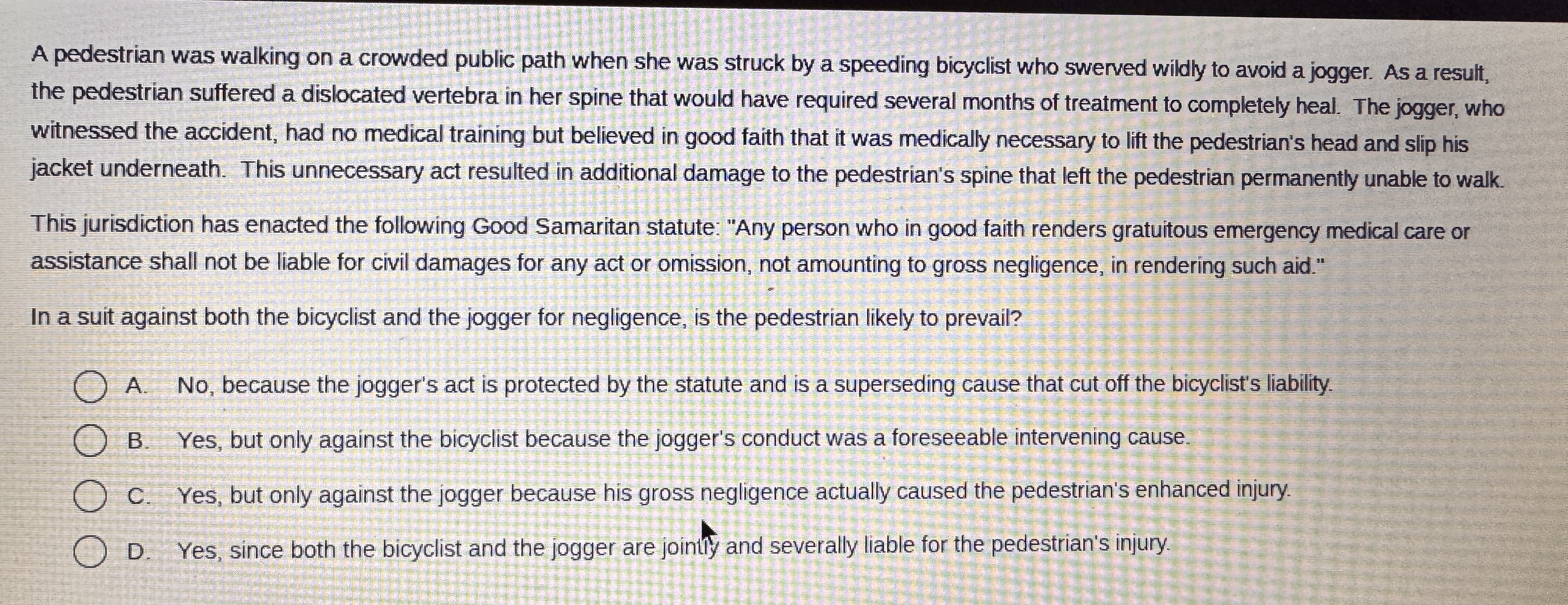 A pedestrian was walking on a crowded public path when she was struck by a speeding bicyclist who swerved wildly to avoid a jogger. As a result, the pedestrian suffered a dislocated vertebra in her spine that would have required several months of treatment to completely heal. The jogger, who witnessed the accident, had no medical training but believed in good faith that it was medically necessary to lift the pedestrian's head and slip his jacket underneath. This unnecessary act resulted in additional damage to the pedestrian's spine that left the pedestrian permanently unable to walk. This jurisdiction has enacted the following Good Samaritan statute: "Any person who in good faith renders gratuitous emergency medical care or assistance shall not be liable for civil damages for any act or omission, not amounting to gross negligence, in rendering such aid." In a suit against both the bicyclist and the jogger for negligence, is the pedestrian likely to prevail? A. No, because the jogger's act is protected by the statute and is a superseding cause that cut off the bicyclist's liability. B. Yes, but only against the bicyclist because the jogger's conduct was a foreseeable intervening cause. C. Yes, but only against the jogger because his gross negligence actually caused the pedestrian's enhanced injury D. Yes, since both the bicyclist and the jogger are jointly and severally liable for the pedestrian's injury
Step by Step Solution
There are 3 Steps involved in it

Get step-by-step solutions from verified subject matter experts
 Study Help