







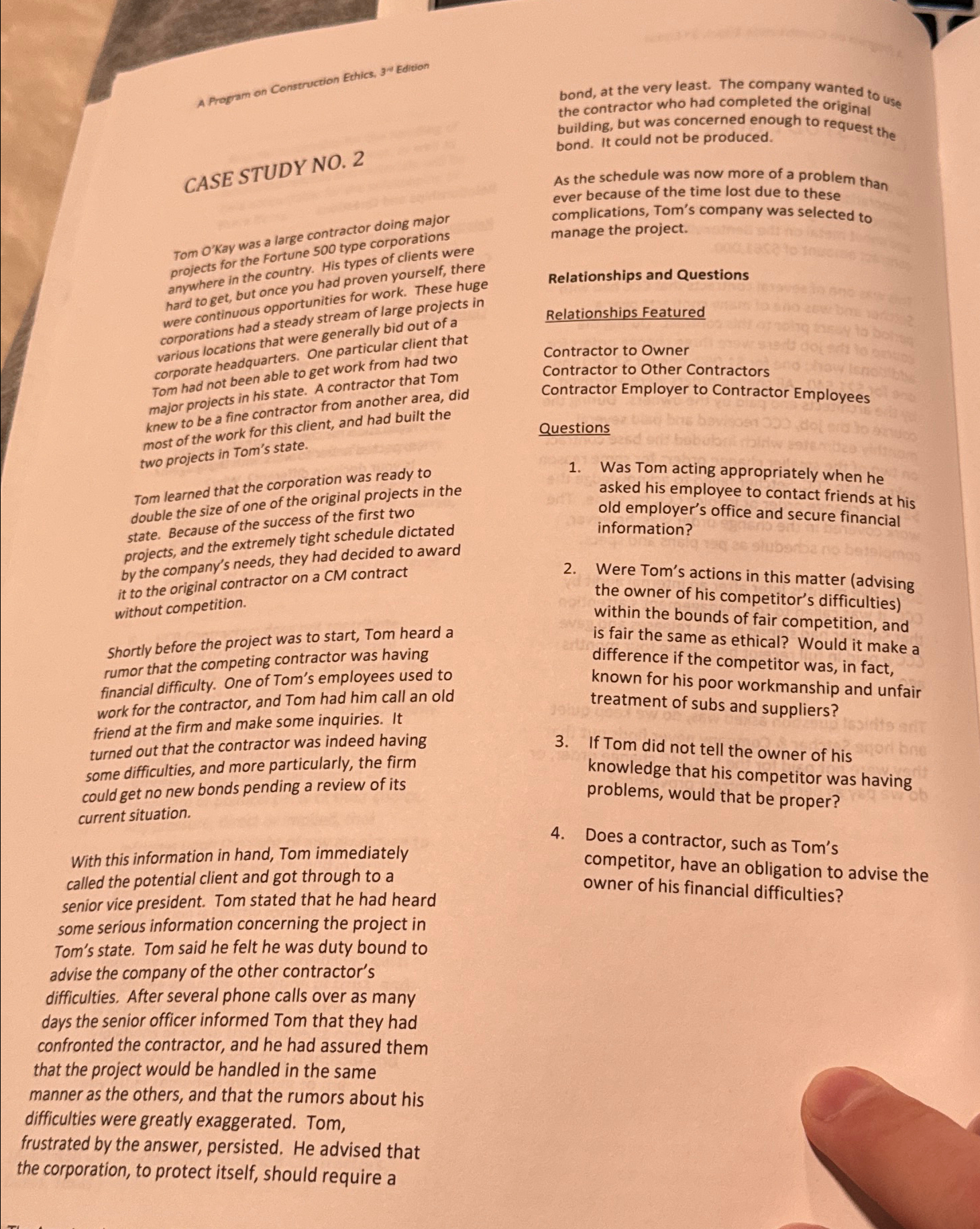
Question: A Program on Construction Echics, 3 adition CASE STUDY NO . 2 Tom O'Kay was a large contractor doing major projects for the Fortune 5
A Program on Construction Echics, adition
CASE STUDY NO
Tom O'Kay was a large contractor doing major projects for the Fortune type corporations anywhere in the country. His types of clients were hard to get, but once you had proven yourself, there were continuous opportunities for work. These huge corporations had a steady stream of large projects in various locations that were generally bid out of a corporate headquarters. One particular client that Tom had not been able to get work from had two major projects in his state. A contractor that Tom knew to be a fine contractor from another area, did most of the work for this client, and had built the two projects in Tom's state.
Tom learned that the corporation was ready to double the size of one of the original projects in the state. Because of the success of the first two projects, and the extremely tight schedule dictated by the company's needs, they had decided to award it to the original contractor on contract without competition.
Shortly before the project was to start, Tom heard a rumor that the competing contractor was having financial difficulty. One of Tom's employees used to work for the contractor, and Tom had him call an old friend at the firm and make some inquiries. It turned out that the contractor was indeed having some difficulties, and more particularly, the firm could get no new bonds pending a review of its current situation.
With this information in hand, Tom immediately called the potential client and got through to a senior vice president. Tom stated that he had heard some serious information concerning the project in Tom's state. Tom said he felt he was duty bound to advise the company of the other contractor's difficulties. After several phone calls over as many days the senior officer informed Tom that they had confronted the contractor, and he had assured them that the project would be handled in the same manner as the others, and that the rumors about his difficulties were greatly exaggerated. Tom, frustrated by the answer, persisted. He advised that the corporation, to protect itself, should require a
bond, at the very least. The company wanted to use the contractor who had completed the original building, but was concerned enough to request the bond. It could not be produced.
As the schedule was now more of a problem than ever because of the time lost due to these complications, Tom's company was selected to manage the project.
Relationships and Questions
Relationships Featured
Contractor to Owner
Contractor to Other Contractors
Contractor Employer to Contractor Employees
Questions
Was Tom acting appropriately when he asked his employee to contact friends at his old employer's office and secure financial information?
Were Tom's actions in this matter advising the owner of his competitor's difficulties within the bounds of fair competition, and is fair the same as ethical? Would it make a difference if the competitor was, in fact, known for his poor workmanship and unfair treatment of subs and suppliers?
If Tom did not tell the owner of his knowledge that his competitor was having problems, would that be proper?
Does a contractor, such as Tom's competitor, have an obligation to advise the owner of his financial difficulties?
Step by Step Solution
There are 3 Steps involved in it
1 Expert Approved Answer
Step: 1 Unlock

Question Has Been Solved by an Expert!
Get step-by-step solutions from verified subject matter experts
Step: 2 Unlock
Step: 3 Unlock
 Study Help