







Question: A question on erogeneity condition, exclusion restriction. see below please Using data from the 1980 census, Angrist and Krueger (1991) looked at the relationship between
A question on erogeneity condition, exclusion restriction. see below please

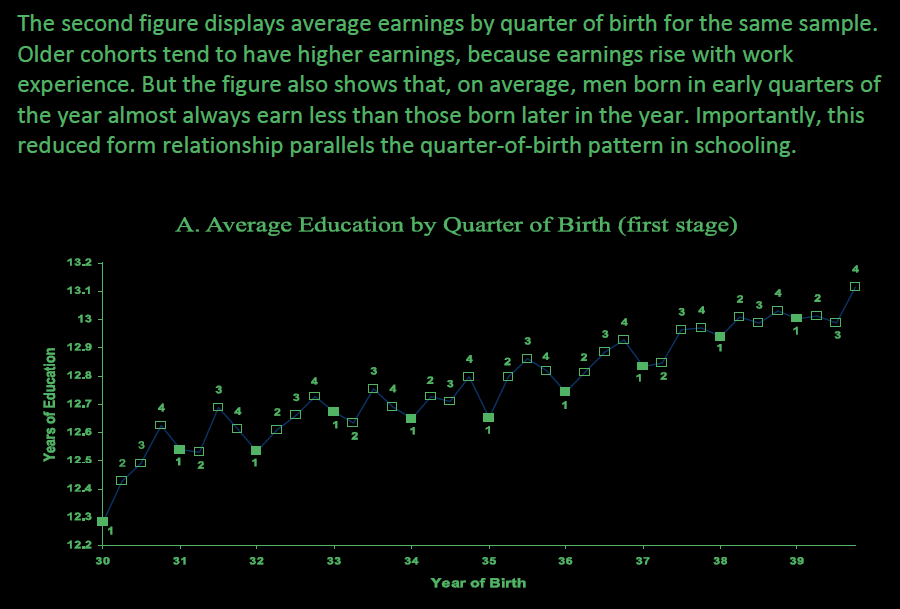
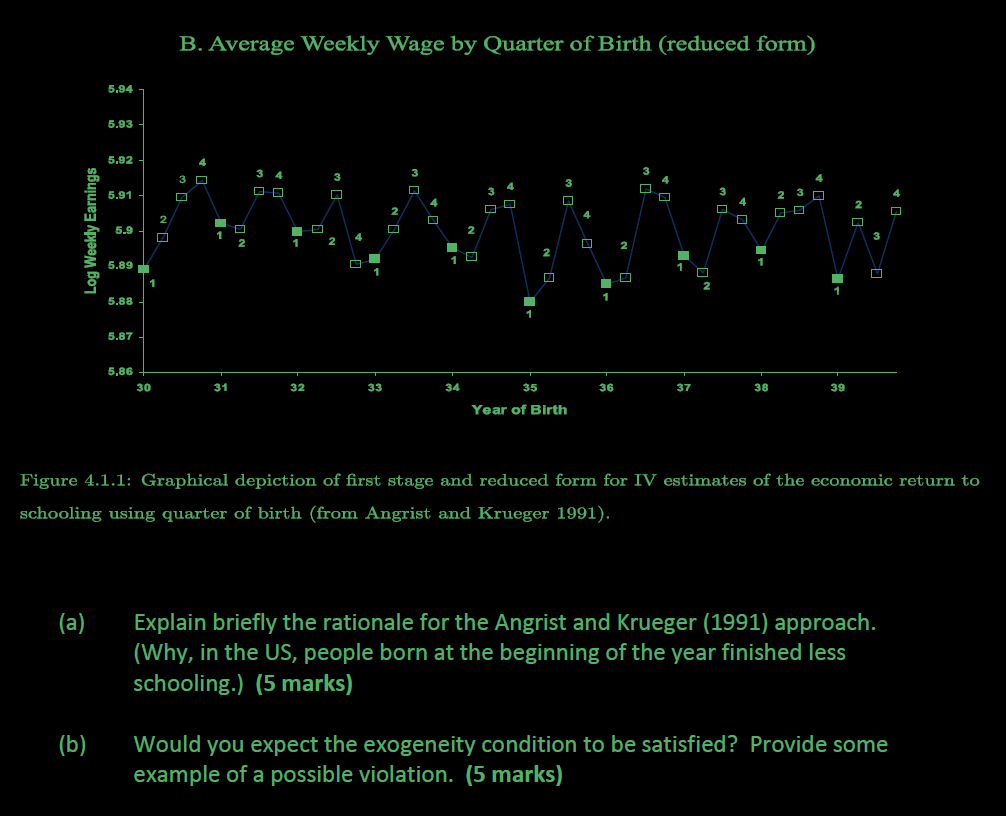
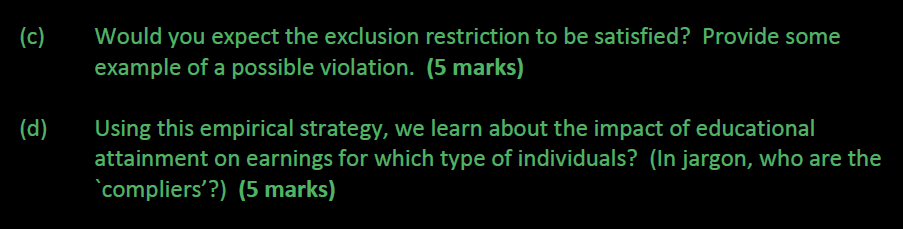
Using data from the 1980 census, Angrist and Krueger (1991) looked at the relationship between educational attainment and quarter of birth for men born from 1930 to 1959. The first figure below displays the relationship between education and quarter of birth for men born in the 1930s. The figure clearly shows that men born early in the calendar year tend to have lower average schooling levels.The second figure displays average earnings by quarter of birth for the same sample. Older cohorts tend to have higher earnings, because earnings rise with work experience. But the figure also shows that, on average, men born in early quarters of the year almost always earn less than those born later in the year. Importantly, this reduced form relationship parallels the quarter-of-birth pattern in schooling. A. Average Education by Quarter of Birth (first stage) 13.2 13.1 2 2 13 3 3 A 12.9 2 12.8 2 13 3 A Years of Education 12.7 4 2 A 12.6 N 3 12.5 2 2 12.4 12.3 12.2 36 37 38 39 30 31 32 33 34 35 Year of BirthB. Average Weekly Wage by Quarter of Birth (reduced form) 5,94 5.93 5.92 3 3 A 3 2 5.9 2 6.9 Log Weekly Earnings 5.89 5.88 5.87 5,86 30 31 32 33 34 35 36 37 38 39 Year of Birth Figure 4.1.1: Graphical depiction of first stage and reduced form for IV estimates of the economic return to schooling using quarter of birth (from Angrist and Krueger 1991). (a) Explain briefly the rationale for the Angrist and Krueger (1991) approach. (Why, in the US, people born at the beginning of the year finished less schooling.) (5 marks) (b) Would you expect the exogeneity condition to be satisfied? Provide some example of a possible violation. (5 marks)(c) Would you expect the exclusion restriction to be satisfied? Provide some example of a possible violation. (5 marks) (d) Using this empirical strategy, we learn about the impact of educational attainment on earnings for which type of individuals? (In jargon, who are the compliers'?)
Step by Step Solution
There are 3 Steps involved in it

Get step-by-step solutions from verified subject matter experts
 Study Help