



Question: A reflection on what you have learned in BUS 303, Organizational Behaviour chapters 1 to 3. identify the 3 most significant takeaways from this course
A reflection on what you have learned in BUS 303, Organizational Behaviour chapters 1 to 3. identify the 3 most significant takeaways from this course in terms of learning. Your reflection should clearly explain what you have learned by providing details and examples of what your understanding may have been coming into the course and where it is now. Connect and explain the concept of Organizational Behaviour accurately Note: Organizational Behaviour course please help me
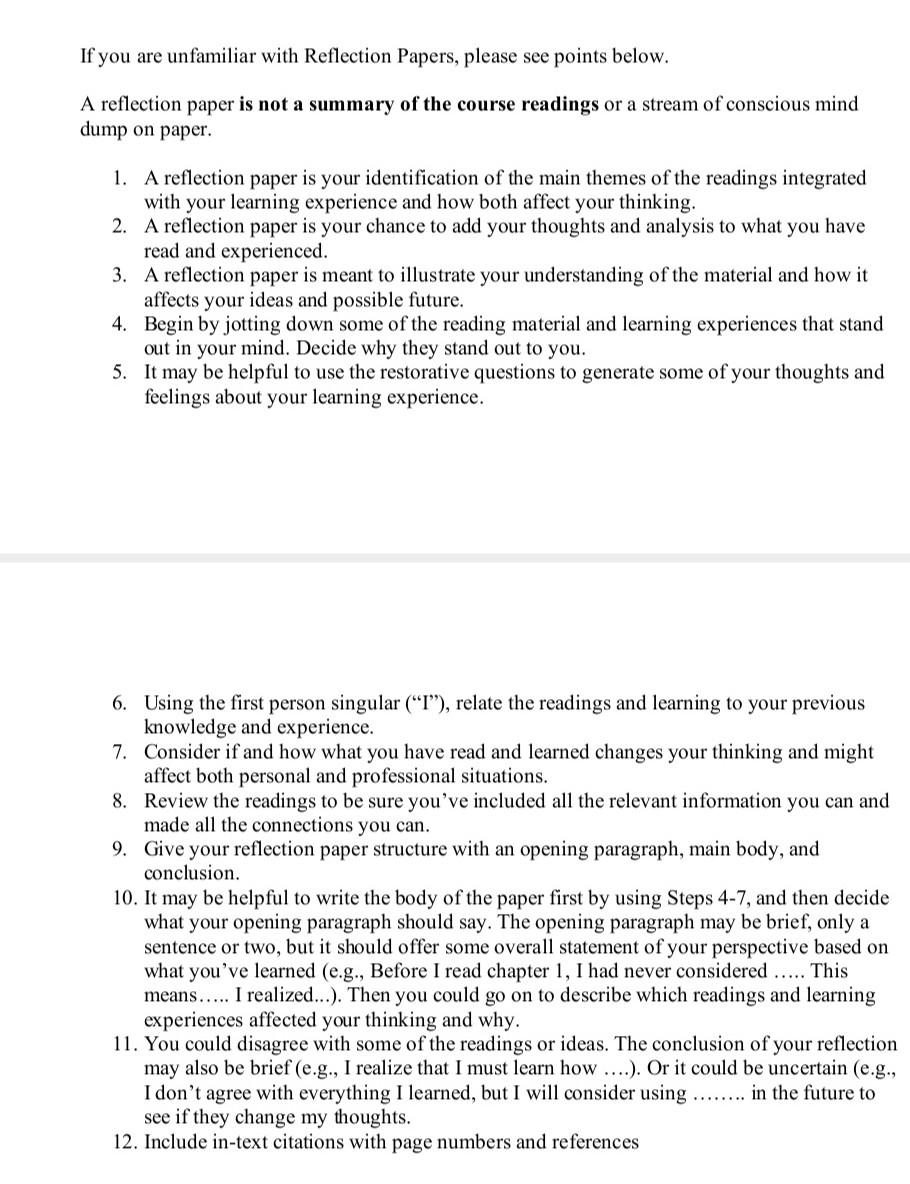
If you are unfamiliar with Reflection Papers, please see points below. A reflection paper is not a summary of the course readings or a stream of conscious mind dump on paper. 1. A reflection paper is your identification of the main themes of the readings integrated with your learning experience and how both affect your thinking. 2. A reflection paper is your chance to add your thoughts and analysis to what you have read and experienced. 3. A reflection paper is meant to illustrate your understanding of the material and how it affects your ideas and possible future. 4. Begin by jotting down some of the reading material and learning experiences that stand out in your mind. Decide why they stand out to you. 5. It may be helpful to use the restorative questions to generate some of your thoughts and feelings about your learning experience. 6. Using the first person singular ("I"), relate the readings and learning to your previous knowledge and experience. 7. Consider if and how what you have read and learned changes your thinking and might affect both personal and professional situations. 8. Review the readings to be sure you've included all the relevant information you can and made all the connections you can. 9. Give your reflection paper structure with an opening paragraph, main body, and conclusion. 10. It may be helpful to write the body of the paper first by using Steps 4-7, and then decide what your opening paragraph should say. The opening paragraph may be brief, only a sentence or two, but it should offer some overall statement of your perspective based on what you've learned (e.g., Before I read chapter 1, I had never considered .... This means..... I realized...). Then you could go on to describe which readings and learning experiences affected your thinking and why. 11. You could disagree with some of the readings or ideas. The conclusion of your reflection may also be brief (e.g., I realize that I must learn how ....). Or it could be uncertain (e.g., I don't agree with everything I learned, but I will consider using in the future to see if they change my thoughts. 12. Include in-text citations with page numbers and references
Step by Step Solution
There are 3 Steps involved in it

Get step-by-step solutions from verified subject matter experts