







Question: a. Return on equity (Use average equity.) % b. Return on assets (Use after-tax operating income and average assets.) % c. Return on capital (Use
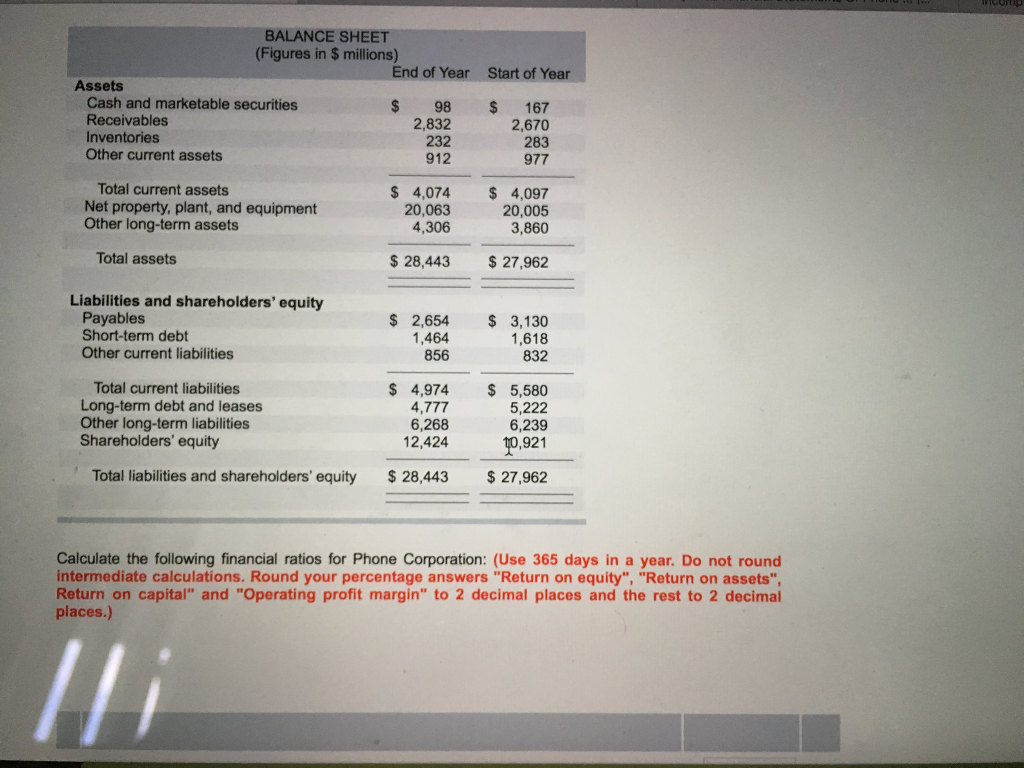
| a. | Return on equity (Use average equity.) | % | |
| b. | Return on assets (Use after-tax operating income and average assets.) | % | |
| c. | Return on capital (Use after-tax operating income and average capital.) | % | |
| d. | Days in inventory (Use beginning inventory.) | days | |
| e. | Inventory turnover (Use beginning inventory.) | ||
| f. | Average collection period (Use beginning receivables.) | days | |
| g. | Operating profit margin (Use after-tax operating income.) | % | |
| h. | Long-term debt ratio (Use end of year values.) | ||
| i. | Total debt ratio (Use end of year values.) | ||
| j. | Times interest earned | ||
| k. | Cash coverage ratio | ||
| l. | Current ratio (Use end of year values.) | ||
| m. | Quick ratio (Use end of year values.) | ||
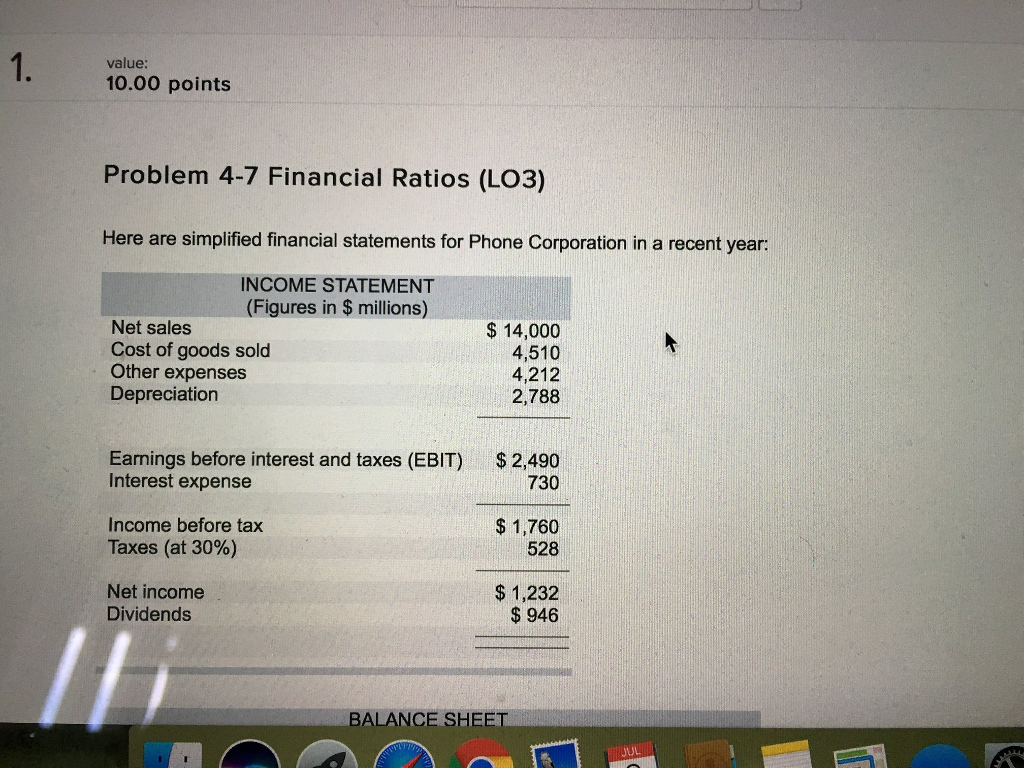
1. 10.00 points value Problem 4-7 Financial Ratios (LO3) Here are simplified financial statements for Phone Corporation in a recent year: INCOME STATEMENT (Figures in $ millions) Net sales Cost of goods sold Other expenses Depreciation $ 14,000 4,510 4,212 2,788 and taxes (EBIT) $2 Interest expense 730 Income before tax Taxes (at 30%) $1,760 528 Net income Dividends $1,232 $ 946 BALANCE SHEET
Step by Step Solution
There are 3 Steps involved in it
1 Expert Approved Answer
Step: 1 Unlock

Question Has Been Solved by an Expert!
Get step-by-step solutions from verified subject matter experts
Step: 2 Unlock
Step: 3 Unlock
 Study Help