







Question: A second version of the Markowitz portfolio model maximizes expected return subject to a constraint that the variance of the portfolio must be less than
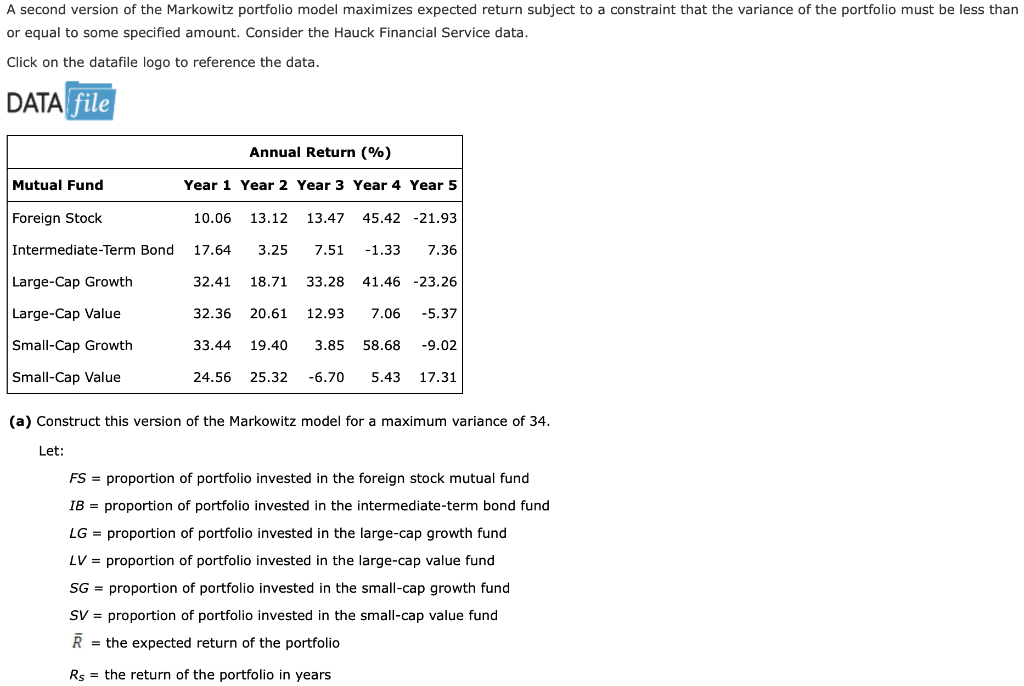
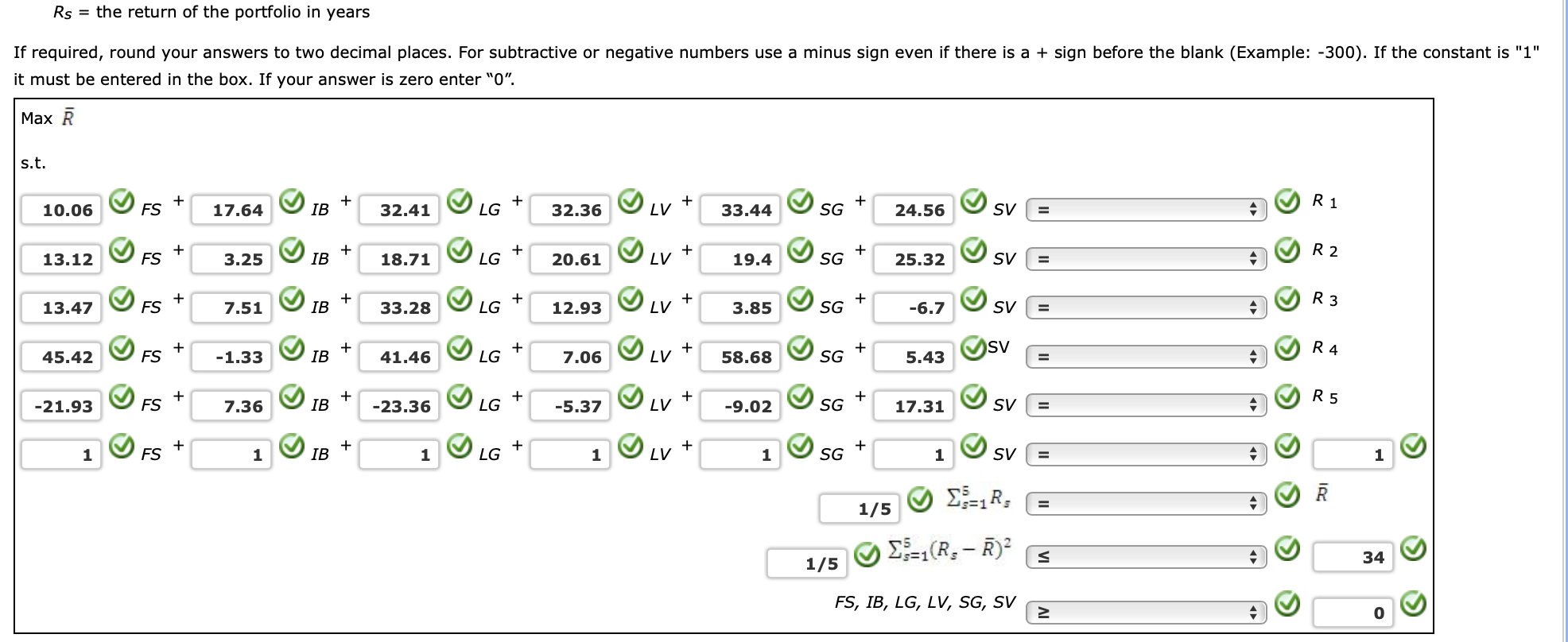
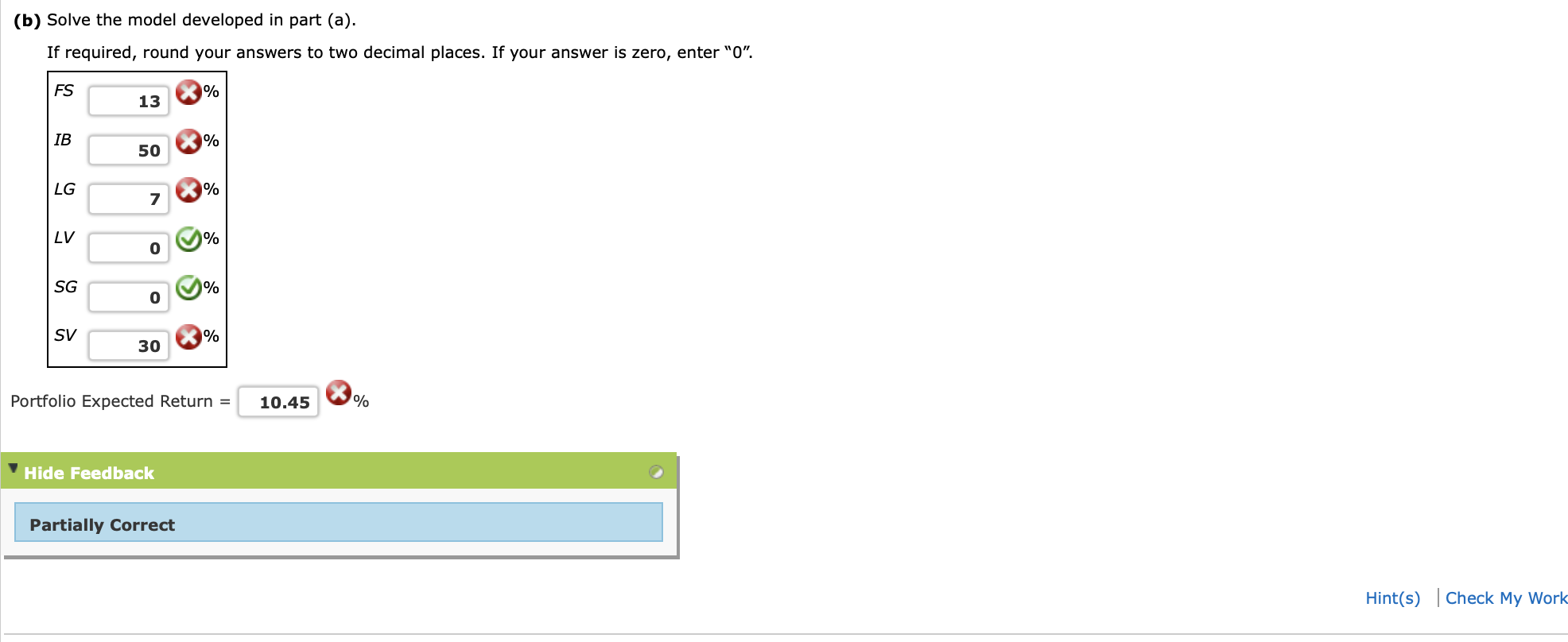
A second version of the Markowitz portfolio model maximizes expected return subject to a constraint that the variance of the portfolio must be less than or equal to some specified amount. Consider the Hauck Financial Service data. Click on the datafile logo to reference the data. DATA file Annual Return (%) Mutual Fund Year 1 Year 2 Year 3 Year 4 Year 5 Foreign Stock 10.06 13.12 13.47 45.42 -21.93 Intermediate-Term Bond 17.64 3.25 7.51 -1.33 7.36 Large-Cap Growth 32.41 18.71 33.28 41.46 -23.26 Large-Cap Value 32.36 20.61 12.93 7.06 -5.37 Small-Cap Growth 33.44 19.40 3.85 58.68 -9.02 Small-Cap Value 24.56 25.32 -6.70 5.43 17.31 (a) Construct this version of the Markowitz model for a maximum variance of 34. Let: FS = proportion of portfolio invested in the foreign stock mutual fund IB = proportion of portfolio invested in the intermediate-term bond fund LG = proportion of portfolio invested in the large-cap growth fund LV = proportion of portfolio invested in the large-cap value fund SG = proportion of portfolio invested in the small-cap growth fund SV = proportion of portfolio invested in the small-cap value fund R = the expected return of the portfolio Rs = the return of the portfolio in years Rs = the return of the portfolio in years If required, round your answers to two decimal places. For subtractive or negative numbers use a minus sign even if there is a + sign before the blank (Example: -300). If the constant is "1" it must be entered in the box. If your answer is zero enter "0". Max s.t. + FS + + 10.06 R 1 17.64 IB 32.41 LG + LV 32.36 + SG 33.44 24.56 SV = + + FS 13.12 3.25 R2 IB + LG 18.71 + LV 20.61 + SG 19.4 25.32 SV + + + 13.47 R3 FS 7.51 IB + LG 33.28 12.93 LV + SG 3.85 -6.7 SV = + + + FS 45.42 SV R4 -1.33 + LG IB 41.46 + LV 7.06 58.68 SG 5.43 = + + + + -21.93 FS R5 7.36 IB + LG -23.36 -5.37 LV -9.02 SG 17.31 SV = + + 1 + FS 1 IB 1 + LG 1 + LV 1 SG 1 SV 1 R, R = 1/5 (R, - )2 1/5 s 4 34 FS, IB, LG, LV, SG, SV 0 (b) Solve the model developed in part (a). If required, round your answers to two decimal places. If your answer is zero, enter "0". FS % 13 IB % 50 LG X% 7 LV % 0 SG % 0 SV % 30 Portfolio Expected Return = 10.45 % Hide Feedback Partially Correct Hint(s) Check My Work A second version of the Markowitz portfolio model maximizes expected return subject to a constraint that the variance of the portfolio must be less than or equal to some specified amount. Consider the Hauck Financial Service data. Click on the datafile logo to reference the data. DATA file Annual Return (%) Mutual Fund Year 1 Year 2 Year 3 Year 4 Year 5 Foreign Stock 10.06 13.12 13.47 45.42 -21.93 Intermediate-Term Bond 17.64 3.25 7.51 -1.33 7.36 Large-Cap Growth 32.41 18.71 33.28 41.46 -23.26 Large-Cap Value 32.36 20.61 12.93 7.06 -5.37 Small-Cap Growth 33.44 19.40 3.85 58.68 -9.02 Small-Cap Value 24.56 25.32 -6.70 5.43 17.31 (a) Construct this version of the Markowitz model for a maximum variance of 34. Let: FS = proportion of portfolio invested in the foreign stock mutual fund IB = proportion of portfolio invested in the intermediate-term bond fund LG = proportion of portfolio invested in the large-cap growth fund LV = proportion of portfolio invested in the large-cap value fund SG = proportion of portfolio invested in the small-cap growth fund SV = proportion of portfolio invested in the small-cap value fund R = the expected return of the portfolio Rs = the return of the portfolio in years Rs = the return of the portfolio in years If required, round your answers to two decimal places. For subtractive or negative numbers use a minus sign even if there is a + sign before the blank (Example: -300). If the constant is "1" it must be entered in the box. If your answer is zero enter "0". Max s.t. + FS + + 10.06 R 1 17.64 IB 32.41 LG + LV 32.36 + SG 33.44 24.56 SV = + + FS 13.12 3.25 R2 IB + LG 18.71 + LV 20.61 + SG 19.4 25.32 SV + + + 13.47 R3 FS 7.51 IB + LG 33.28 12.93 LV + SG 3.85 -6.7 SV = + + + FS 45.42 SV R4 -1.33 + LG IB 41.46 + LV 7.06 58.68 SG 5.43 = + + + + -21.93 FS R5 7.36 IB + LG -23.36 -5.37 LV -9.02 SG 17.31 SV = + + 1 + FS 1 IB 1 + LG 1 + LV 1 SG 1 SV 1 R, R = 1/5 (R, - )2 1/5 s 4 34 FS, IB, LG, LV, SG, SV 0 (b) Solve the model developed in part (a). If required, round your answers to two decimal places. If your answer is zero, enter "0". FS % 13 IB % 50 LG X% 7 LV % 0 SG % 0 SV % 30 Portfolio Expected Return = 10.45 % Hide Feedback Partially Correct Hint(s) Check My Work
Step by Step Solution
There are 3 Steps involved in it
To solve the Markowitz optimization problem for maximizing the expected return with a constraint on variance we can follow these steps Step 1 Define t... View full answer

Get step-by-step solutions from verified subject matter experts
 Study Help