







Question: A solid insulating sphere of radius a has charge Q distributed uniformly throughout its volume. The sphere is surrounded by a thin spherical shell of
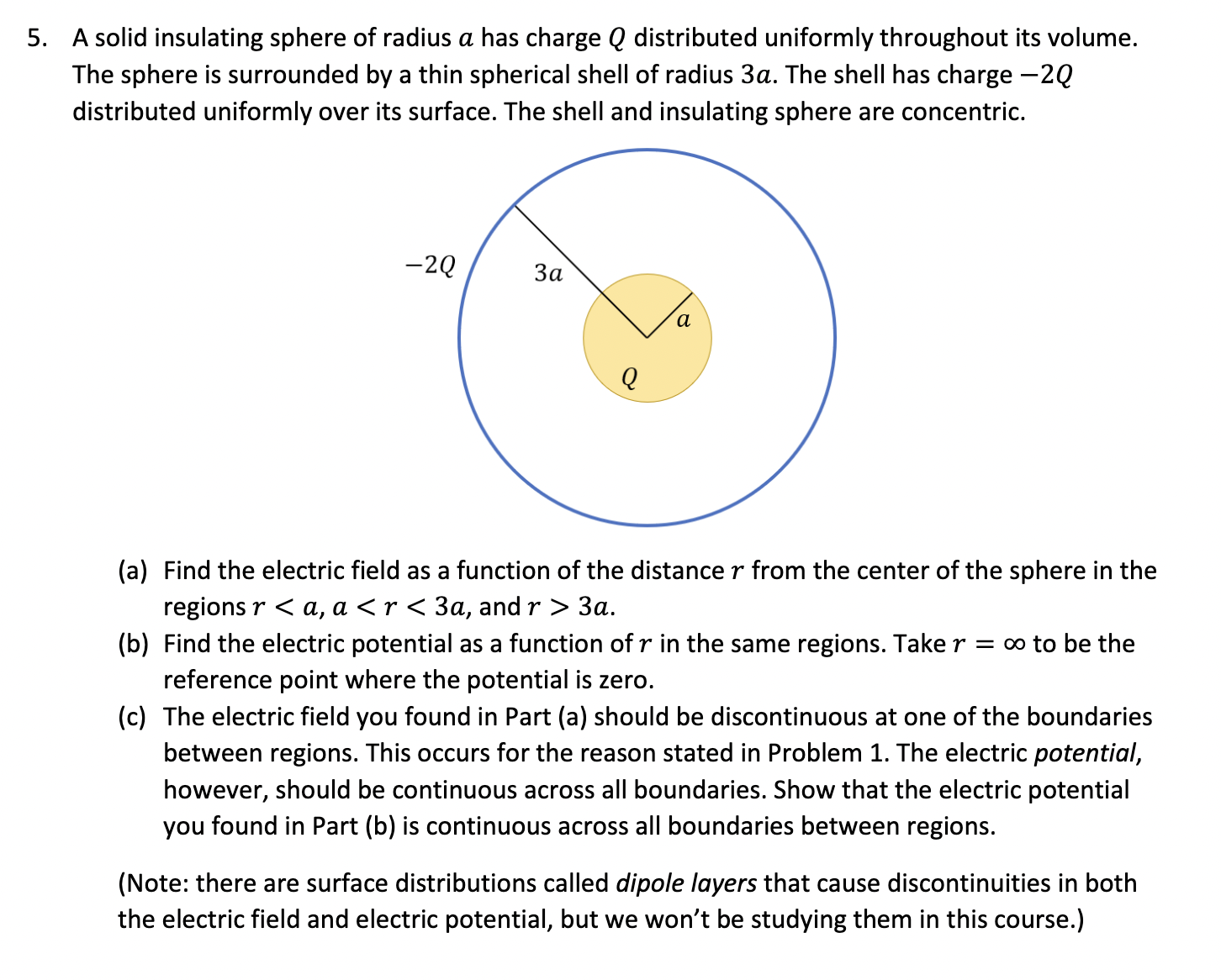
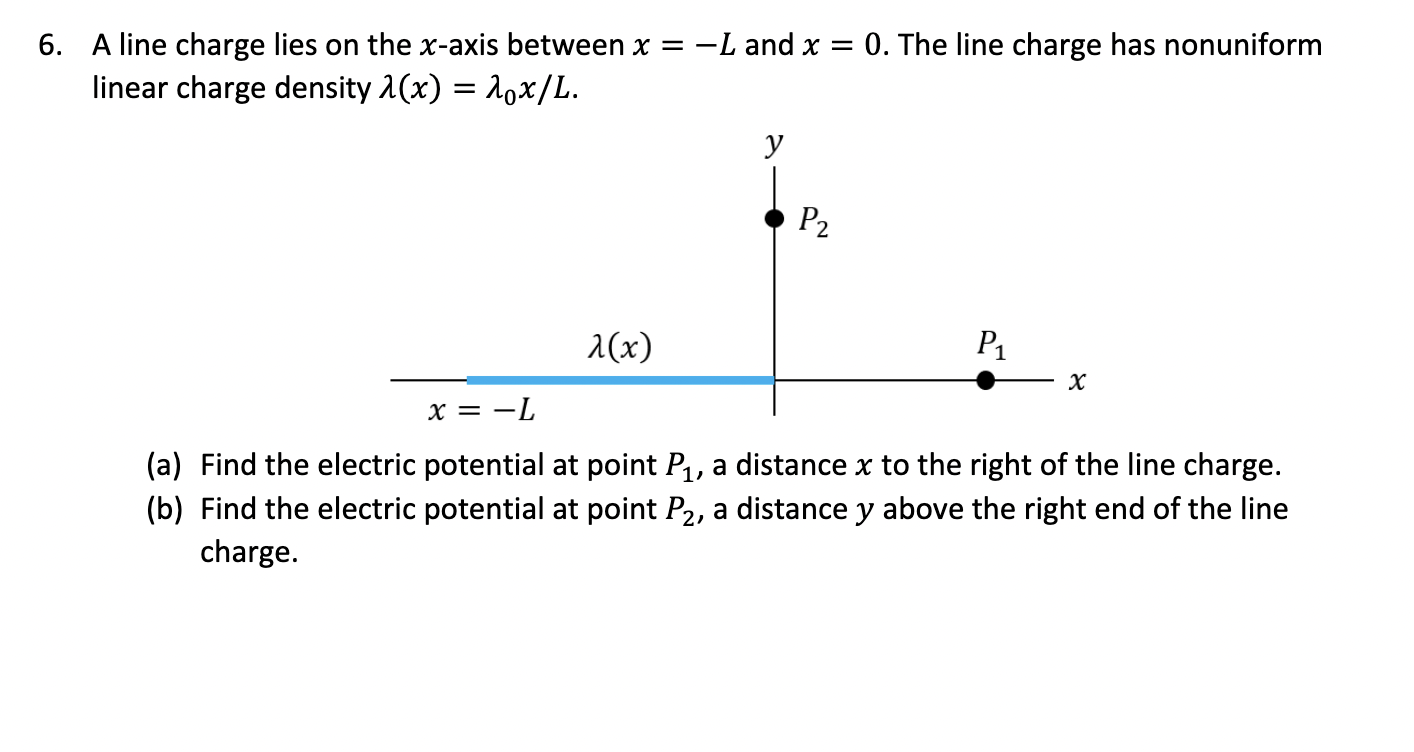
A solid insulating sphere of radius a has charge Q distributed uniformly throughout its volume. The sphere is surrounded by a thin spherical shell of radius 3a. The shell has charge 2Q distributed uniformly over its surface. The shell and insulating sphere are concentric. ZQ (a) Find the electric field as a function of the distance 'r from the center of the sphere in the regions 1' 3a. (b) Find the electric potential as a function ofr in the same regions. Take r = 00 to be the reference point where the potential is zero. (c) The electric field you found in Part (a) should be discontinuous at one of the boundaries between regions. This occurs for the reason stated in Problem 1. The electric potential, however, should be continuous across all boundaries. Show that the electric potential you found in Part (b) is continuous across all boundaries between regions. (Note: there are surface distributions called dipole layers that cause discontinuities in both the electric field and electric potential, but we won't be studying them in this course.) 6. A line charge lies on the x-axis between x = L and x = 0. The line charge has nonuniform linear charge density 105) = Aux/L. Mac) P1 x x = L (a) Find the electric potential at point P1, a distance x to the right of the line charge. (b) Find the electric potential at point P2, a distance y above the right end of the line charge
Step by Step Solution
There are 3 Steps involved in it

Get step-by-step solutions from verified subject matter experts
 Study Help