







Question: A spherical mirror is a reflective surface that can be concave or convex. Making the analogy with a spoon, the reflective surface of a
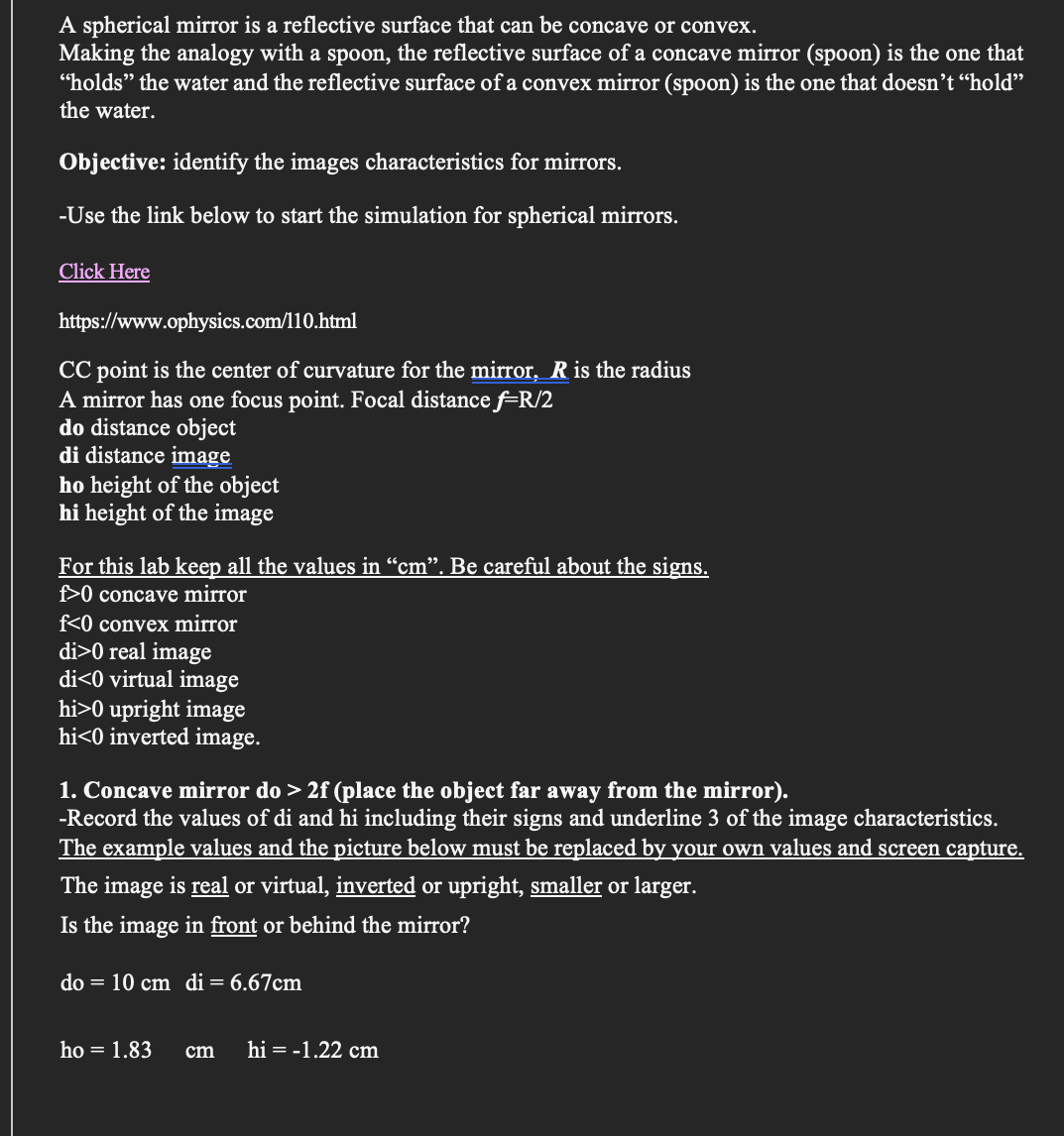
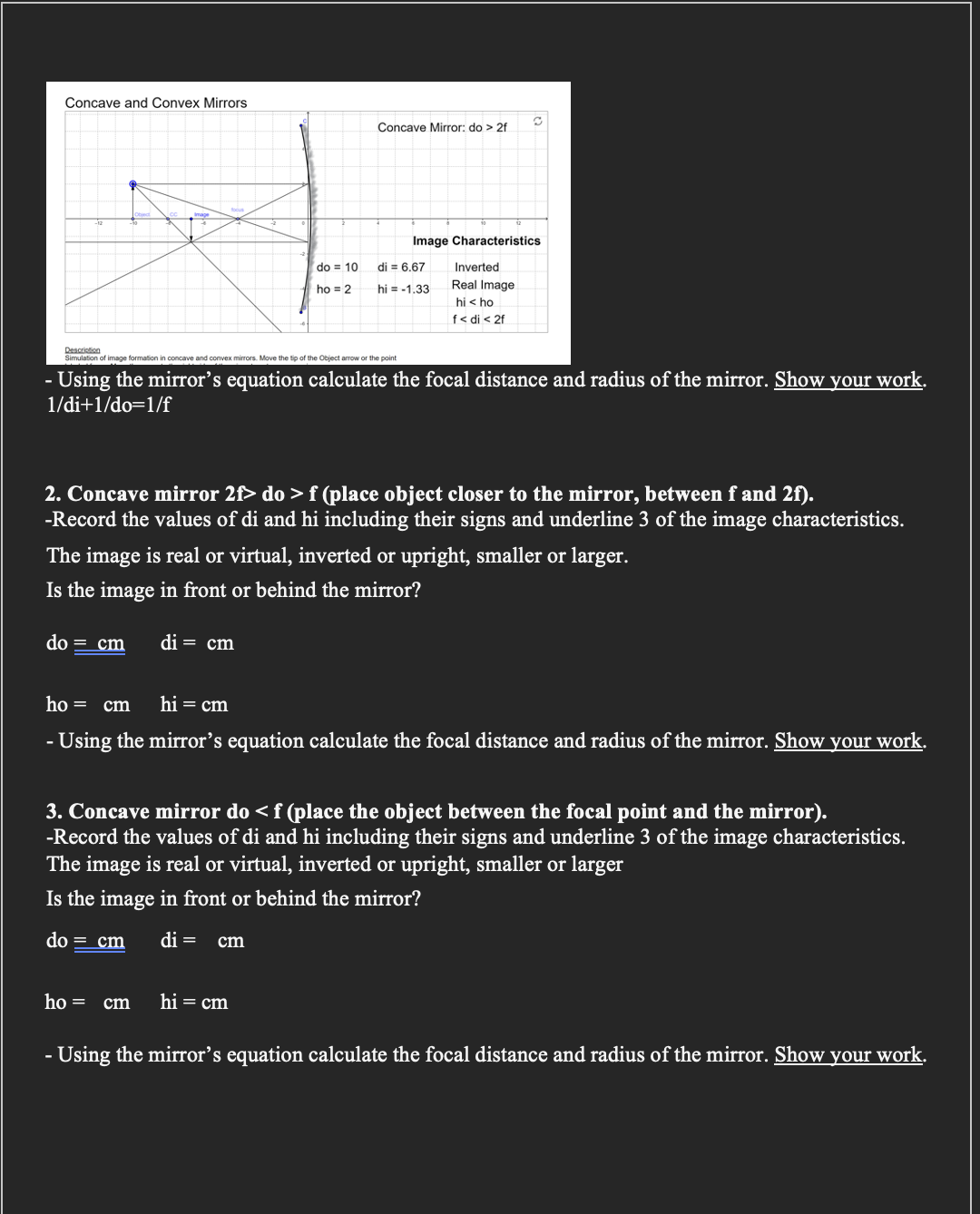
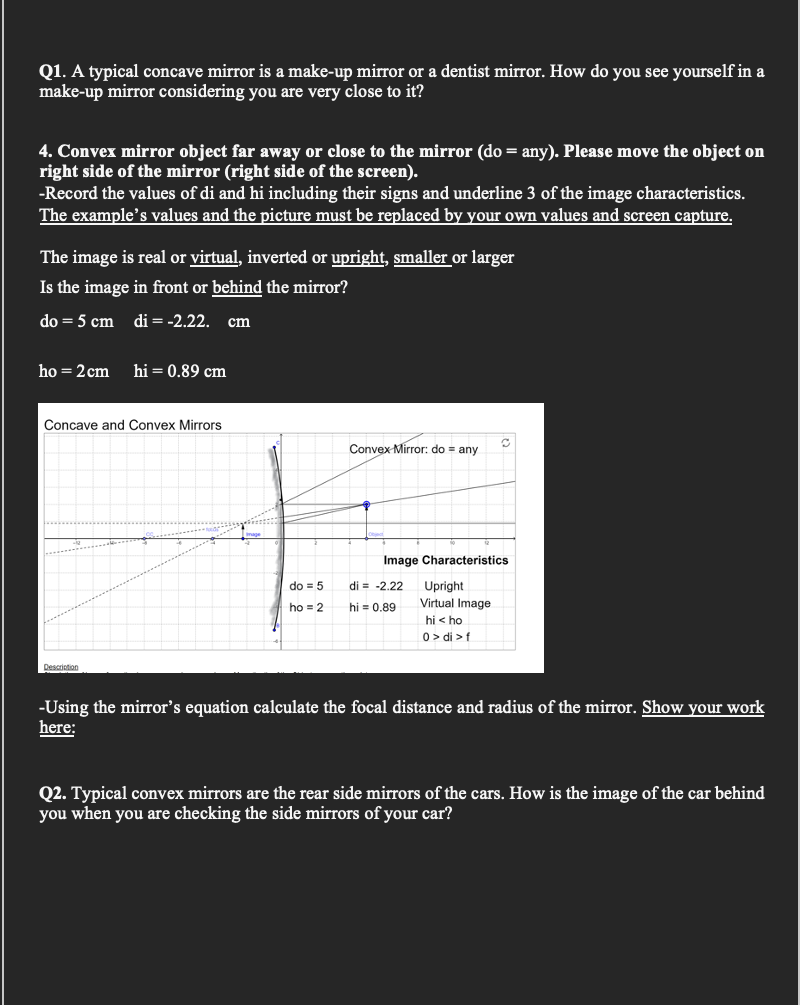
A spherical mirror is a reflective surface that can be concave or convex. Making the analogy with a spoon, the reflective surface of a concave mirror (spoon) is the one that "holds" the water and the reflective surface of a convex mirror (spoon) is the one that doesn't hold the water. Objective: identify the images characteristics for mirrors. -Use the link below to start the simulation for spherical mirrors. Click Here https://www.ophysics.com/110.html CC point is the center of curvature for the mirror, R is the radius A mirror has one focus point. Focal distance =R/2 do distance object di distance image ho height of the object hi height of the image For this lab keep all the values in cm. Be careful about the signs. f>0 concave mirror f 0 real image di 0 upright image hi 2f (place the object far away from the mirror). -Record the values of di and hi including their signs and underline 3 of the image characteristics. The example values and the picture below must be replaced by your own values and screen capture. The image is real or virtual, inverted or upright, smaller or larger. Is the image in front or behind the mirror? do 10 cm di = 6.67cm ho= 1.83 cm hi = -1.22 cm Concave and Convex Mirrors Concave Mirror: do > 2f. Description Image Characteristics Inverted Real Image do 10 ho=2 di = 6.67 hi = -1.33 hi Q1. A typical concave mirror is a make-up mirror or a dentist mirror. How do you see yourself in a make-up mirror considering you are very close to it? 4. Convex mirror object far away or close to the mirror (do = any). Please move the object on right side of the mirror (right side of the screen). -Record the values of di and hi including their signs and underline 3 of the image characteristics. The example's values and the picture must be replaced by your own values and screen capture. The image is real or virtual, inverted or upright, smaller or larger Is the image in front or behind the mirror? do = 5 cm di = -2.22. cm ho=2cm hi = 0.89 cm Concave and Convex Mirrors Description C Convex Mirror: do = any do 5 ho=2 di -2.22 hi = 0.89 Image Characteristics Upright Virtual Image hi di>f -Using the mirror's equation calculate the focal distance and radius of the mirror. Show your work here: Q2. Typical convex mirrors are the rear side mirrors of the cars. How is the image of the car behind you when you are checking the side mirrors of your car?
Step by Step Solution
There are 3 Steps involved in it

Get step-by-step solutions from verified subject matter experts
 Study Help