







Question: A. Suppose A = C5 and B = 6D (both in hexadecimal). Show the step by step result multiplying A and B, using Booth's algorithm.
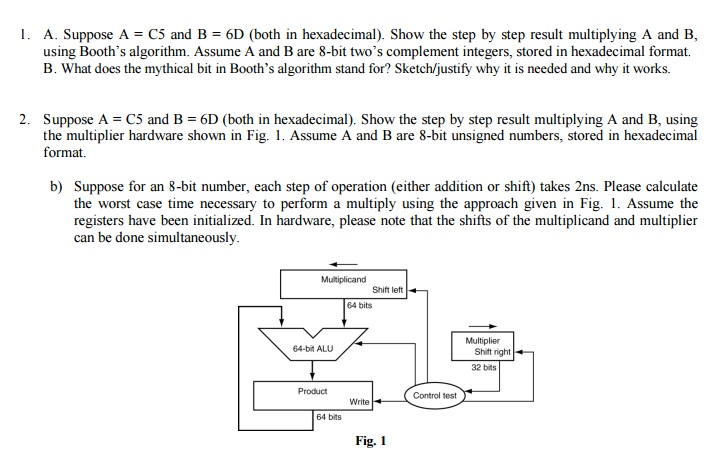
A. Suppose A = C5 and B = 6D (both in hexadecimal). Show the step by step result multiplying A and B, using Booth's algorithm. Assume A and Bare 8-bit two's complement integers, stored in hexadecimal format. B. What does the mythical bit in Booth's algorithm stand for? Sketch/justify why it is needed and why it works. Suppose A = C5 and B = 6D (both in hexadecimal). Show the step by step result multiplying A and B, using the multiplier hardware shown in Fig. 1. Assume A and Bare 8-bit unsigned numbers, stored in hexadecimal format. b) Suppose for an 8-bit number, each step of operation (either addition or shift) takes 2ns. Please calculate the worst case time necessary to perform a multiply using the approach given in Fig. 1. Assume the registers have been initialized. In hardware, please note that the shifts of the multiplicand and multiplier can be done simultaneously. A. Suppose A = C5 and B = 6D (both in hexadecimal). Show the step by step result multiplying A and B, using Booth's algorithm. Assume A and Bare 8-bit two's complement integers, stored in hexadecimal format. B. What does the mythical bit in Booth's algorithm stand for? Sketch/justify why it is needed and why it works. Suppose A = C5 and B = 6D (both in hexadecimal). Show the step by step result multiplying A and B, using the multiplier hardware shown in Fig. 1. Assume A and Bare 8-bit unsigned numbers, stored in hexadecimal format. b) Suppose for an 8-bit number, each step of operation (either addition or shift) takes 2ns. Please calculate the worst case time necessary to perform a multiply using the approach given in Fig. 1. Assume the registers have been initialized. In hardware, please note that the shifts of the multiplicand and multiplier can be done simultaneously
Step by Step Solution
There are 3 Steps involved in it

Get step-by-step solutions from verified subject matter experts
 Study Help