







Question: ( a ) test for difference in means between test vs controls for both products ( watch the # of stores ) , ( b
a test for difference in means between test vs controls for both products watch the # of storesb provide a unit sales forecast with and without ads use the "sales potential" information and the "represented X of sales" informationc estimate profits with and without ads for Arizona and California assume they are running the same ad that was used in the experiment, ie treat the development of the ads as a sunk cost, and the M ad budget in this rollout is the national total, ie you need to adjust it for Arizona and California combined based on population tracks with the retailer's national sales percentages
In other words, you only do AZ and CA; you need to think of them as one joint market; the M national ad budget needs to be prorated for AZCA based on population the and figure can be used for this purpose actual numbers are and
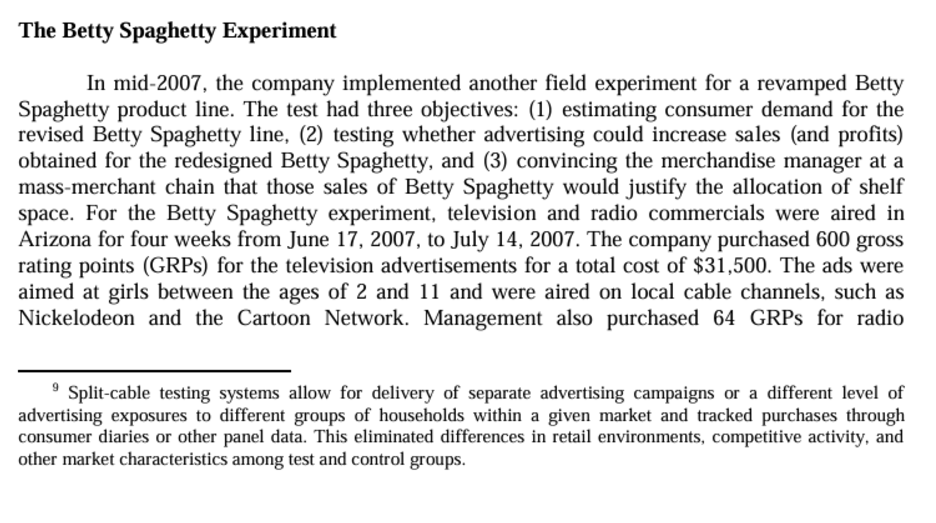
Splitcable testing systems allow for delivery of separate advertising campaigns or a different level of
advertising exposures to different groups of households within a given market and tracked purchases through
consumer diaries or other panel data. This eliminated differences in retail environments, competitive activity, and
other market characteristics among test and control groups.
commercials for a total cost of $ The radio commercials were aired during morning and evening commutes. Each of the television and radio programs selected for the commercials reached about of the population in Phoenix. The cost of developing the commercial through an outside agency was $
Management estimated that an equivalent ad budget for eight to ten weeks of preholiday advertising, factoring in certain economies as well as the higher seasonal cost of media, would be approximately $ million. The average retail selling price of Betty Spaghetty during the test was about $ Retailer and Ohio Art margins were about the same as for EAS, and respectively. Given that some time would be required to read the test, obtain shelf space, and ship product to stores, management estimated that the fourweek test market sales period represented about of the total remaining sales potential for the year.
Table reports weekly sales in Arizona stores test and in stores of the same mass merchant in California control for two versions of Betty Spaghetty. The stores represented of the retailer's Arizona sales and of California sales, respectively. Arizona and California represented and respectively, of the retailer's national sales, and that same retailer was expected to account for of total Betty Spaghetty sales. Management intended to use the test to help estimate Betty Spaghetty sales with and without advertising.
Table Weekly unit sales of Betty Spaghetty in test and control cities.
Data source: Ohio Art. Used with permission.
Splitcable testing systems allow for delivery of separate advertising campaigns or a different level of advertising exposures to different groups of households within a given market and tracked purchases through consumer diaries or other panel data. This eliminated differences in retail environments, competitive activity, and other market characteristics among test and control groups. commercials for a total cost of $ The radio commercials were aired during morning and evening commutes. Each of the television and radio programs selected for the commercials reached about of the population in Phoenix. The cost of developing the commercial through an outside agency was $
Management estimated that an equivalent ad budget for eight to ten weeks of preholiday advertising, factoring in certain economies as well as the higher seasonal cost of media, would be approximately $ million. The average retail selling price of Betty Spaghetty during the test was about $ Retailer and Ohio Art margins were about the same as for EAS, and respectively. Given that some time would be required to read the test, obtain shelf space, and ship product to stores, management estimated that the fourweek test market sales period represented about of the total remaining sales potential for the year.
Table reports weekly sales in Arizona stores test and in stores of the same mass merchant in California control for two versions of Betty Spaghetty. The stores represented of the retailer's Arizona sales and of California sales, respectively. Arizona and California represented and respectively, of the retailer's national sales, and that same retailer was expected to account for of total Betty Spaghetty sales. Management intended to use the test to help estimate Betty Spaghetty sales with and without advertising.
Table Weekly unit sales
Step by Step Solution
There are 3 Steps involved in it
1 Expert Approved Answer
Step: 1 Unlock

Question Has Been Solved by an Expert!
Get step-by-step solutions from verified subject matter experts
Step: 2 Unlock
Step: 3 Unlock
 Study Help