







Question: A three-phase algorithm performed by a Turing machine is listed below. The input alphabet of the machine is {a, #}, the tape alphabet is {a,
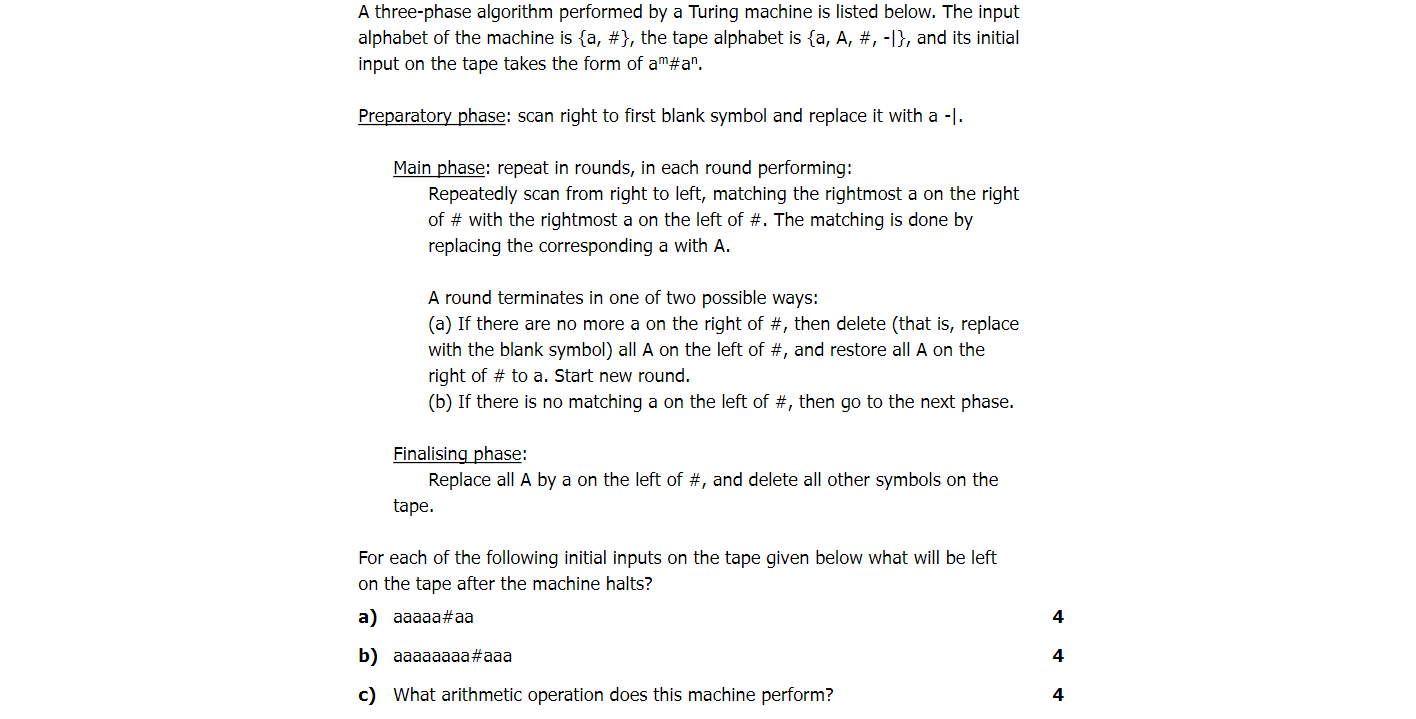
A three-phase algorithm performed by a Turing machine is listed below. The input alphabet of the machine is {a, #}, the tape alphabet is {a, A, #, -1}, and its initial input on the tape takes the form of am#a". Preparatory phase: scan right to first blank symbol and replace it with a -1. Main phase: repeat in rounds, in each round performing: Repeatedly scan from right to left, matching the rightmost a on the right of # with the rightmost a on the left of #. The matching is done by replacing the corresponding a with A. A round terminates in one of two possible ways: (a) If there are no more a on the right of #, then delete (that is, replace with the blank symbol) all A on the left of #, and restore all A on the right of # to a. Start new round. (b) If there is no matching a on the left of #, then go the next phase. Finalising phase: Replace all A by a on the left of #, and delete all other symbols on the tape. For each of the following initial inputs on the tape given below what will be left on the tape after the machine halts? a) aaaaa#aa 4 b) aaaaaaaa#aaa 4 c) What arithmetic operation does this machine perform? 4
Step by Step Solution
There are 3 Steps involved in it

Get step-by-step solutions from verified subject matter experts
 Study Help