



Question: A toroid with a four-sided cross-section is constructed with an inner radius R1 and outer radius R2. Each half of the toroid consists of a
A toroid with a four-sided cross-section is constructed with an inner radius R1 and outer radius R2. Each half of the toroid consists of a different material: Half A has relative permeability A and half B has relative permeability B (A, B>>1). A coil of NA turns is wound onto half A, both halves are of depth d and they fit perfectly together.
(a) Calculate the magnetic flux density, B, at radius r stating any assumptions made. (b) Calculate the inductance L of the toroid. What would be the inductance if the coil were shifted onto half B of the toroid? (c) A rectangular pulse of voltage V and duration T is applied to the coil. Calculate the peak flux circulating in the toroid, and mark this on a sketch of flux circulating in response to the voltage pulse. Assume that the initial flux is zero.
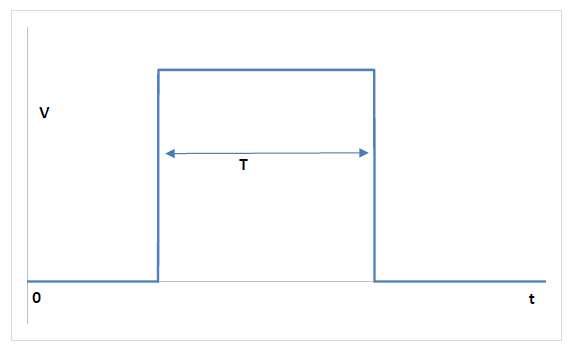
(d) Another coil of NB turns is added to half B of the toroid, and connected to a high impedance oscilloscope input. Sketch the voltage waveform observed in response to the voltage pulse of part above (Hint: assume it is ideal mutual inductance).
(e) If a steady current IA is applied to the coil on half A, what is the approximate flux density at point O in the centre of the toroid, and why is this so?
(f) An eddy current probe is used to discriminate between a defect breaking at the surface of a Stainless Steel 304L sample and internal defect at a depth of 1 mm. Estimate the operating frequency such that the lag in phase is equal to 45 degrees at this depth. Hence calculate the residual amplitude of the eddy current distribution in %.
V o V o
Step by Step Solution
There are 3 Steps involved in it

Get step-by-step solutions from verified subject matter experts