





Question: A. True/False (1 point each) ABC analysis classifies inventoried items into three groups, usually based on annual units or quantities used. The bullwhip effect was
A. True/False (1 point each) ABC analysis
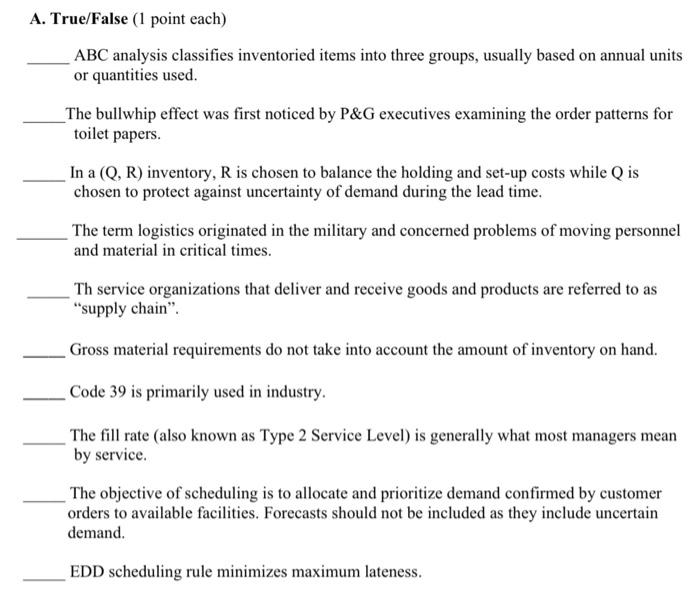
A. True/False (1 point each) ABC analysis classifies inventoried items into three groups, usually based on annual units or quantities used. The bullwhip effect was first noticed by P&G executives examining the order patterns for toilet papers. In a (Q, R) inventory, R is chosen to balance the holding and set-up costs while Q is chosen to protect against uncertainty of demand during the lead time. The term logistics originated in the military and concerned problems of moving personnel and material in critical times. Th service organizations that deliver and receive goods and products are referred to as "supply chain". Gross material requirements do not take into account the amount of inventory on hand. Code 39 is primarily used in industry. The fill rate (also known as Type 2 Service Level) is generally what most managers mean by service. The objective of scheduling is to allocate and prioritize demand confirmed by customer orders to available facilities. Forecasts should not be included as they include uncertain demand. EDD scheduling rule minimizes maximum lateness

Step by Step Solution

There are 3 Steps involved in it

1 Expert Approved Answer
Step: 1 Unlock blur-text-image

Question Has Been Solved by an Expert!

Get step-by-step solutions from verified subject matter experts

Step: 2 Unlock
Step: 3 Unlock

Students Have Also Explored These Related General Management Questions!