







Question: A. Using these data, state assumptions about functional dependencies among the columns of data. Justify your assumptions on the basis of these sample data and
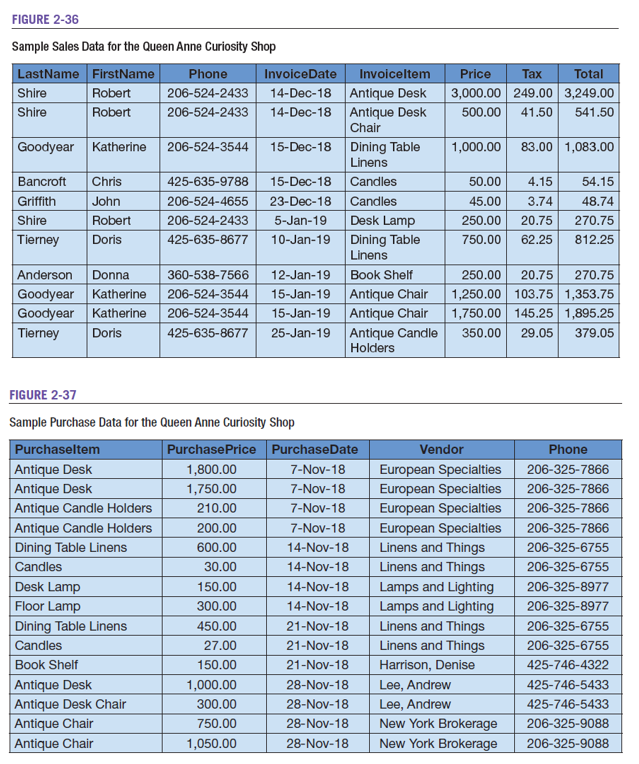
A. Using these data, state assumptions about functional dependencies among the columns of data. Justify your assumptions on the basis of these sample data and also on the basis of what you know about retail sales.
From the sample sales data it would appear:
B. Given your assumptions in part A, comment on the appropriateness of the following designs, are they not good or better or good or incomplete?
1. CUSTOMER (LastName, FirstName, Phone, InvoiceDate, InvoiceItem, Price, Tax, Total)
2. CUSTOMER (LastName, FirstName, Phone, InvoiceDate, InvoiceItem, Price, Tax, Total)
3. CUSTOMER (LastName, FirstName, Phone, InvoiceDate, InvoiceItem, Price, Tax, Total)
4. CUSTOMER (LastName, FirstName, Phone, InvoiceDate, InvoiceItem, Price, Tax, Total)
5. CUSTOMER (LastName, FirstName, Phone, InvoiceDate, InvoiceItem, Price, Tax, Total)
6. CUSTOMER (LastName, FirstName, Phone)
and:
SALE (InvoiceDate, InvoiceItem, Price, Tax, Total)
7. CUSTOMER (LastName, FirstName, Phone, InvoiceDate)
and:
SALE (InvoiceDate, InvoiceItem, Price, Tax, Total)
8. CUSTOMER (LastName, FirstName, Phone)
and:
SALE (InvoiceDate, InvoiceItem, Price, Tax, Total, LastName, FirstName)
C. Modify what you consider to be the best design in part B to include surrogate ID columns called CustomerID and SaleID. How does this improve the design?
D. Modify the design in part C by breaking SALE into two relations named SALE and SALE_ITEM. Modify columns and add additional columns as you think necessary. How does this improve the design?
E. Given your assumptions, comment on the appropriateness of the following designs, are they not good or better or good or incomplete?
1. PURCHASE (PurchaseItem, PurchasePrice, PurchaseDate, Vendor, Phone)
2. PURCHASE (PurchaseItem, PurchasePrice, PurchaseDate, Vendor, Phone)
3. PURCHASE (PurchaseItem, PurchasePrice, PurchaseDate, Vendor, Phone)
4. PURCHASE (PurchaseItem, PurchasePrice, PurchaseDate, Vendor, Phone)
5. PURCHASE (PurchaseItem, PurchasePrice, PurchaseDate)
and:
VENDOR (Vendor, Phone)
6. PURCHASE (PurchaseItem, PurchasePrice, PurchaseDate, Vendor)
and:
VENDOR (Vendor, Phone)
7. PURCHASE (PurchaseItem, PurchasePrice, PurchaseDate, Vendor)
and:
VENDOR (Vendor, Phone)
F. Modify what you consider to be the best design in part E to include surrogate ID columns called PurchaseID and VendorID. How does this improve the design?
G. The relations in your design from part D and part F are not connected. Modify the database design so that sales data and purchase data are related.
Sample Sales Data for the Queen Anne Curiosity Shop FIGURE 2-37 Sample Purchase Data for the Queen Anne Curiosity Shop
Step by Step Solution
There are 3 Steps involved in it

Get step-by-step solutions from verified subject matter experts
 Study Help