







Question: A voting algorithm for distributed mutual exclusion has each process VOTE for which process can hold the mutual exclusion. A voting algorithm for distributed mutual
 A voting algorithm for distributed mutual exclusion has each process VOTE for which process can hold the mutual exclusion.
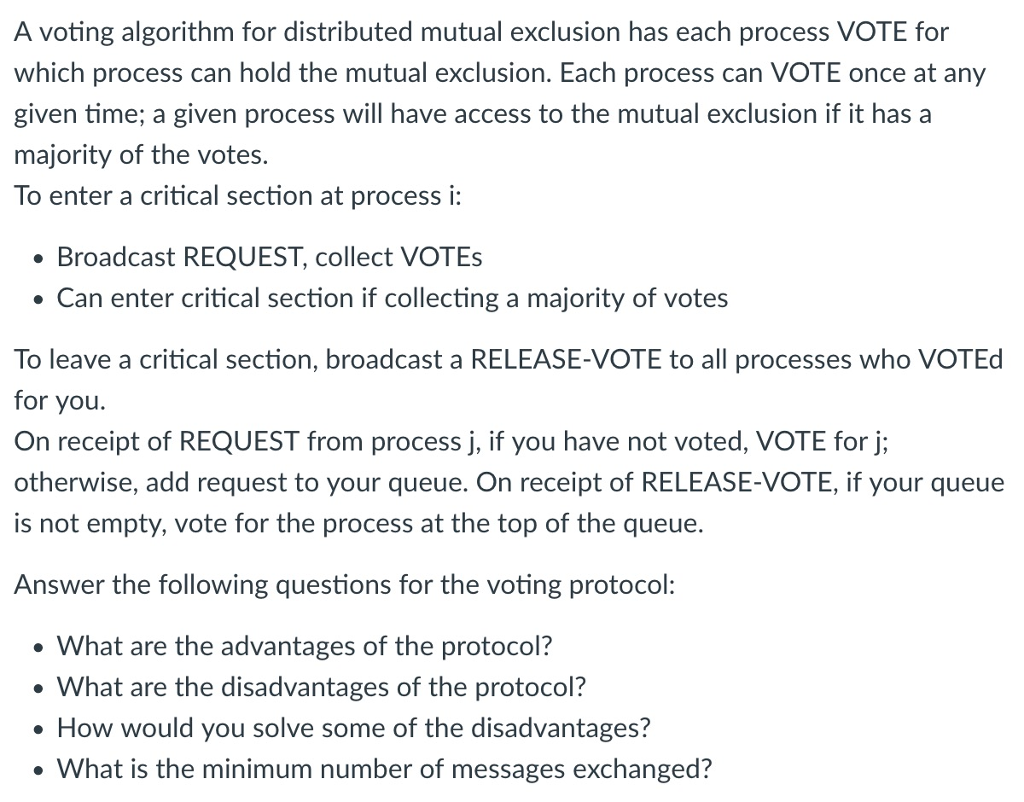
A voting algorithm for distributed mutual exclusion has each process VOTE for which process can hold the mutual exclusion. Each process can VOTE once at any given time; a given process will have access to the mutual exclusion if it has a majority of the votes. To enter a critical section at process i: Broadcast REQUEST, collect VOTEs Can enter critical section if collecting a majority of votes To leave a critical section, broadcast a RELEASE-VOTE to all processes who VOTEd for you. On receipt of REQUEST from process j, if you have not voted, VOTE for j; otherwise, add request to your queue. On receipt of RELEASE-VOTE, if your queue is not empty, vote for the process at the top of the queue. Answer the following questions for the voting protocol: . What are the advantages of the protocol? What are the disadvantages of the protocol? How would you solve some of the disadvantages? . What is the minimum number of messages exchanged
Step by Step Solution
There are 3 Steps involved in it

Get step-by-step solutions from verified subject matter experts
 Study Help