



Question: a, what force Pult is required to cause the pin to fail in shear? (Disregard friction between the plates.) Pin 1= 14 mm Gusset
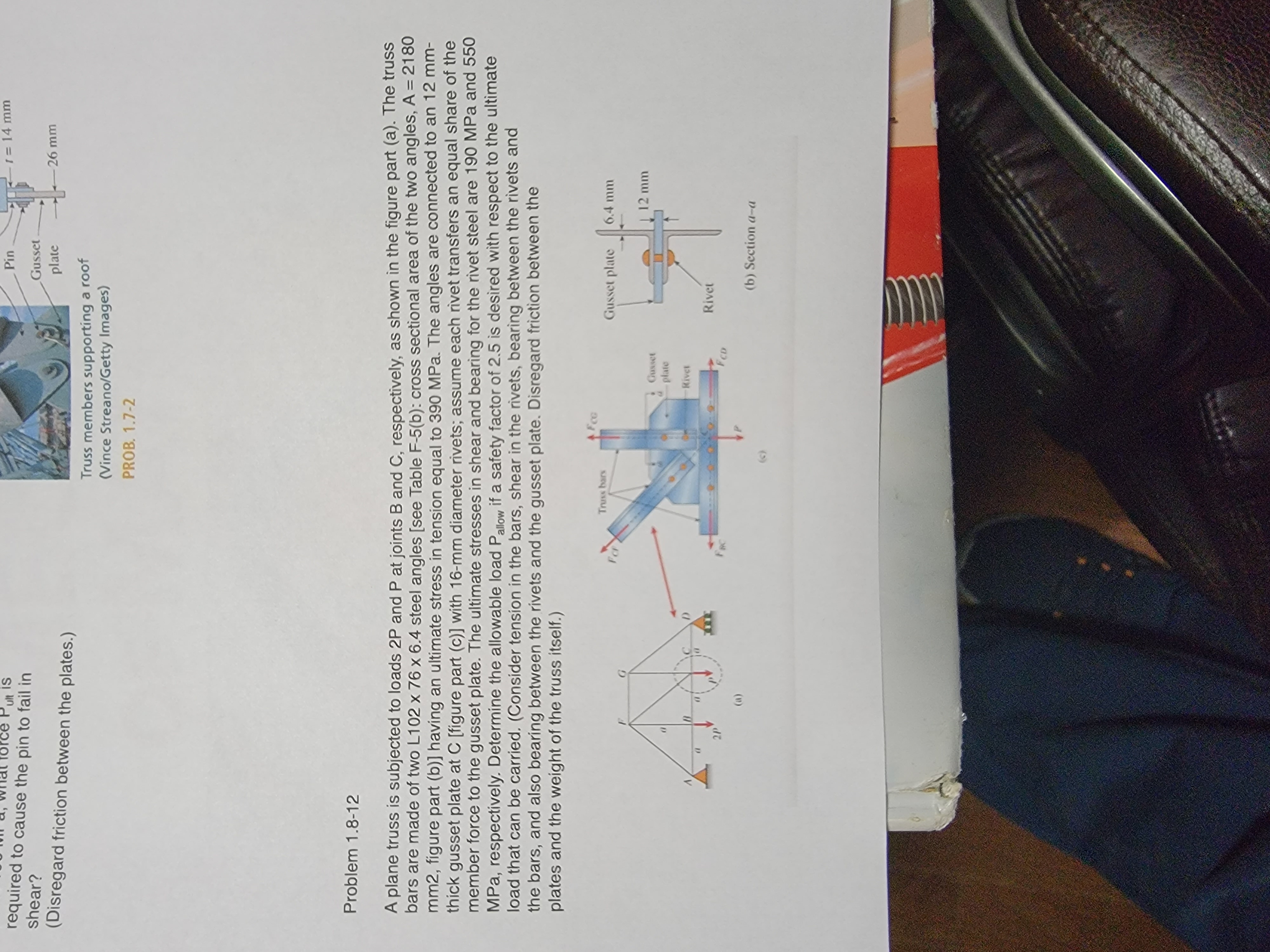
a, what force Pult is required to cause the pin to fail in shear? (Disregard friction between the plates.) Pin 1= 14 mm Gusset plate 26 mm Truss members supporting a roof (Vince Streano/Getty Images) PROB. 1.7-2 Problem 1.8-12 A plane truss is subjected to loads 2P and P at joints B and C, respectively, as shown in the figure part (a). The truss bars are made of two L102 x 76 x 6.4 steel angles [see Table F-5(b): cross sectional area of the two angles, A = 2180 mm2, figure part (b)] having an ultimate stress in tension equal to 390 MPa. The angles are connected to an 12 mm- thick gusset plate at C [figure part (c)] with 16-mm diameter rivets; assume each rivet transfers an equal share of the member force to the gusset plate. The ultimate stresses in shear and bearing for the rivet steel are 190 MPa and 550 MPa, respectively. Determine the allowable load P if a safety factor of 2.5 is desired with respect to the ultimate load that can be carried. (Consider tension in the bars, shear in the rivets, bearing between the rivets and the bars, and also bearing between the rivets and the gusset plate. Disregard friction between the plates and the weight of the truss itself.) allow 2P (11) D m FCG Truss bars (c) Gusset plate Rivet FCD Gusset plate 6.4 mm 12 mm Rivet (b) Section a-a
Step by Step Solution
There are 3 Steps involved in it

Get step-by-step solutions from verified subject matter experts