







Question: a. What is func in this function? Provide description and how func would be entered. b. What is es? Provide definition. How can you calculate
a. What is func in this function? Provide description and how func would be entered.
b. What is es? Provide definition. How can you calculate an es if you want n number of significant digits in your final answer? c. Why is iter=iter+1 being used? d. What is ea? e. When does the while loop stop?
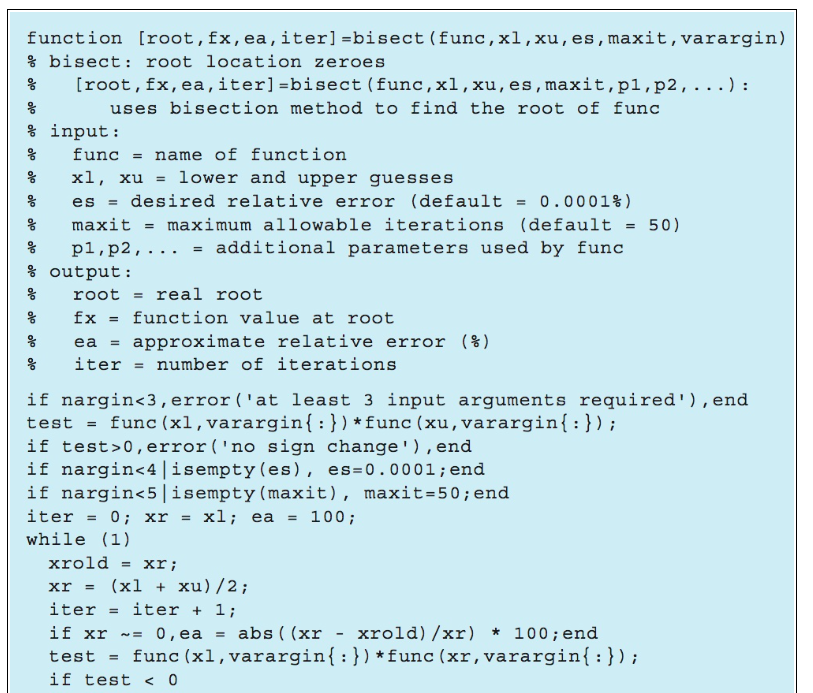
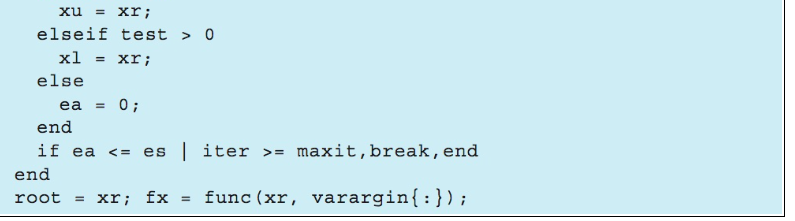
function [root,fx,ea,iter]-bisect (func,xl,xu,es,maxit,varargin) % bisect: root location zeroes [root, fx, ea, iter] =bisect (func , xl , xu, es, maxit, p1,p2, . . . ) : uses bisection method to find the root of func % input: func = name of function xl, xu lower and upper guesses % es desired relative error (default = 0.0001%) maxit maximum allowable iterations (default = 50) % pl,p2, . . .additional parameters used by func output: rot real root fxfunction value at root ea = approximate relative error (%) % iter= number of iterations if nargin0,error ('no sign change', end if nargin
Step by Step Solution
There are 3 Steps involved in it

Get step-by-step solutions from verified subject matter experts
 Study Help