







Question: (a) What is the probability that a randomly selected worker primarily drives a car or takes public transportation to work? P(worker drives a car or
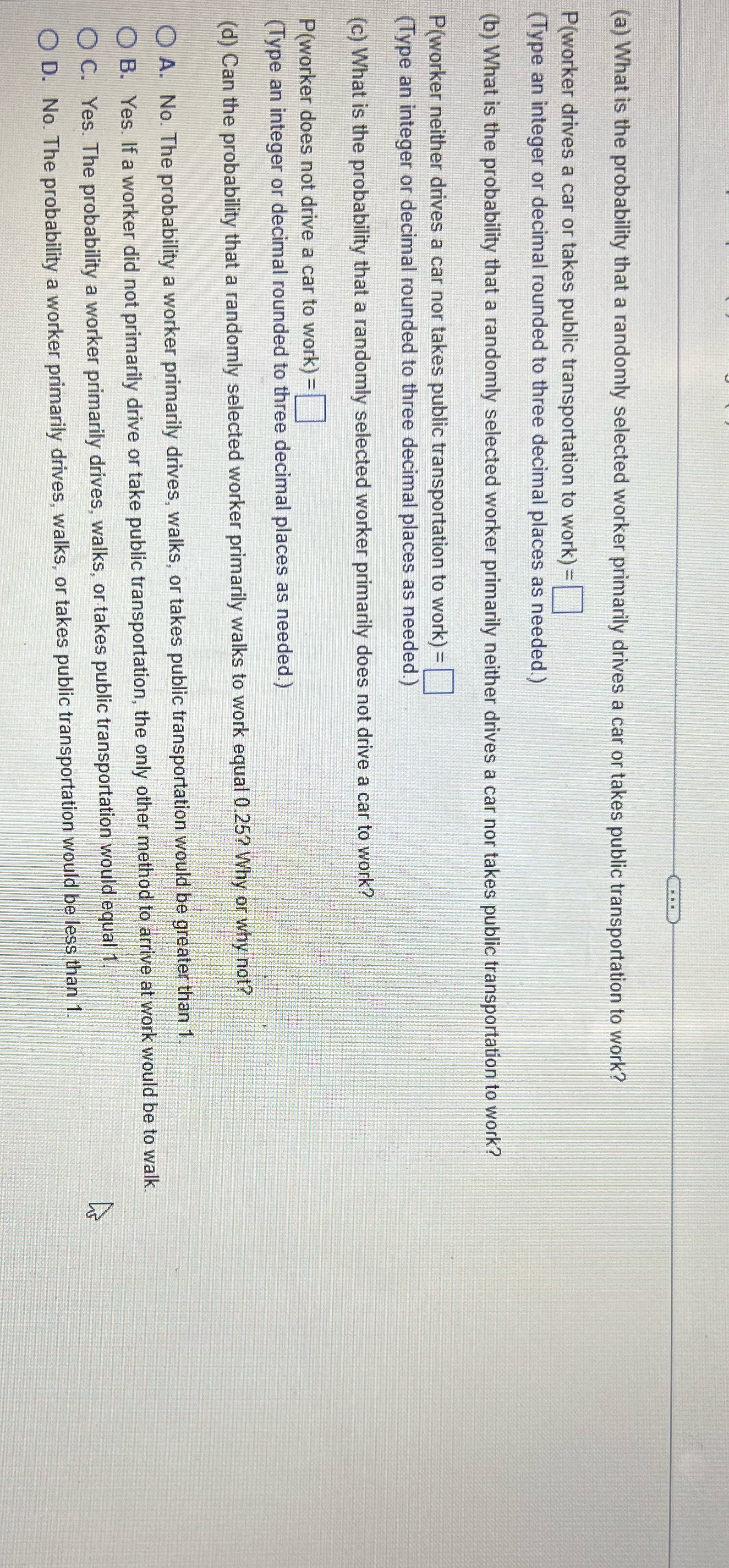
(a) What is the probability that a randomly selected worker primarily drives a car or takes public transportation to work? P(worker drives a car or takes public transportation to work) = (Type an integer or decimal rounded to three decimal places as needed.) (b) What is the probability that a randomly selected worker primarily neither drives a car nor takes public transportation to work? P(worker neither drives a car nor takes public transportation to work) = (Type an integer or decimal rounded to three decimal places as needed.) (c) What is the probability that a randomly selected worker primarily does not drive a car to work? P(worker does not drive a car to work) = (Type an integer or decimal rounded to three decimal places as needed.) (d) Can the probability that a randomly selected worker primarily walks to work equal 0.25? Why or why not? A. No. The probability a worker primarily drives, walks, or takes public transportation would be greater than 1. O B. Yes. If a worker did not primarily drive or take public transportation, the only other method to arrive at work would be to walk. O C. Yes. The probability a worker primarily drives, walks, or takes public transportation would equal 1. O D. No. The probability a worker primarily drives, walks, or takes public transportation would be less than 1
Step by Step Solution
There are 3 Steps involved in it

Get step-by-step solutions from verified subject matter experts
 Study Help