Question: A) why one project is always superior to another project. B) how decisions concerning mutually exclusive projects are derived. C) how the duration of a
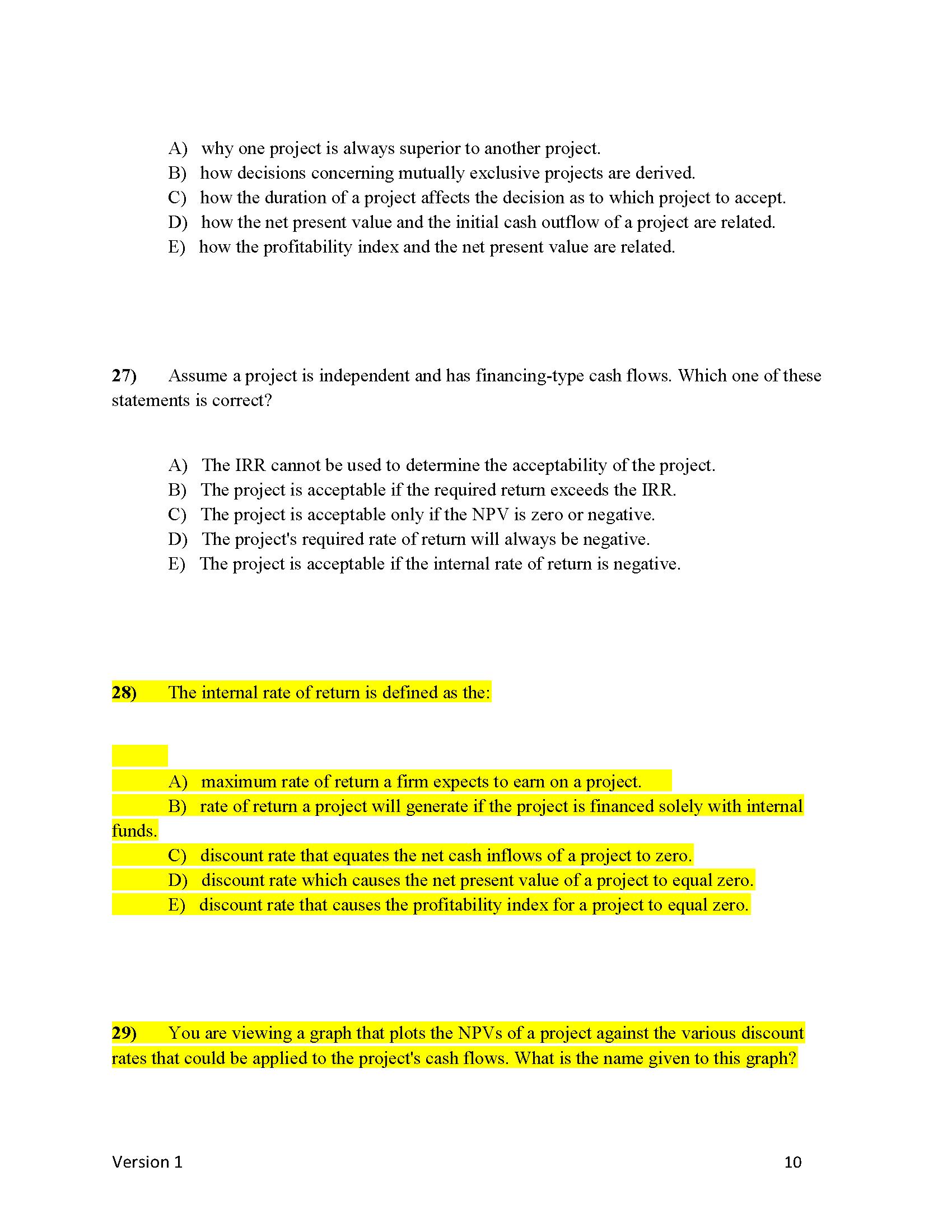
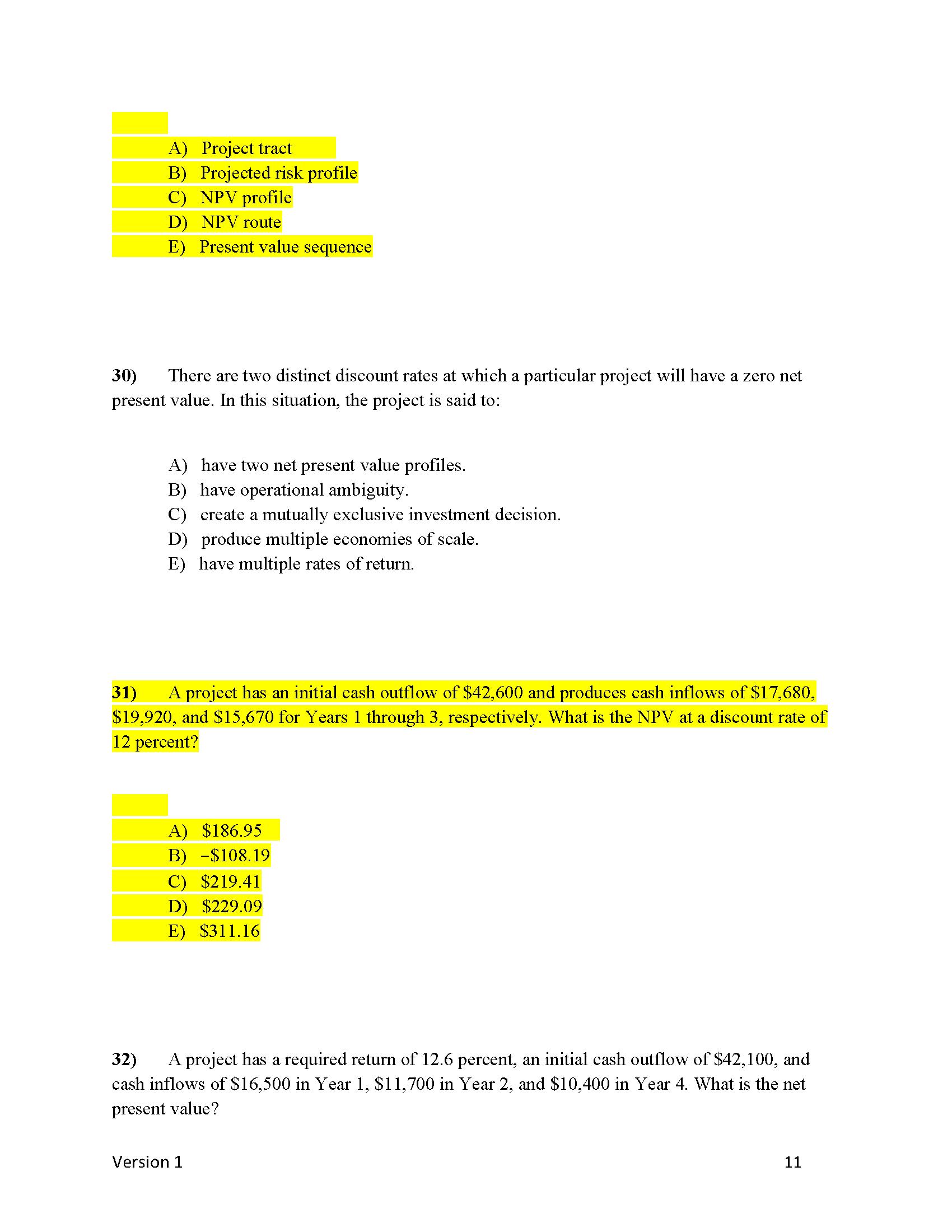
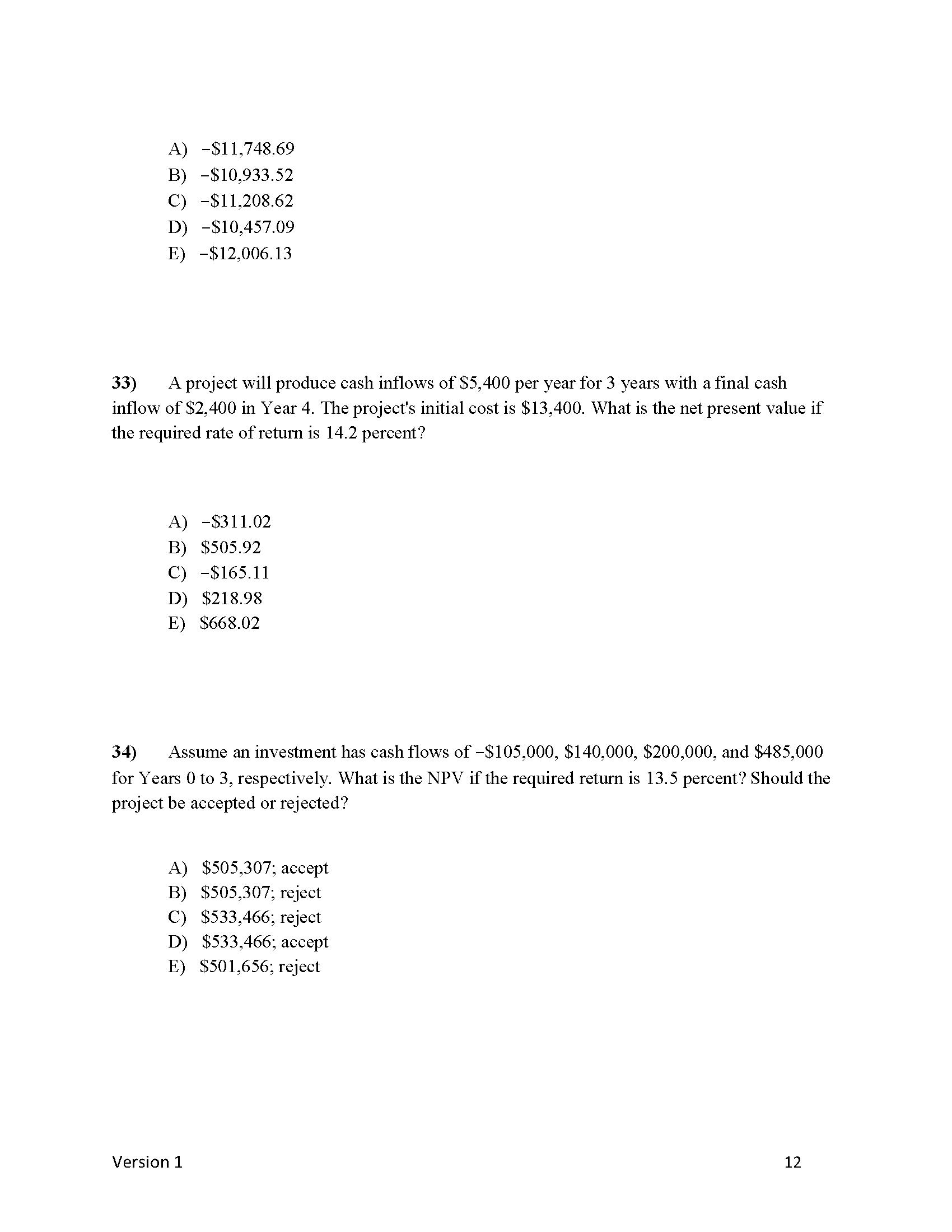
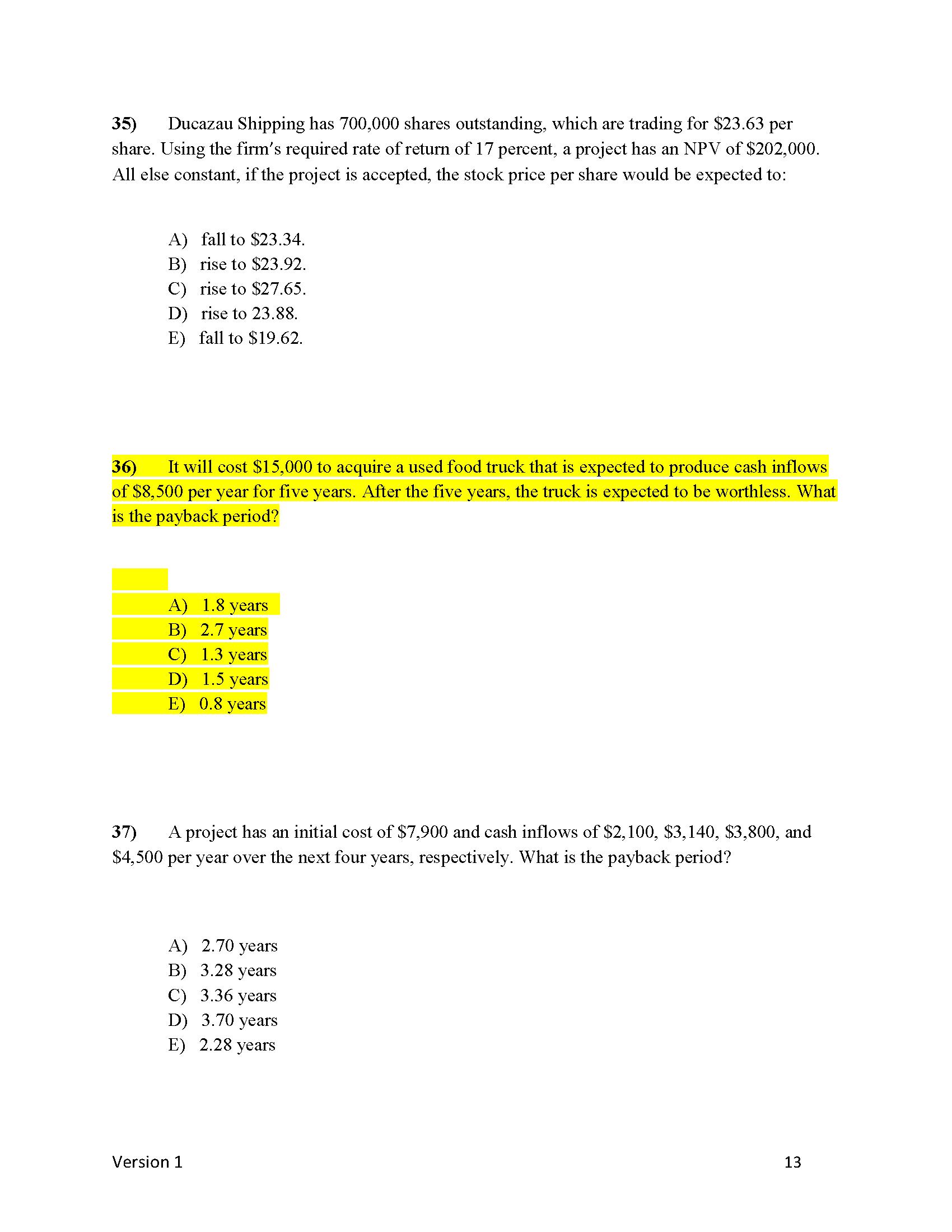
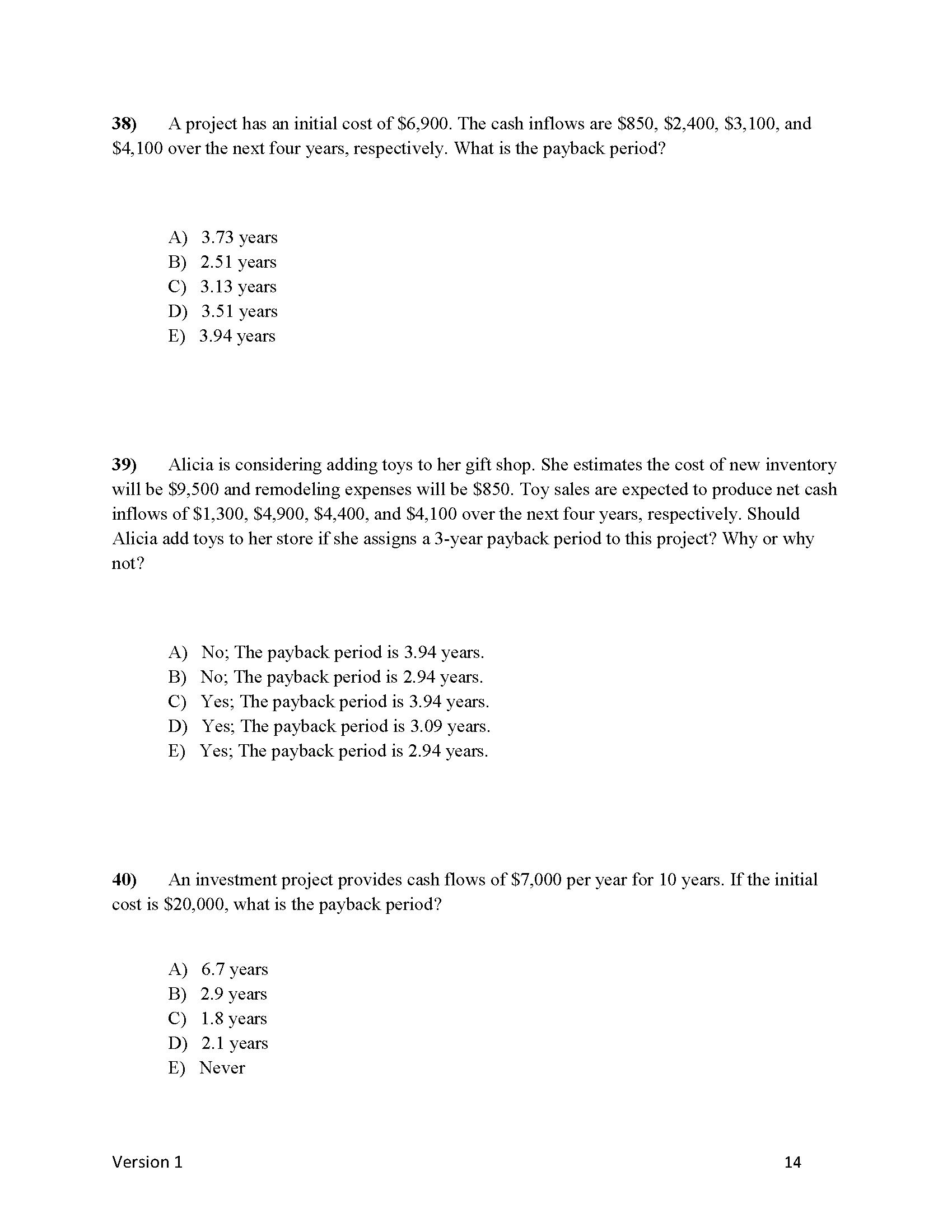
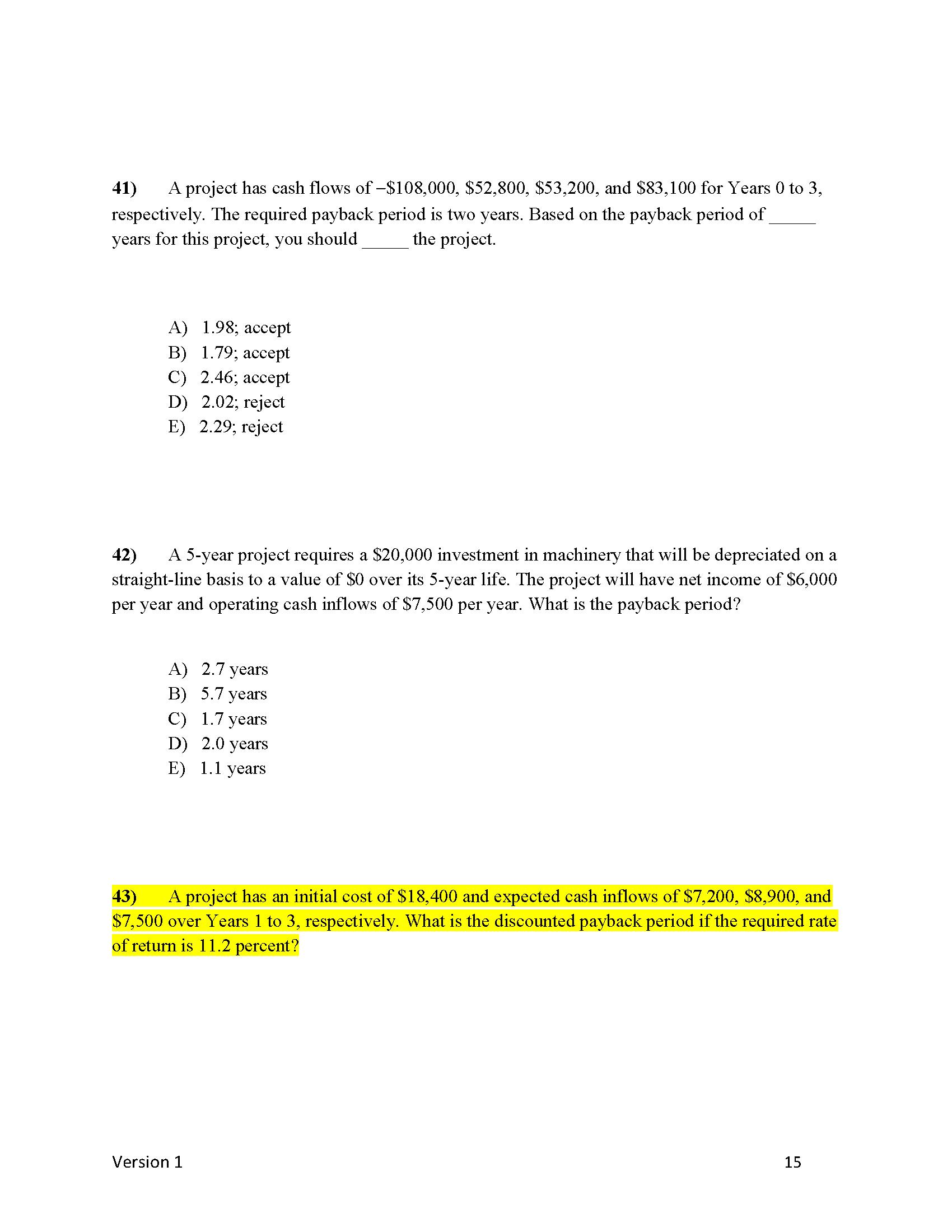
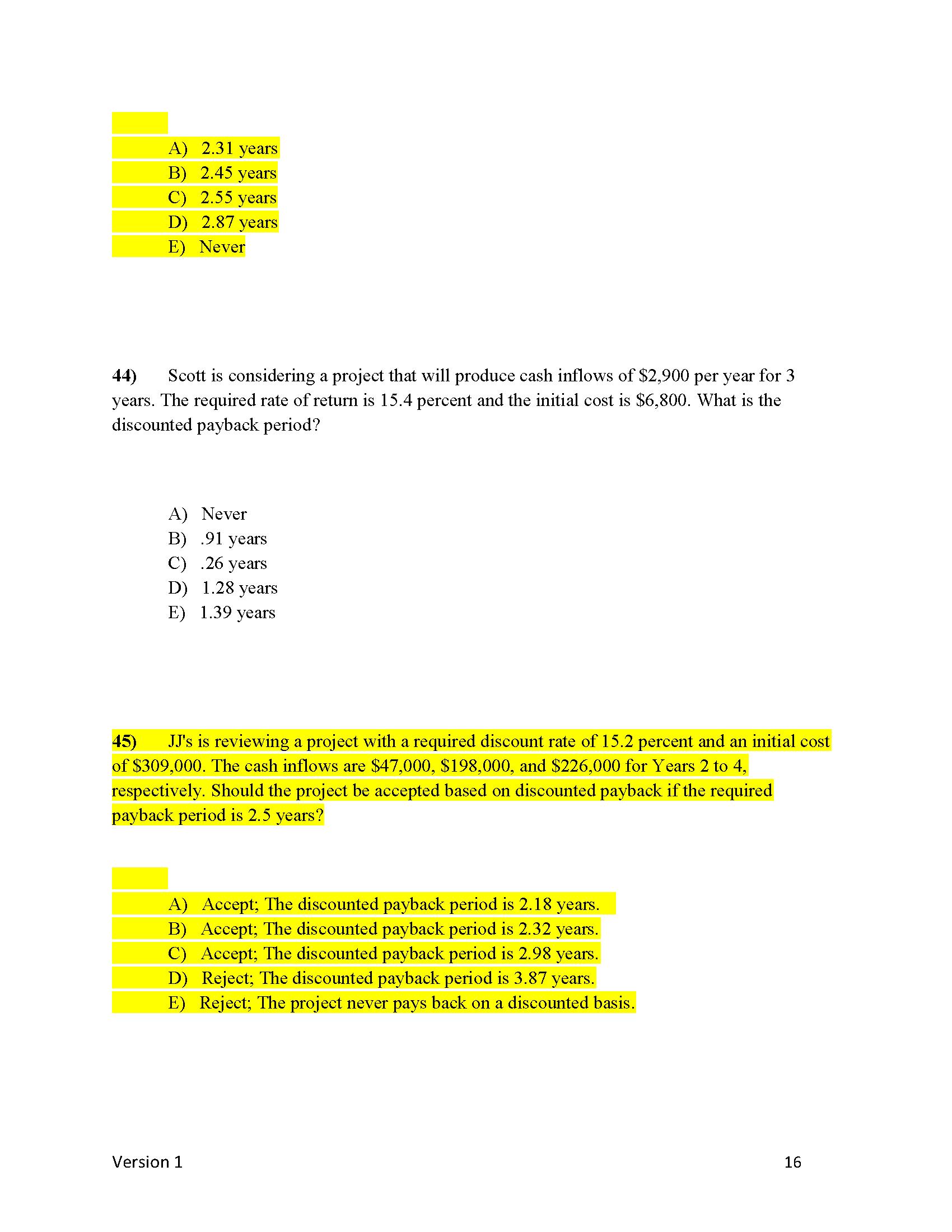
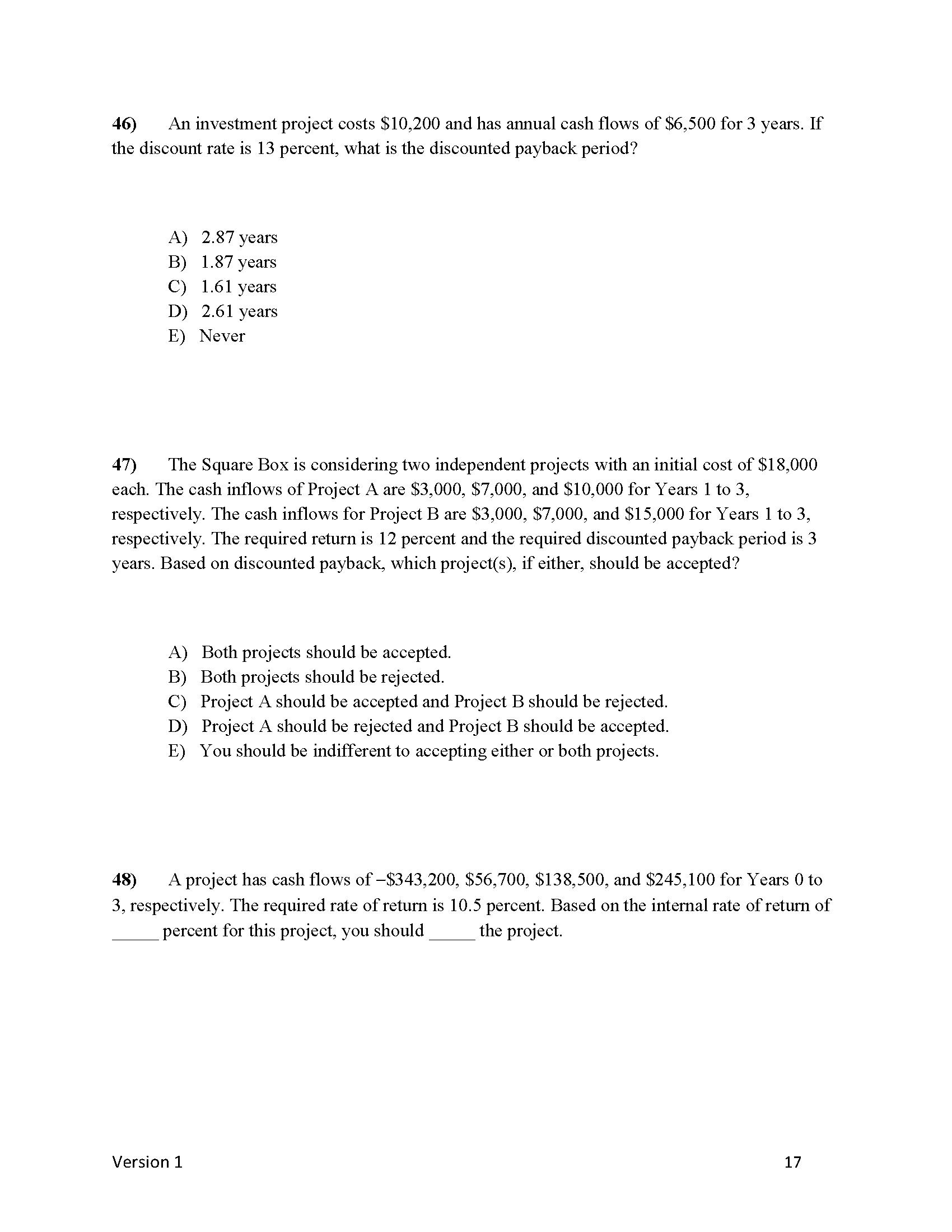
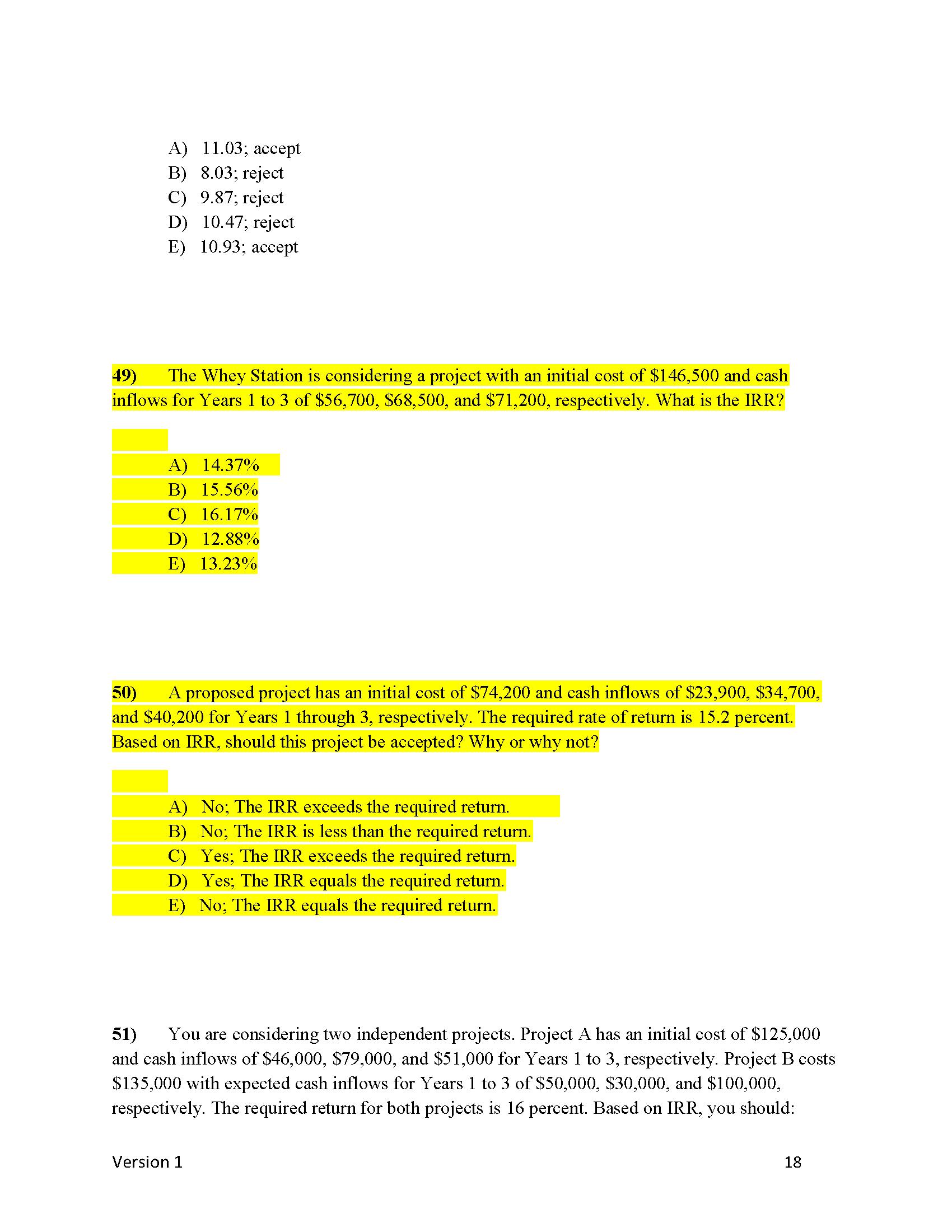
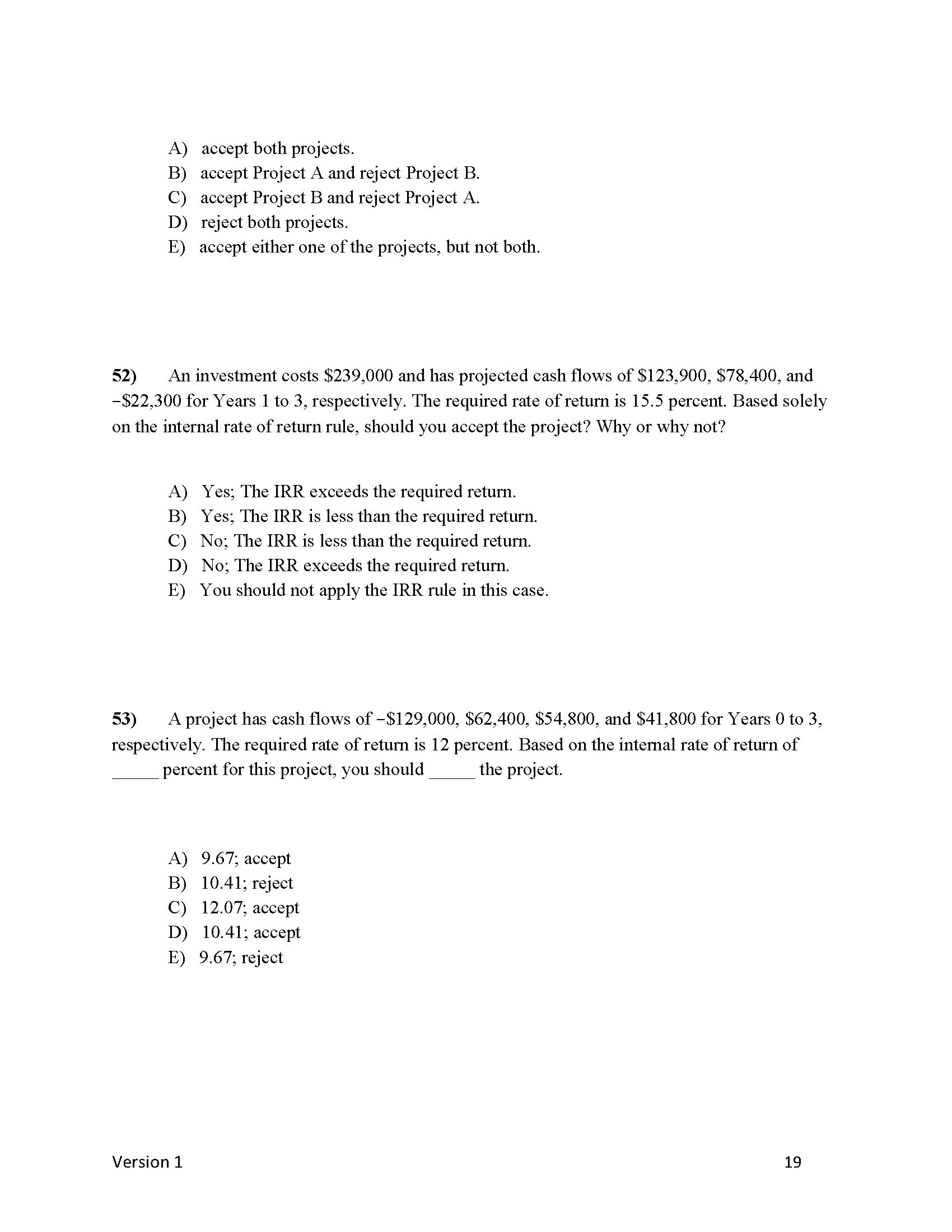
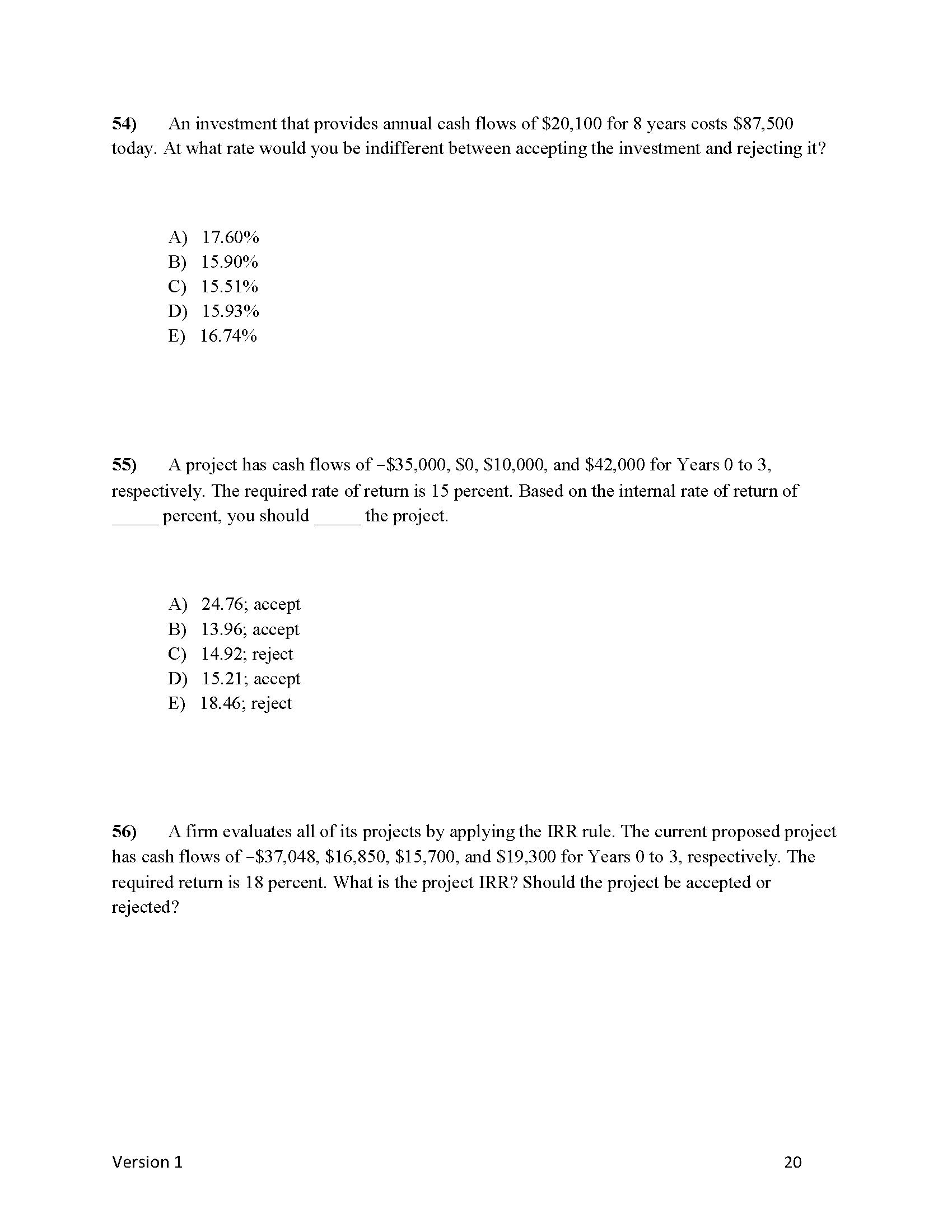
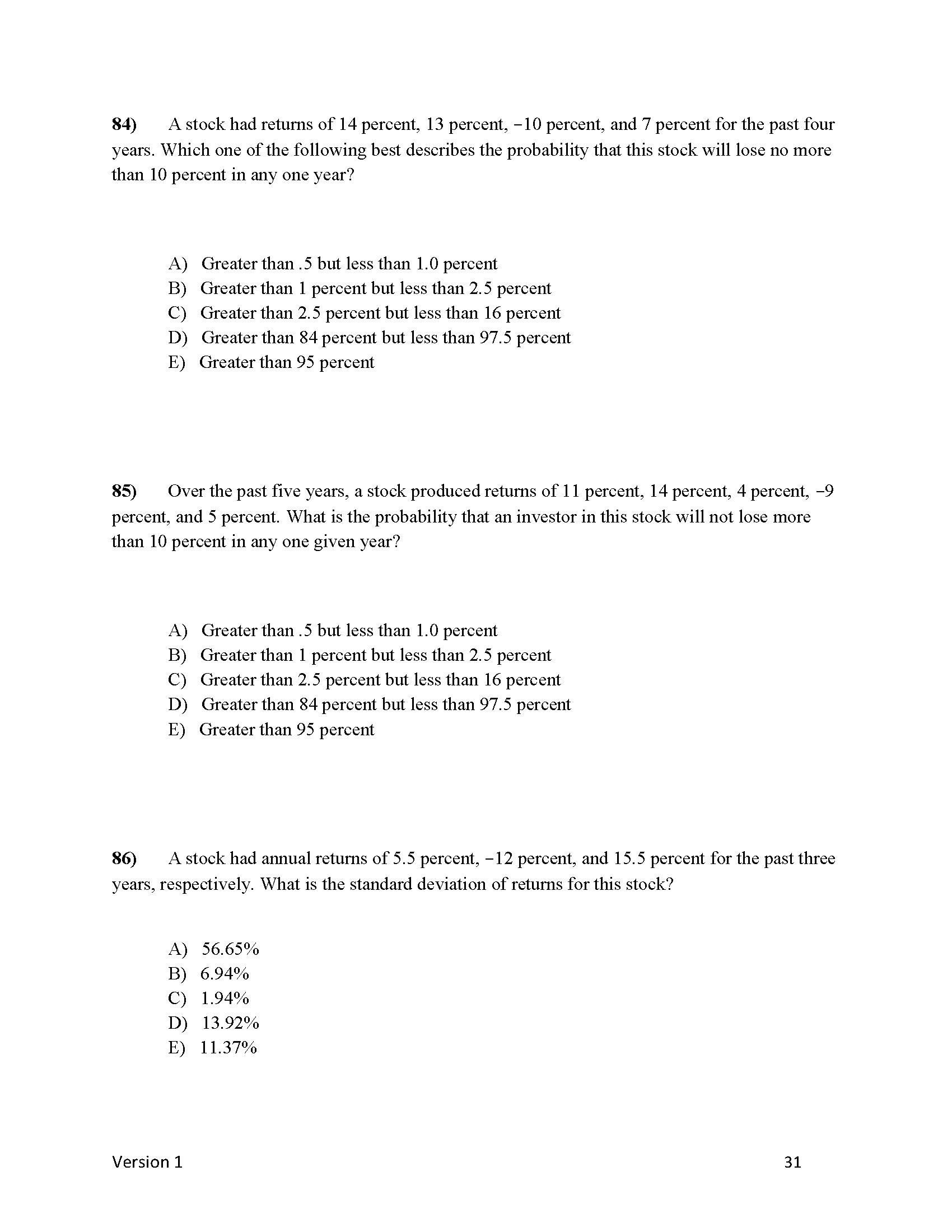
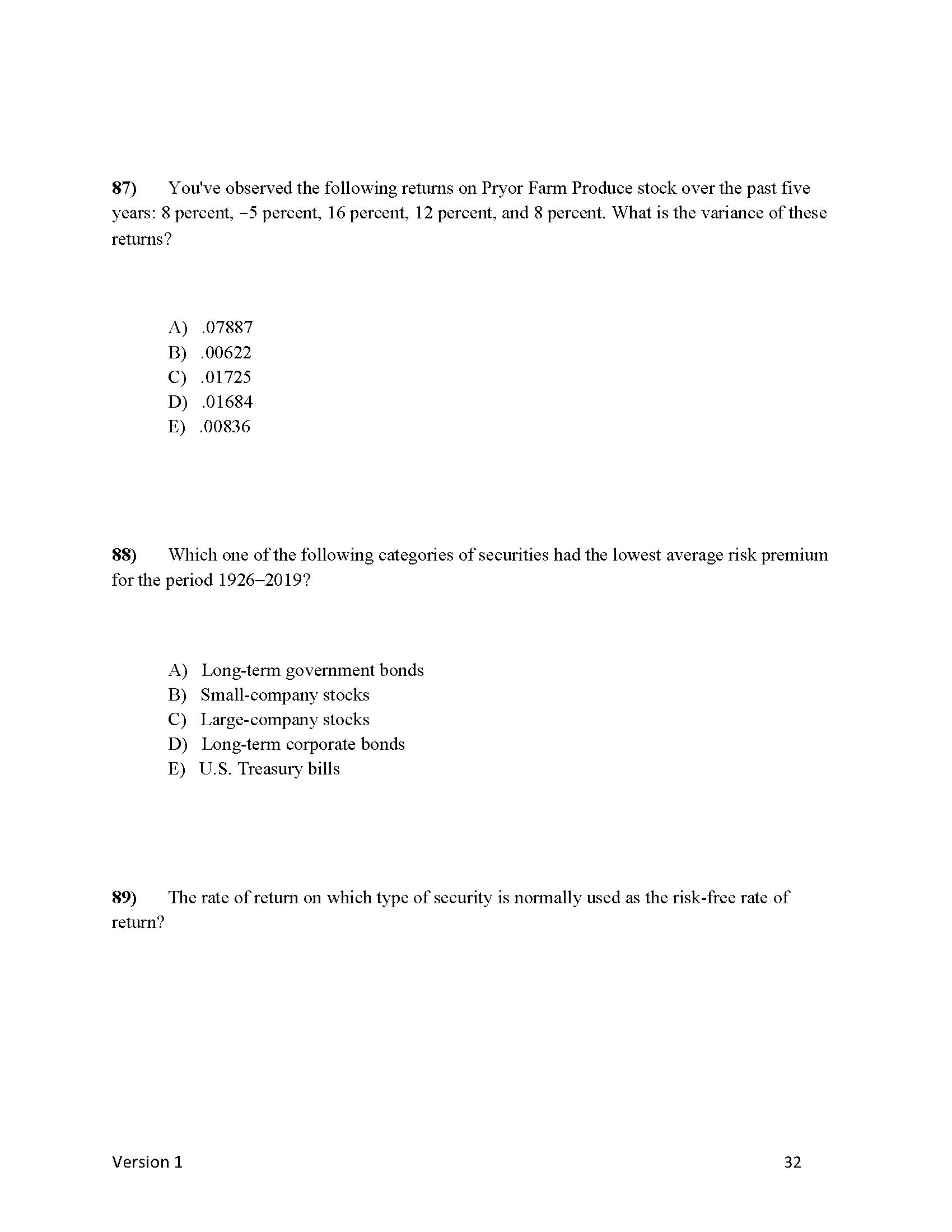
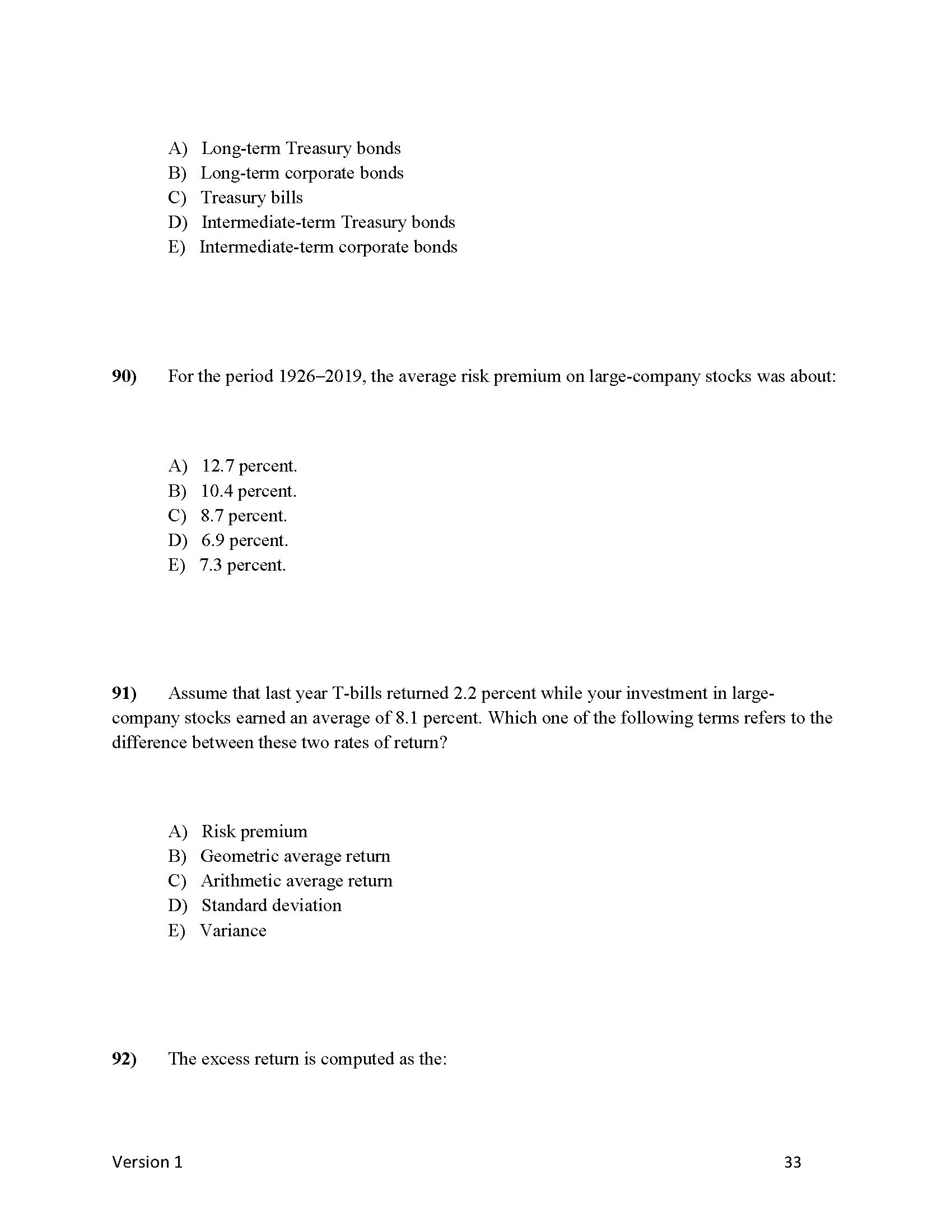
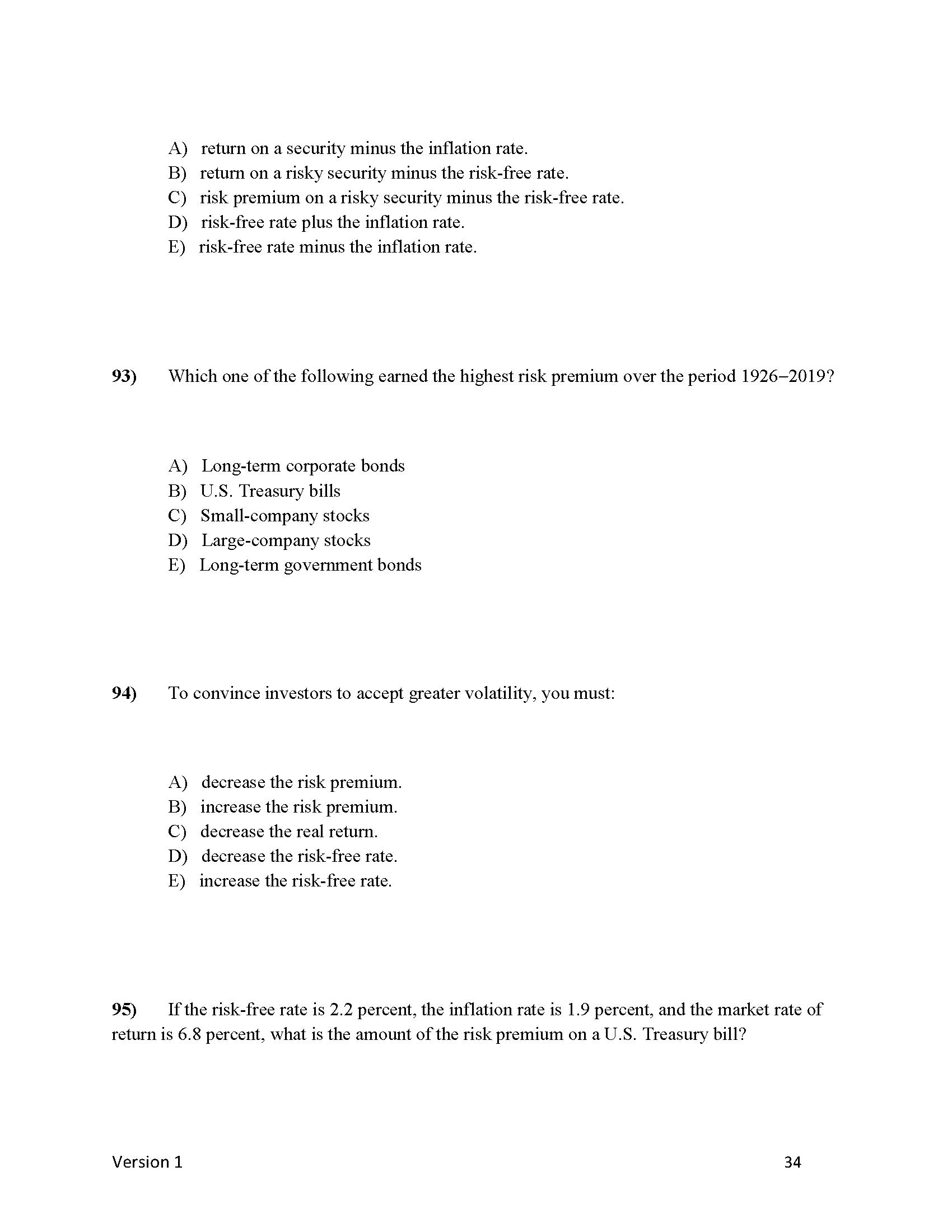
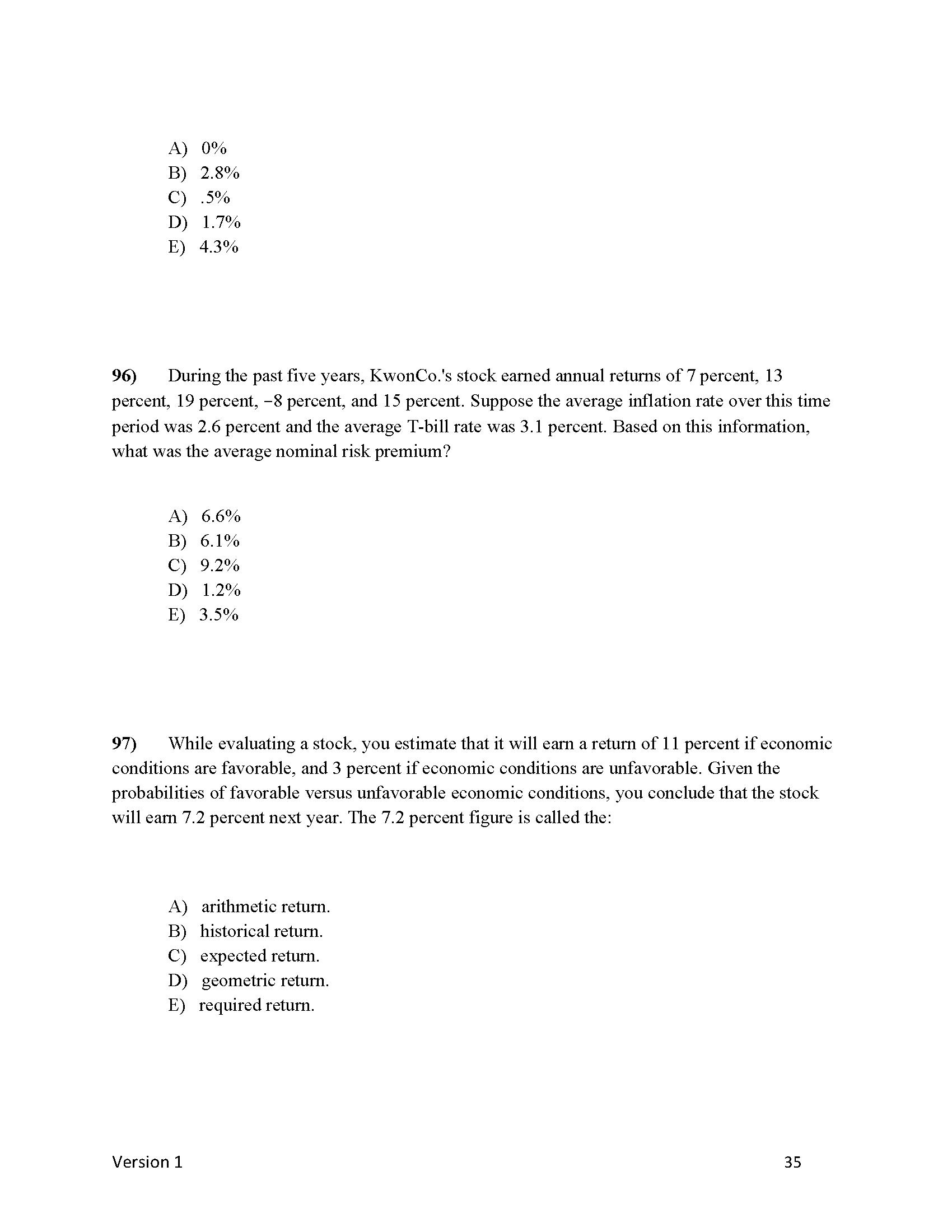
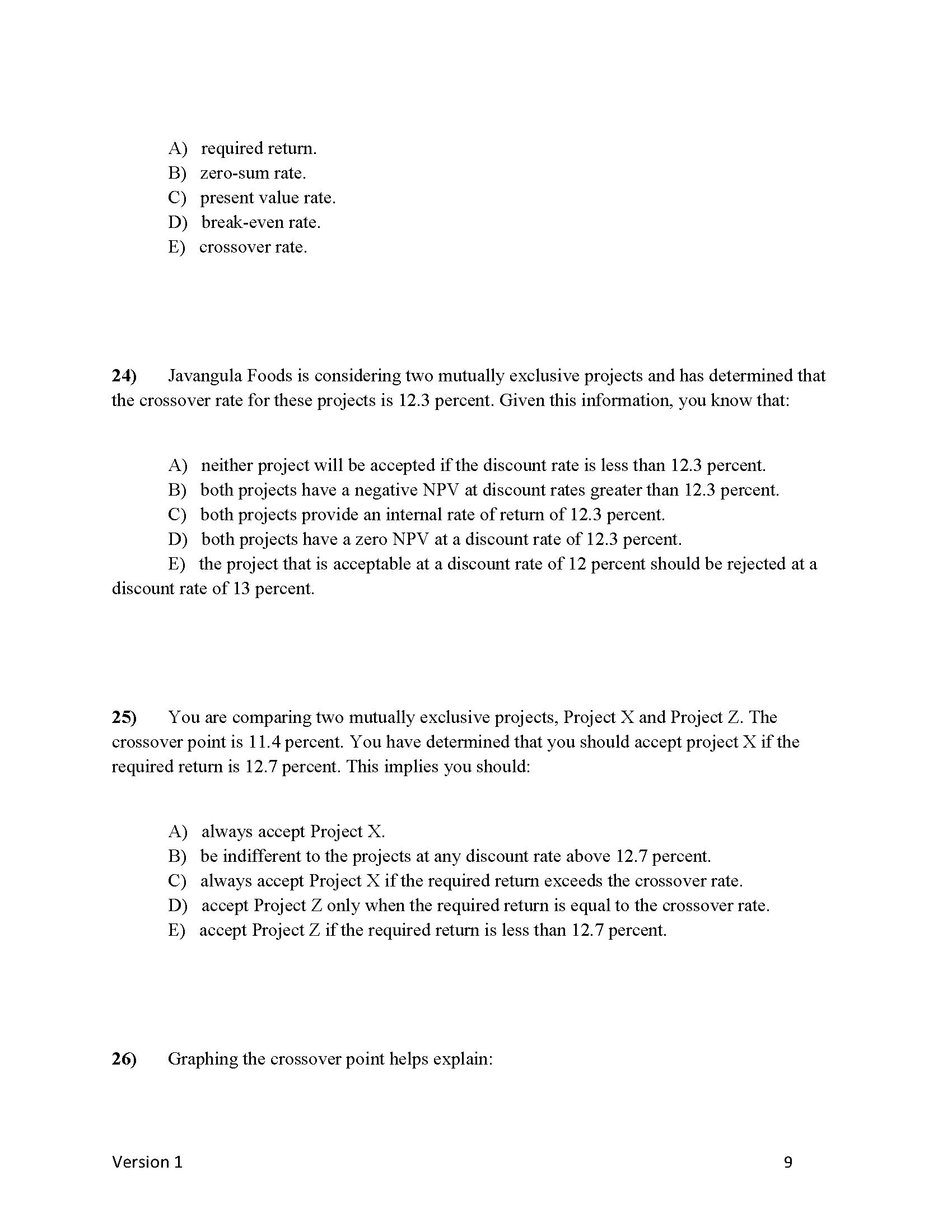
A) why one project is always superior to another project. B) how decisions concerning mutually exclusive projects are derived. C) how the duration of a project affects the decision as to which project to accept. D) how the net present value and the initial cash outow of a project are related. E) how the protability index and the net present value are related. 27) Assume aproject is independent and has nancing-type cash ows. Which one of these statements is correct? A) The IRR cannot be used to determine the acceptability of the project. B) The project is acceptable if the required return exceeds the IRR. C) The project is acceptable only if the NPV is zero or negative. D) The project's required rate of return will always be negative. E) The project is acceptable if the internal rate of return is negative. 28) The internal rate of return is defined as the: A) maximum rate of return a firm expects to earn on a project. B) rate of return a project will generate if the project is nanced solely with internal funds. C) discount rate that equates the net cash inows of a project to zero. D) discount rate which causes the net present value of a project to equal zero. E) discount rate that causes the protability index for a project to equal zero. 29) You are viewing a graph that plots the NPVs of a project against the various discount rates that could be applied to the project's cash ows. What is the name given to this graph? Version 1 10 A) Project tract B) Projected risk profile C) NPV profile D) NPV route E) Present value sequence 30) There are two distinct discount rates at which a particular project will have a zero net present value. In this situation, the project is said to: A) have two net present value profiles. B) have operational ambiguity. C) create a mutually exclusive investment decision. D) produce multiple economies of scale. E) have multiple rates of return. 31) A project has an initial cash outflow of $42,600 and produces cash inflows of $17,680, $19,920, and $15,670 for Years 1 through 3, respectively. What is the NPV at a discount rate of 12 percent? A) $186.95 B) -$108.19 C) $219.41 D) $229.09 E) $311.16 32) A project has a required return of 12.6 percent, an initial cash outflow of $42,100, and cash inflows of $16,500 in Year 1, $1 1, 700 in Year 2, and $10,400 in Year 4. What is the net present value? Version 1 11A) $11,748.69 B) $10,933.52 C) $ll,208.62 D) -$10,457.09 E) -$l2,006.l3 33) A project will produce cash inows of $5,400 per year for 3 years with a nal cash inow of $2,400 in Year 4. The project's initial cost is $13,400. What is the net present value if the required rate of return is 14.2 percent? A) $311.02 B) $505.92 C) $165.11 D) $218.98 E) $668.02 34) Assume an investment has cash flows of $105,000, $140,000, $200,000, and $485,000 for Years 0 to 3, respectively. What is the NPV if the required return is 13.5 percent? Should the project be accepted or rejected? A) $505,307; accept B) $505,307; reject C) $533,466; reject D) $533,466; accept E) $501,656; reject Version 1 12 35) Ducazau Shipping has 700,000 shares outstanding, which are trading for $23.63 per share. Using the firm's required rate of return of 17 percent, a project has an NPV of $202,000. All else constant, if the project is accepted, the stock price per share would be expected to: A) fall to $23.34. B) rise to $23.92. C) rise to $27.65. D) rise to 23.88. E) fall to $19.62. 36) It will cost $15,000 to acquire a used food truck that is expected to produce cash inflows of $8,500 per year for five years. After the five years, the truck is expected to be worthless. What is the payback period? A) 1.8 years B) 2.7 years C) 1.3 years D) 1.5 years E) 0.8 years 37) A project has an initial cost of $7,900 and cash inflows of $2, 100, $3, 140, $3,800, and $4,500 per year over the next four years, respectively. What is the payback period? A) 2.70 years B) 3.28 years C) 3.36 years D) 3.70 years E) 2.28 years Version 1 1338) A project has an initial cost of $6,900. The cash inows are $850, $2,400, $3,100, and $4,100 over the next four years, respectively. What is the payback period? A) 3.73 years B) 2.51 years C) 3.13 years D) 3.51 years E) 3.94 years 39) Alicia is considering adding toys to her gift shop. She estimates the cost of new inventory will be $9,500 and remodeling expenses will be $850. Toy sales are expected to produce net cash inows of $1,300, $4,900, $4,400, and $4,100 over the next four years, respectively. Should Alicia add toys to her store if she assigns a 3-year payback period to this project? Why or why not? A) No; The payback period is 3.94 years. B) No; The payback period is 2.94 years. C) Yes; The payback period is 3.94 years. D) Yes; The payback period is 3.09 years. E) Yes; The payback period is 2.94 years. 40) An investment project provides cash flows of $7,000 per year for 10 years. If the initial cost is $20,000, what is the payback period? A) 6.7 years B) 2.9 years C) 1.8 years D) 2.1 years E) Never Version 1 14 41) A project has cash ows of $108,000, $52,800, $53,200, and $83,100 for Years 0 to 3, respectively. The required payback period is two years. Based on the payback period of the project. years for this project, you should A) 1.98; accept B) 1.79; accept C) 2.46; accept D) 2.02; reject E) 2.29; reject 42) A 5-year project requires a $20,000 investment in machinery that will be depreciated on a straight-line basis to a value of $0 over its 5-year life. The project will have net income of $6,000 per year and operating cash inows of $7,500 per year. What is the payback period? A) 2.7 years B) 5.7 years C) 1.7 years D) 2.0 years E) 1.1 years 43) A project has an initial cost of $18,400 and expected cash inows of $7,200, $8,900, and $7,500 over Years 1 to 3, respectively. What is the discounted payback period if the required rate of return is 11.2 percent? Version 1 15 A) 2.31 years B) 2.45 years C) 2.55 years D) 2.87 years E) Never 44) Scott is considering a project that will produce cash inows of $2,900 per year for 3 years. The required rate of return is 15.4 percent and the initial cost is $6,800. What is the discounted payback period? A) Never B) .91 years C) .26 years D) 1.28 years E) 1.39 years 45) JJ's is reviewing a project with a required discount rate of 15.2 percent and an initial cost of $309,000. The cash inows are $47,000, $198,000, and $226,000 for Years 2 to 4, respectively. Should the project be accepted based on discounted payback if the required payback period is 2.5 years? A) Accept; The discounted payback period is 2.18 years. B) Accept; The discounted payback period is 2.32 years. C) Accept; The discounted payback period is 2.98 years. D) Reject; The discounted payback period is 3.87 years. E) Reject; The project never pays back on a discounted basis. Version 1 16 46) An investment project costs $10,200 and has annual cash ows of $6,500 for 3 years. If the discount rate is 13 percent, what is the discounted payback period? A) 2.87 years B) 1.87 years C) 1.61 years D) 2.61 years E) Never 47) The Square Box is considering two independent projects with an initial cost of $18,000 each. The cash inows of Project A are $3,000, $7,000, and $10,000 for Years 1 to 3, respectively. The cash inows for Project B are $3,000, $7,000, and $15,000 for Years 1 to 3, respectively. The required return is 12 percent and the required discounted payback period is 3 years. Based on discounted payback, which project(s), if either, should be accepted? A) Both projects should be accepted. B) Both projects should be rejected. C) Project A should be accepted and Project B should be rejected. D) Project A should be rejected and Project B should be accepted. E) You should be indifferent to accepting either or both projects. 48) A project has cash ows of $343,200, $56,700, $138,500, and $245,100 for Years 0 to 3, respectively. The required rate of return is 10.5 percent. Based on the internal rate of return of percent for this project, you should the project. Version 1 17 A) 11.03; accept B) 8.03; reject C) 9.87; reject D) 10.47; reject E) 10.93; accept 49) The Whey Station is considering a project with an initial cost of $146,500 and cash inows for Years 1 to 3 of $56,700, $68,500, and $71,200, respectively. What is the IRR? A) 14.37% B) 15.56% C) 16.17% D) 12.88% E) 13.23% 50) A proposed project has an initial cost of $74,200 and cash inows of $23,900, $34,700, and $40,200 for Years 1 through 3, respectively. The required rate of return is 15.2 percent. Based on IRR, should this project be accepted? Why or why not? A) No; The IRR exceeds the required return. B) No; The IRR is less than the required return. C) Yes; The IRR exceeds the required return. D) Yes; The IRR equals the required return. E) No; The IRR equals the required return. 51) You are considering two independent projects. Project A has an initial cost of $125,000 and cash inows of $46,000, $79,000, and $51,000 for Years 1 to 3, respectively. Project B costs $135,000 with expected cash inows for Years 1 t0 3 of $50,000, $30,000, and $100,000, respectively. The required return for both projects is 16 percent. Based on IRR, you should: Version 1 18 A) accept both projects. B) accept Project A and reject Project B. C) accept Project B and reject Project A. D) reject both projects. E) accept either one of the projects, but not both. 52) An investment costs $239,000 and has projected cash ows of $123,900, $78,400, and -$22,300 for Years 1 to 3, respectively. The required rate of return is 15.5 percent. Based solely on the internal rate of return rule, should you accept the project? Why or why not? A) Yes; The IRR exceeds the required return. B) Yes; The IRR is less than the required return. C) No; The IRR is less than the required return. D) No; The IRR exceeds the required return. B) You should not apply the IRR rule in this case. 53) A project has cash flows of $129,000, $62,400, $54,800, and $41,800 for Years 0 to 3, respectively. The required rate of return is 12 percent. Based on the internal rate of return of percent for this project, you should the project. A) 9.67; accept B) 10.41; reject C) 12.07; accept D) 10.41; accept E) 9.67; reject Version 1 19 54) An investment that provides annual cash ows of $20,100 for 8 years costs $87,500 today. At What rate would you be indifferent between accepting the investment and rejecting it? A) 17.60% B) 15.90% C) 15.51% D) 15.93% E) 16.74% 55) A project has cash ows of $35,000, $0, $10,000, and $42,000 for Years 0 to 3, respectively. The required rate of return is 15 percent. Based on the internal rate of return of percent, you should the project. A) 24.76; accept B) 13.96; accept C) 14.92; reject D) 15.21; accept E) 18.46; reject 56) A rm evaluates all of its projects by applying the IRR rule. The current proposed project has cash ows of -$37,048, $16,850, $15,700, and $19,300 for Years 0 to 3, respectively. The required return is 18 percent. What is the project IRR? Should the project be accepted or rejected? Version 1 20 84) A stock had returns of 14 percent, 13 percent, 10 percent, and 7 percent for the past four years. Which one of the following best describes the probability that this stock will lose no more than 10 percent in any one year? A) Greater than .5 but less than 1.0 percent B) Greater than 1 percent but less than 2.5 percent C) Greater than 2.5 percent but less than 16 percent D) Greater than 84 percent but less than 97.5 percent E) Greater than 95 percent 85) Over the past ve years, a stock produced returns of 11 percent, 14 percent, 4 percent, 9 percent, and 5 percent. What is the probability that an investor in this stock will not lose more than 10 percent in any one given year? A) Greater than .5 but less than 1.0 percent B) Greater than 1 percent but less than 2.5 percent C) Greater than 2.5 percent but less than 16 percent D) Greater than 84 percent but less than 97.5 percent E) Greater than 95 percent 86) A stock had annual returns of 5.5 percent, 12 percent, and 15.5 percent for the past three years, respectively. What is the standard deviation of returns for this stock? A) 56.65% B) 6.94% C) 1.94% D) 13.92% E) 11.37% Version 1 31 87) You've observed the following returns on Pryor Farm Produce stock over the past ve years: 8 percent, 5 percent, 16 percent, 12 percent, and 8 percent. What is the variance of these returns? A) .07887 B) .00622 C) .01725 D) .01684 E) .00836 88) Which one of the following categories of securities had the lowest average risk premium for the period 19262019? A) Long-term government bonds B) Small-company stocks C) Large-company stocks D) Long-term corporate bonds E) US. Treasury bills 89) The rate of return on which type of security is normally used as the risk-free rate of return? Version 1 32 A) Long-term Treasury bonds B) Long-term corporate bonds C) Treasury bills D) Intermediate-term Treasury bonds E) Intermediate-term corporate bonds 90) For the period 19262019, the average risk premium on large-company stocks was about: A) 12.7 percent. B) 10.4 percent. C) 8.7 percent. D) 6.9 percent. E) 7.3 percent. 91) Assume that last year T-bills returned 2.2 percent while your investment in large- company stocks earned an average of 8.1 percent. Which one of the following terms refers to the difference between these two rates of return? A) Risk premium B) Geometric average return C) Arithmetic average return D) Standard deviation E) Variance 92) The excess return is computed as the: Version 1 33 A) return on a security minus the inflation rate. B) return on a risky security minus the risk-free rate. C) risk premium on a risky security minus the risk-free rate. D) risk-free rate plus the inflation rate. E) risk-free rate minus the inflation rate. 93) Which one of the following earned the highest risk premium over the period 1926-2019? A) Long-term corporate bonds B) U.S. Treasury bills C) Small-company stocks D) Large-company stocks E) Long-term government bonds 94) To convince investors to accept greater volatility, you must: A) decrease the risk premium. B) increase the risk premium. C) decrease the real return. D) decrease the risk-free rate. E) increase the risk-free rate. 95) If the risk-free rate is 2.2 percent, the inflation rate is 1.9 percent, and the market rate of return is 6.8 percent, what is the amount of the risk premium on a U.S. Treasury bill? Version 1 34A) 0% B) 2.8% C) .5% D) 1.7% E) 4.3% 96) During the past five years, KwonCo.'s stock earned annual returns of 7 percent, 13 percent, 19 percent, 8 percent, and 15 percent. Suppose the average ination rate over this time period was 2.6 percent and the average Tbill rate was 3.1 percent. Based on this information, what was the average nominal risk premium? A) 6.6% B) 6.1% C) 9.2% D) 1.2% E) 3.5% 97) While evaluating a stock, you estimate that it will earn a return of 11 percent if economic conditions are favorable, and 3 percent if economic conditions are unfavorable. Given the probabilities of favorable versus unfavorable economic conditions, you conclude that the stock will earn 7.2 percent next year. The 7.2 percent gure is called the: A) arithmetic return. B) historical return. C) expected return. D) geometric return. E) required return. Version 1 35 A) required return. B) zero-sum rate. C) present value rate. D) break-even rate. E) crossover rate. 24) Javangula Foods is considering two mutually exclusive projects and has determined that the crossover rate for these projects is 12.3 percent. Given this information, you know that: A) neither project will be accepted if the discount rate is less than 12.3 percent. B) both projects have a negative NPV at discount rates greater than 12.3 percent. C) both projects provide an internal rate of return of 12.3 percent. D) both projects have a zero NPV at a discount rate of 12.3 percent. E) the project that is acceptable at a discount rate of 12 percent should be rejected at a discount rate of 13 percent. 25) You are comparing two mutually exclusive projects, Project X and Project Z. The crossover point is 11.4 percent. You have determined that you should accept project X if the required return is 12.7 percent. This implies you should: A) always accept Project X. B) be indifferent to the projects at any discount rate above 12.7 percent. C) always accept Project X if the required return exceeds the crossover rate. D) accept Project Z only when the required return is equal to the crossover rate. E) accept Project Z if the required return is less than 12.7 percent. 26) Graphing the crossover point helps explain: Version 1 9
Step by Step Solution
There are 3 Steps involved in it
1 Expert Approved Answer
Step: 1 Unlock
Question Has Been Solved by an Expert!
Get step-by-step solutions from verified subject matter experts
Step: 2 Unlock
Step: 3 Unlock
Students Have Also Explored These Related Finance Questions!









 Study Help