







Question: A. Write a simple test program to find out PIDs of ALL ancestor (i.e., parent, grandparent) processes of the current process or a given process
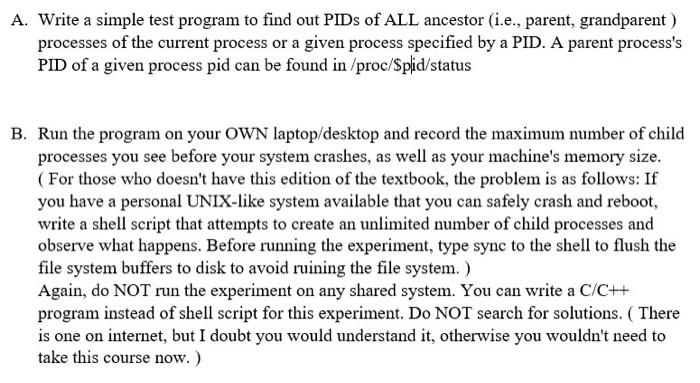
A. Write a simple test program to find out PIDs of ALL ancestor (i.e., parent, grandparent) processes of the current process or a given process specified by a PID. A parent process's PID of a given process pid can be found in /proc/Splid/status B. Run the program on your OWN laptop/desktop and record the maximum number of child processes you see before your system crashes, as well as your machine's memory size. (For those who doesn't have this edition of the textbook, the problem is as follows: If you have a personal UNIX-like system available that you can safely crash and reboot, write a shell script that attempts to create an unlimited number of child processes and observe what happens. Before running the experiment, type sync to the shell to flush the file system buffers to disk to avoid ruining the file system.) Again, do NOT run the experiment on any shared system. You can write a C/C++ program instead of shell script for this experiment. Do NOT search for solutions. ( There is one on internet, but I doubt you would understand it, otherwise you wouldn't need to take this course now.)
Step by Step Solution
There are 3 Steps involved in it

Get step-by-step solutions from verified subject matter experts
 Study Help