



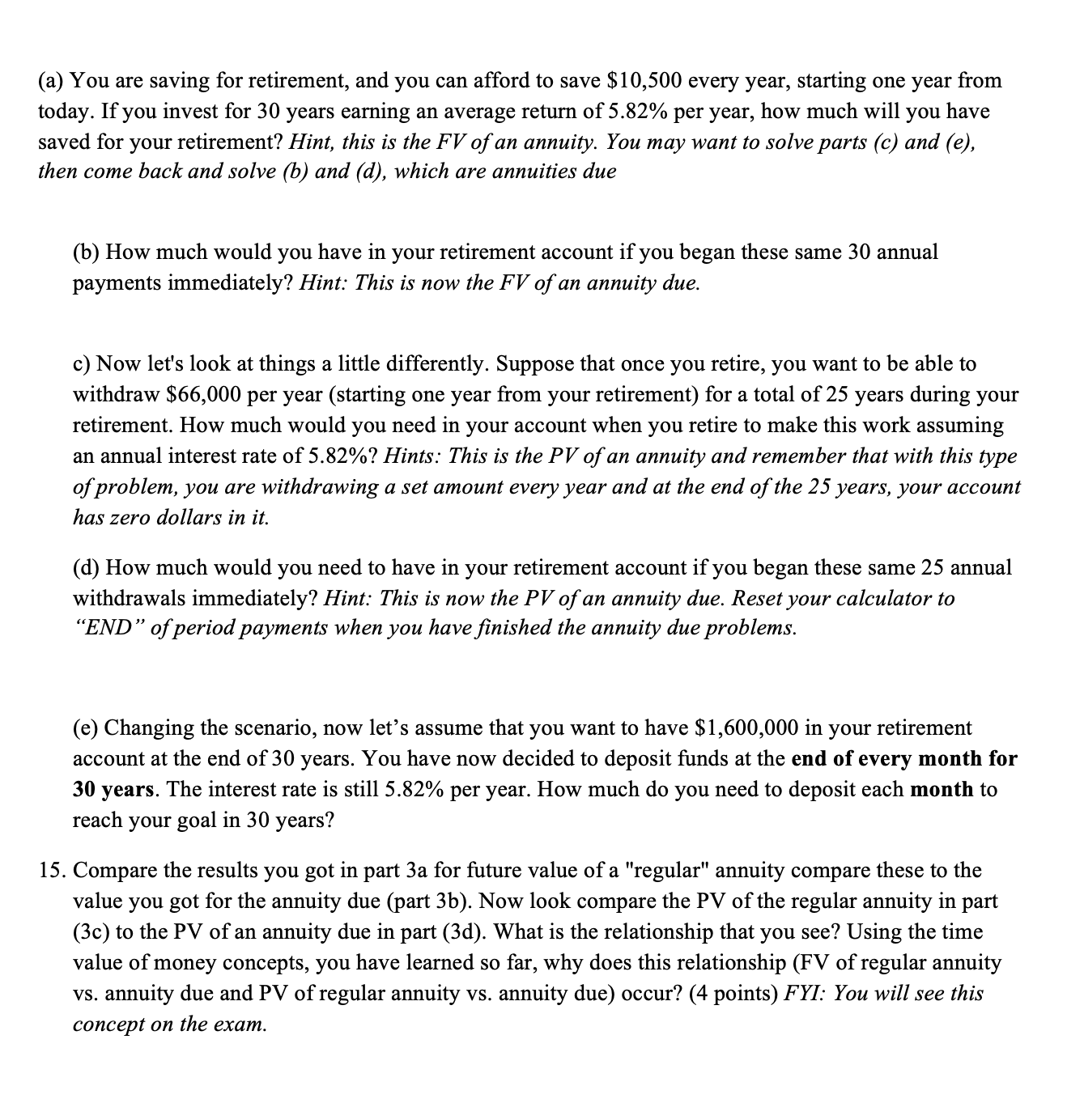
Question: ( a ) You are saving for retirement, and you can afford to save $ 1 0 , 5 0 0 every year, starting one
a You are saving for retirement, and you can afford to save $ every year, starting one year from today. If you invest for years earning an average return of per year, how much will you have
saved for your retirement?
b How much would you have in your retirement account if you began these same annualpayments immediately?
c Now let's look at things a little differently. Suppose that once you retire, you want to be able to withdraw $ per year starting one year from your retirement for a total of years during your
retirement. How much would you need in your account when you retire to make this work assuming an annual interest rate of of the years, your account
has zero dollars in it
d How much would you need to have in your retirement account if you began these same annual
withdrawals immediately?
e Changing the scenario, now let's assume that you want to have $ in your retirement account at the end of years. You have now decided to deposit funds at the end of every month for
years. The interest rate is still per year. How much do you need to deposit each month to reach your goal in years?
Compare the results you got in part a for future value of a "regular" annuity compare these to the value you got for the annuity due part b Now look compare the PV of the regular annuity in part
c to the PV of an annuity due in part d What is the relationship that you see? Using the time value of money concepts, you have learned so far, why does this relationship FV of regular annuity
vs annuity due and PV of regular annuity vs annuity due occur?
Step by Step Solution
There are 3 Steps involved in it
1 Expert Approved Answer
Step: 1 Unlock

Question Has Been Solved by an Expert!
Get step-by-step solutions from verified subject matter experts
Step: 2 Unlock
Step: 3 Unlock