







Question: A1 Using appropriate models and relevant information in the BMW case study, critically explain why and how BMW should carry out regular scans of its
A1 Using appropriate models and relevant information in the BMW case study, critically explain why and how BMW should carry out regular scans of its external business environment.
A2 Identify and critically discuss THREE external factors that, in your judgement, will have a significant influence on the business operations of BMW in the next five years (2022-2027).
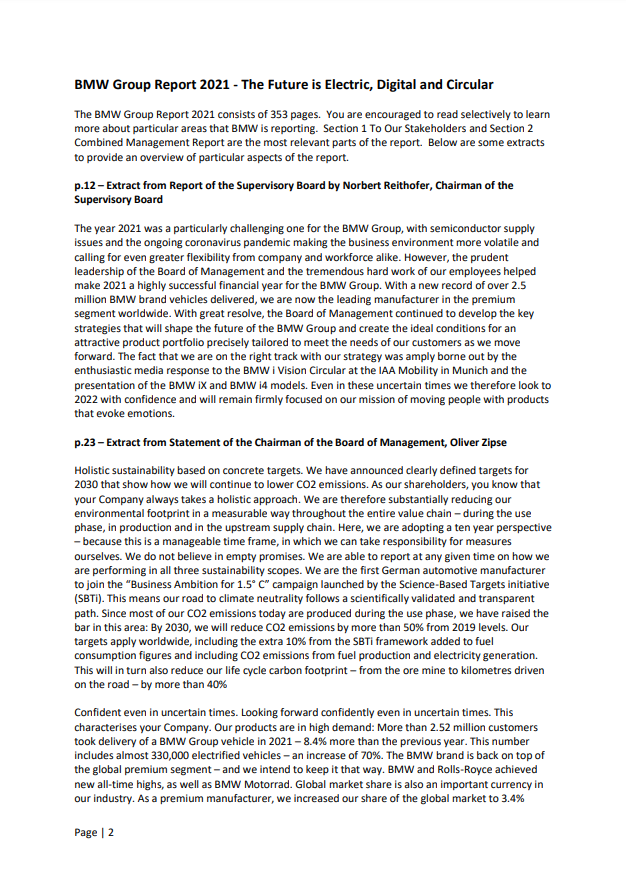
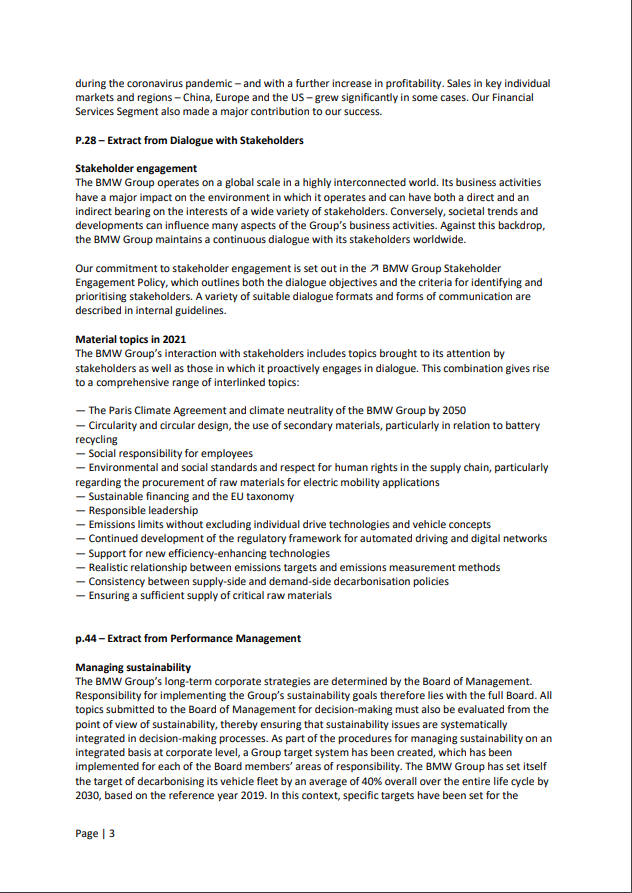
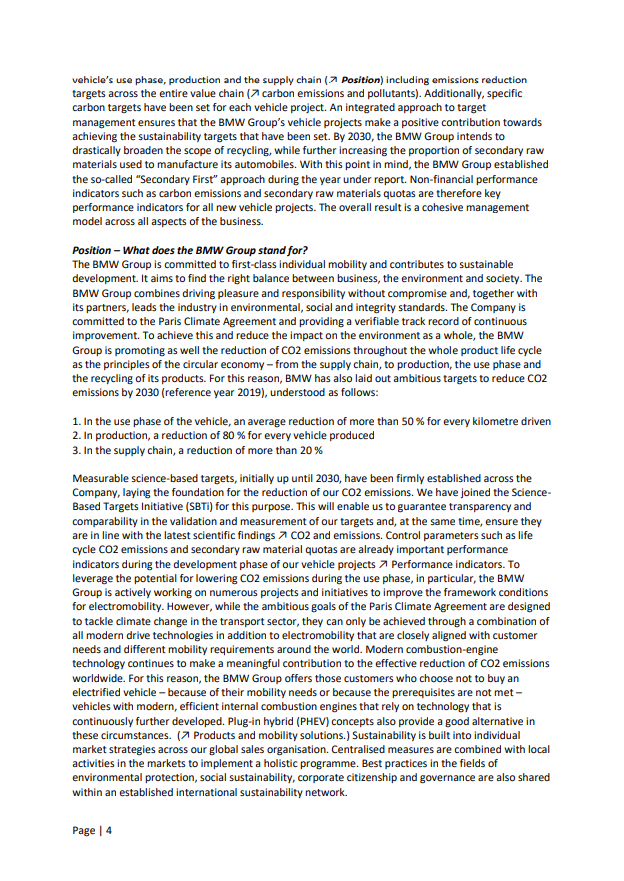
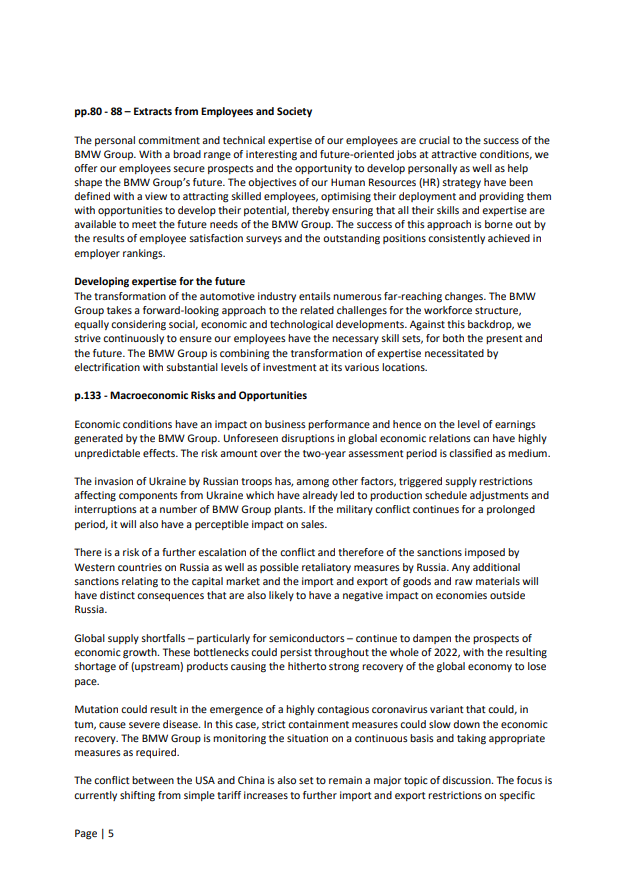
BMW Group Report 2021 - The Future is Electric, Digital and Circular The BMW Group Report 2021 consists of 353 pages. You are encouraged to read selectively to learn more about particular areas that BMW is reporting. Section 1 To Our Stakeholders and Section 2 Combined Management Report are the most relevant parts of the report. Below are some extracts to provide an overview of particular aspects of the report. p.12 - Extract from Report of the Supervisory Board by Norbert Reithofer, Chairman of the Supervisory Board The year 2021 was a particularly challenging one for the BMW Group, with semiconductor supply issues and the ongoing coronavirus pandemic making the business environment more volatile and calling for even greater flexibility from company and workforce alike. However, the prudent leadership of the Board of Management and the tremendous hard work of our employees helped make 2021 a highly successful financial year for the BMW Group. With a new record of over 2.5 million BMW brand vehicles delivered, we are now the leading manufacturer in the premium segment worldwide. With great resolve, the Board of Management continued to develop the key strategies that will shape the future of the BMW Group and create the ideal conditions for an attractive product portfolio precisely tailored to meet the needs of our customers as we move forward. The fact that we are on the right track with our strategy was amply borne out by the enthusiastic media response to the BMW i Vision Circular at the IAA Mobility in Munich and the presentation of the BMW iX and BMW i4 models. Even in these uncertain times we therefore look to 2022 with confidence and will remain firmly focused on our mission of moving people with products that evoke emotions. p.23 - Extract from Statement of the Chairman of the Board of Management, Oliver Zipse Holistic sustainability based on concrete targets. We have announced clearly defined targets for 2030 that show how we will continue to lower CO2 emissions. As our shareholders, you know that your Company always takes a holistic approach. We are therefore substantially reducing our environmental footprint in a measurable way throughout the entire value chain-during the use phase, in production and in the upstream supply chain. Here, we are adopting a ten year perspective - because this is a manageable time frame, in which we can take responsibility for measures ourselves. We do not believe in empty promises. We are able to report at any given time on how we are performing in all three sustainability scopes. We are the first German automotive manufacturer to join the "Business Ambition for 1.5 C" campaign launched by the Science-Based Targets initiative (SBTi). This means our road to climate neutrality follows a scientifically validated and transparent path. Since most of our CO2 emissions today are produced during the use phase, we have raised the bar in this area: By 2030, we will reduce CO2 emissions by more than 50% from 2019 levels. Our targets apply worldwide, including the extra 10% from the SBTI framework added to fuel consumption figures and including CO2 emissions from fuel production and electricity generation. This will in turn also reduce our life cycle carbon footprint - from the ore mine to kilometres driven on the road - by more than 40% Confident even in uncertain times. Looking forward confidently even in uncertain times. This characterises your Company. Our products are in high demand: More than 2.52 million customers took delivery of a BMW Group vehicle in 2021-8.4% more than the previous year. This number includes almost 330,000 electrified vehicles - an increase of 70%. The BMW brand is back on top of the global premium segment- and we intend to keep it that way. BMW and Rolls-Royce achieved new all-time highs, as well as BMW Motorrad. Global market share is also an important currency in our industry. As a premium manufacturer, we increased our share of the global market to 3.4% Page | 2 during the coronavirus pandemic - and with a further increase in profitability. Sales in key individual markets and regions - China, Europe and the US-grew significantly in some cases. Our Financial Services Segment also made a major contribution to our success. P.28 - Extract from Dialogue with Stakeholders Stakeholder engagement The BMW Group operates on a global scale in a highly interconnected world. Its business activities have a major impact on the environment in which it operates and can have both a direct and an indirect bearing on the interests of a wide variety of stakeholders. Conversely, societal trends and developments can influence many aspects of the Group's business activities. Against this backdrop, the BMW Group maintains a continuous dialogue with its stakeholders worldwide. Our commitment to stakeholder engagement is set out in the 7 BMW Group Stakeholder Engagement Policy, which outlines both the dialogue objectives and the criteria for identifying and prioritising stakeholders. A variety of suitable dialogue formats and forms of communication are described in internal guidelines. Material topics in 2021 The BMW Group's interaction with stakeholders includes topics brought to its attention by stakeholders as well as those in which it proactively engages in dialogue. This combination gives rise to a comprehensive range of interlinked topics: - The Paris Climate Agreement and climate neutrality of the BMW Group by 2050 - Circularity and circular design, the use of secondary materials, particularly in relation to battery recycling - Social responsibility for employees - Environmental and social standards and respect for human rights in the supply chain, particularly regarding the procurement of raw materials for electric mobility applications - Sustainable financing and the EU taxonomy - Responsible leadership -Emissions limits without excluding individual drive technologies and vehicle concepts - Continued development of the regulatory framework for automated driving and digital networks - Support for new efficiency-enhancing technologies - Realistic relationship between emissions targets and emissions measurement methods - Consistency between supply-side and demand-side decarbonisation policies - Ensuring a sufficient supply of critical raw materials p.44 - Extract from Performance Management Managing sustainability The BMW Group's long-term corporate strategies are determined by the Board of Management. Responsibility for implementing the Group's sustainability goals therefore lies with the full Board. All topics submitted to the Board of Management for decision-making must also be evaluated from the point of view of sustainability, thereby ensuring that sustainability issues are systematically integrated in decision-making processes. As part of the procedures for managing sustainability on an integrated basis at corporate level, a Group target system has been created, which has been implemented for each of the Board members' areas of responsibility. The BMW Group has set itself the target of decarbonising its vehicle fleet by an average of 40% overall over the entire life cycle by 2030, based on the reference year 2019. In this context, specific targets have been set for the Page | 3 vehicle's use phase, production and the supply chain ( Position) including emissions reduction targets across the entire value chain (7 carbon emissions and pollutants). Additionally, specific carbon targets have been set for each vehicle project. An integrated approach to target management ensures that the BMW Group's vehicle projects make a positive contribution towards achieving the sustainability targets that have been set. By 2030, the BMW Group intends to drastically broaden the scope of recycling, while further increasing the proportion of secondary raw materials used to manufacture its automobiles. With this point in mind, the BMW Group established the so-called "Secondary First" approach during the year under report. Non-financial performance indicators such as carbon emissions and secondary raw materials quotas are therefore key performance indicators for all new vehicle projects. The overall result is a cohesive management model across all aspects of the business. Position - What does the BMW Group stand for? The BMW Group is committed to first-class individual mobility and contributes to sustainable development. It aims to find the right balance between business, the environment and society. The BMW Group combines driving pleasure and responsibility without compromise and, together with its partners, leads the industry in environmental, social and integrity standards. The Company is committed to the Paris Climate Agreement and providing a verifiable track record of continuous improvement. To achieve this and reduce the impact on the environment as a whole, the BMW Group is promoting as well the reduction of CO2 emissions throughout the whole product life cycle as the principles of the circular economy - from the supply chain, to production, the use phase and the recycling of its products. For this reason, BMW has also laid out ambitious targets to reduce CO2 emissions by 2030 (reference year 2019), understood as follows: 1. In the use phase of the vehicle, an average reduction of more than 50 % for every kilometre driven 2. In production, a reduction of 80 % for every vehicle produced 3. In the supply chain, a reduction of more than 20% Measurable science-based targets, initially up until 2030, have been firmly established across the Company, laying the foundation for the reduction of our CO2 emissions. We have joined the Science- Based Targets Initiative (SBTi) for this purpose. This will enable us to guarantee transparency and comparability in the validation and measurement of our targets and, at the same time, ensure they are in line with the latest scientific findings > CO2 and emissions. Control parameters such as life cycle CO2 emissions and secondary raw material quotas are already important performance indicators during the development phase of our vehicle projects 7 Performance indicators. To leverage the potential for lowering CO2 emissions during the use phase, in particular, the BMW Group is actively working on numerous projects and initiatives to improve the framework conditions for electromobility. However, while the ambitious goals of the Paris Climate Agreement are designed to tackle climate change in the transport sector, they can only be achieved through a combination of all modern drive technologies in addition to electromobility that are closely aligned with customer needs and different mobility requirements around the world. Modern combustion-engine technology continues to make a meaningful contribution to the effective reduction of CO2 emissions worldwide. For this reason, the BMW Group offers those customers who choose not to buy an electrified vehicle - because of their mobility needs or because the prerequisites are not met- vehicles with modern, efficient internal combustion engines that rely on technology that is continuously further developed. Plug-in hybrid (PHEV) concepts also provide a good alternative in these circumstances. ( Products and mobility solutions.) Sustainability is built into individual market strategies across our global sales organisation. Centralised measures are combined with local activities in the markets to implement a holistic programme. Best practices in the fields of environmental protection, social sustainability, corporate citizenship and governance are also shared within an established international sustainability network. Page | 4 pp.80-88 - Extracts from Employees and Society The personal commitment and technical expertise of our employees are crucial to the success of the BMW Group. With a broad range of interesting and future-oriented jobs at attractive conditions, we offer our employees secure prospects and the opportunity to develop personally as well as help shape the BMW Group's future. The objectives of our Human Resources (HR) strategy have been defined with a view to attracting skilled employees, optimising their deployment and providing them with opportunities to develop their potential, thereby ensuring that all their skills and expertise are available to meet the future needs of the BMW Group. The success of this approach is borne out by the results of employee satisfaction surveys and the outstanding positions consistently achieved in employer rankings. Developing expertise for the future The transformation of the automotive industry entails numerous far-reaching changes. The BMW Group takes a forward-looking approach to the related challenges for the workforce structure, equally considering social, economic and technological developments. Against this backdrop, we strive continuously to ensure our employees have the necessary skill sets, for both the present and the future. The BMW Group is combining the transformation of expertise necessitated by electrification with substantial levels of investment at its various locations. p.133 - Macroeconomic Risks and Opportunities Economic conditions have an impact on business performance and hence on the level of earnings generated by the BMW Group. Unforeseen disruptions in global economic relations can have highly unpredictable effects. The risk amount over the two-year assessment period is classified as medium. The invasion of Ukraine by Russian troops has, among other factors, triggered supply restrictions affecting components from Ukraine which have already led to production schedule adjustments and interruptions at a number of BMW Group plants. If the military conflict continues for a prolonged period, it will also have a perceptible impact on sales. There is a risk of a further escalation of the conflict and therefore of the sanctions imposed by Western countries on Russia as well as possible retaliatory measures by Russia. Any additional sanctions relating to the capital market and the import and export of goods and raw materials will have distinct consequences that are also likely to have a negative impact on economies outside Russia. Global supply shortfalls-particularly for semiconductors - continue to dampen the prospects of economic growth. These bottlenecks could persist throughout the whole of 2022, with the resulting shortage of (upstream) products causing the hitherto strong recovery of the global economy to lose pace. Mutation could result in the emergence of a highly contagious coronavirus variant that could, in tum, cause severe disease. In this case, strict containment measures could slow down the economic recovery. The BMW Group is monitoring the situation on a continuous basis and taking appropriate measures as required. The conflict between the USA and China is also set to remain a major topic of discussion. The focus is currently shifting from simple tariff increases to further import and export restrictions on specific Page | 5 technologies. This could also lead to less favourable import and export conditions for the BMW Group. A further risk is seen in the very high rate of inflation currently being observed in many regions. If inflation were to remain high over an extended period, rising prices would curb demand. The expected interest rate hikes by central banks will also have a dampening effect on business. Macroeconomic opportunities that could have a sustained positive impact on the BMW Group's results of operation are classified as insignificant. END OF REPORT EXTRACTSStep by Step Solution
There are 3 Steps involved in it
1 Expert Approved Answer
Step: 1 Unlock

Question Has Been Solved by an Expert!
Get step-by-step solutions from verified subject matter experts
Step: 2 Unlock
Step: 3 Unlock
 Study Help