







Question: AAS (Atomic Absorption spectroscopy) When performing elemental analysis using an atomic absorption spectroscopy, the sample needs to be first decomposed into free-state atoms (atomization process)
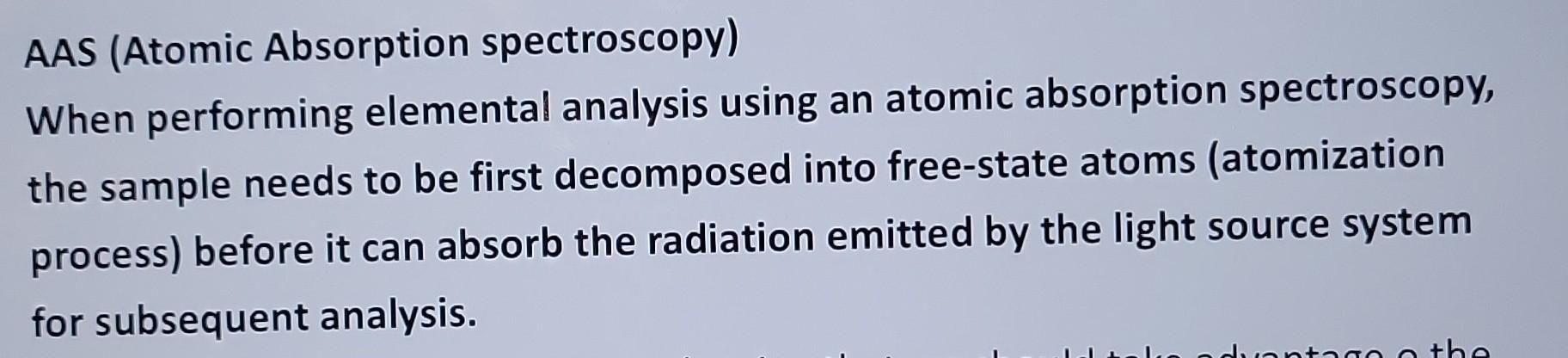
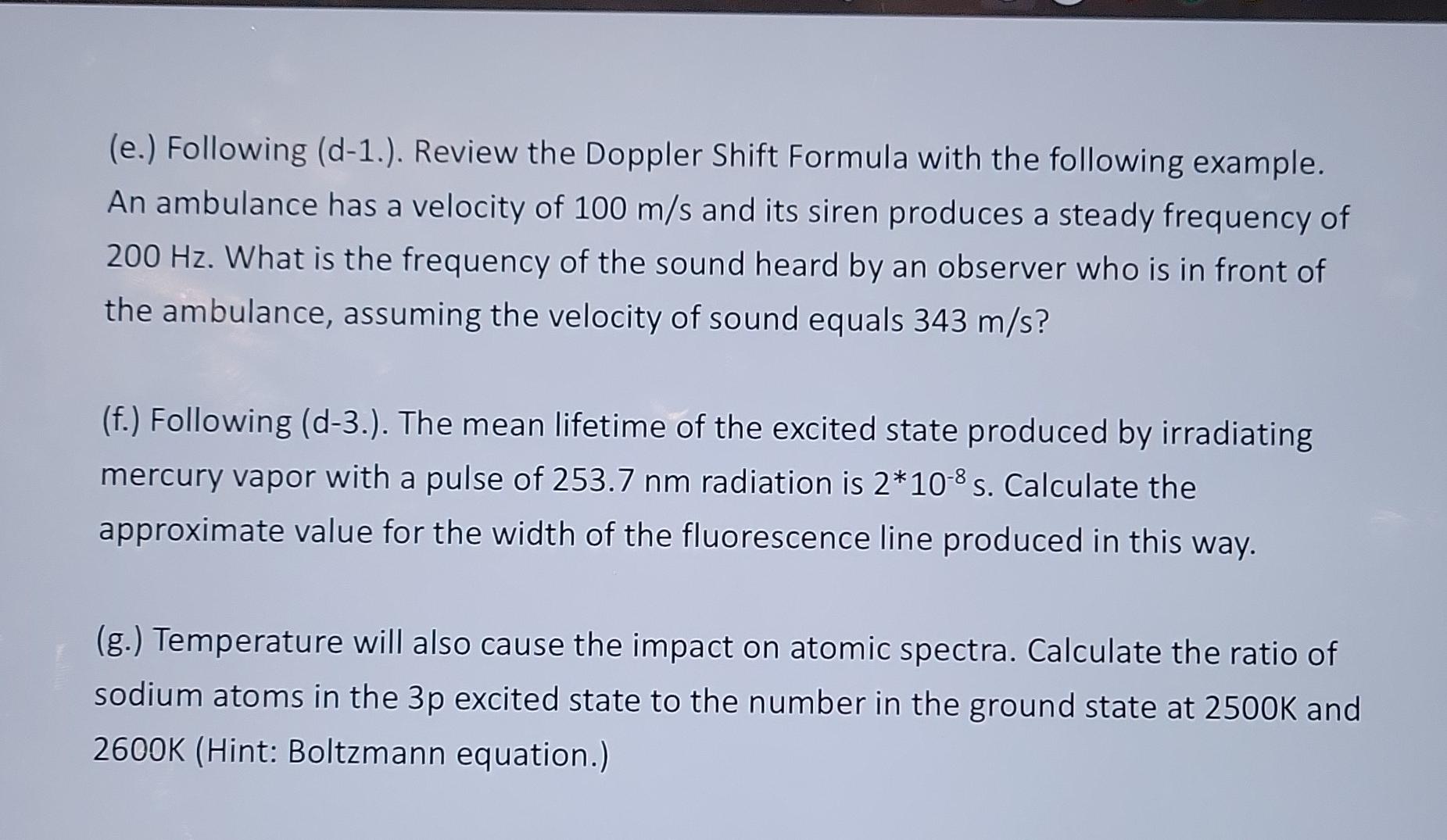
AAS (Atomic Absorption spectroscopy) When performing elemental analysis using an atomic absorption spectroscopy, the sample needs to be first decomposed into free-state atoms (atomization process) before it can absorb the radiation emitted by the light source system for subsequent analysis. (e.) Following (d-1.). Review the Doppler Shift Formula with the following example. An ambulance has a velocity of 100m/s and its siren produces a steady frequency of 200Hz. What is the frequency of the sound heard by an observer who is in front of the ambulance, assuming the velocity of sound equals 343m/s ? (f.) Following (d-3.). The mean lifetime of the excited state produced by irradiating mercury vapor with a pulse of 253.7nm radiation is 2108s. Calculate the approximate value for the width of the fluorescence line produced in this way. (g.) Temperature will also cause the impact on atomic spectra. Calculate the ratio of sodium atoms in the 3p excited state to the number in the ground state at 2500K and 2600K (Hint: Boltzmann equation.)
Step by Step Solution
There are 3 Steps involved in it

Get step-by-step solutions from verified subject matter experts
 Study Help