







Question: Absorption and Variable Costing with Over- and Underapplied Overhead Flaherty, Inc., has just completed its first year of operations. The unit costs on a normal
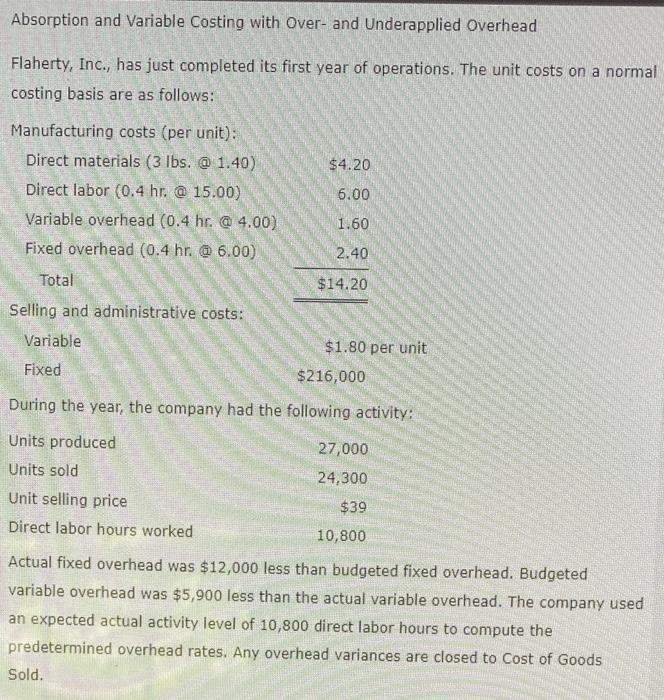
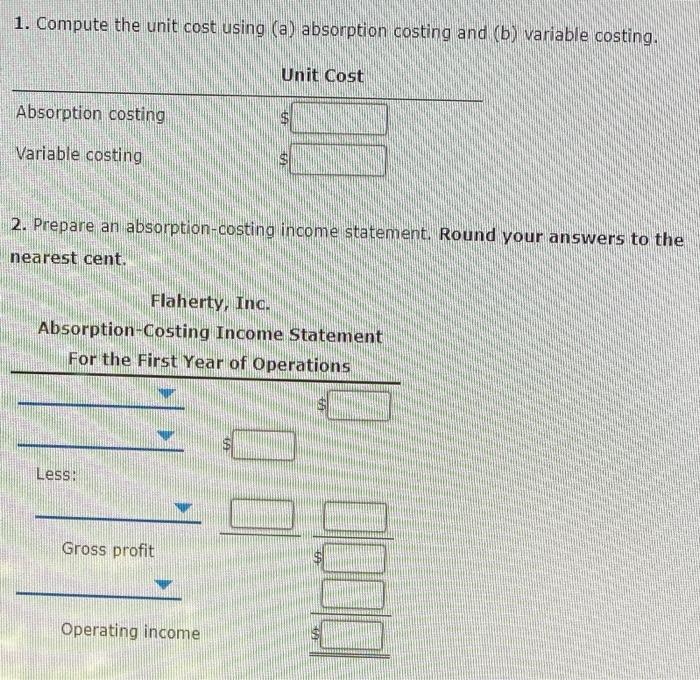
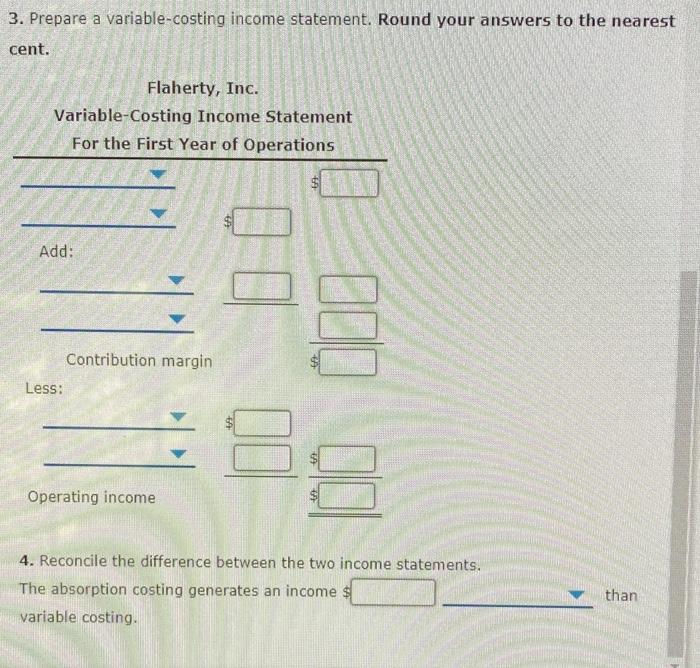
Absorption and Variable Costing with Over- and Underapplied Overhead Flaherty, Inc., has just completed its first year of operations. The unit costs on a normal costing basis are as follows: $4.20 6.00 1.60 Manufacturing costs (per unit): Direct materials (3 lbs. @ 1.40) Direct labor (0.4 hr. @ 15.00) Variable overhead (0.4 hr. @ 4.00) Fixed overhead (0.4 hr @ 6.00) Total Selling and administrative costs: Variable 2.40 $14.20 $1.80 per unit Fixed $216,000 During the year, the company had the following activity: Units produced Units sold 27,000 24,300 Unit selling price Direct labor hours worked $39 10,800 Actual fixed overhead was $12,000 less than budgeted fixed overhead. Budgeted variable overhead was $5,900 less than the actual variable overhead. The company used an expected actual activity level of 10,800 direct labor hours to compute the predetermined overhead rates. Any overhead variances are closed to Cost of Goods Sold. 1. Compute the unit cost using (a) absorption costing and (b) variable costing. Unit Cost Absorption costing $ Variable costing 2. Prepare an absorption-costing income statement. Round your answers to the nearest cent. Flaherty, Inc. Absorption-Costing Income Statement For the First Year of Operations Less: Gross profit DOOD Operating income 3. Prepare a variable-costing income statement. Round your answers to the nearest cent. Flaherty, Inc. Variable-Costing Income Statement For the First Year of Operations Add: Contribution margin Less: Operating income 4. Reconcile the difference between the two income statements. The absorption costing generates an income $ variable costing. than
Step by Step Solution
There are 3 Steps involved in it

Get step-by-step solutions from verified subject matter experts
 Study Help