







Question: (Accounting question) Please answer the questions from the required part but with the value of 100%. The needed information is in the second picture. Thanks.(do
(Accounting question) Please answer the questions from the "required" part but with the value of 100%. The needed information is in the second picture. Thanks.(do not use the 75%)
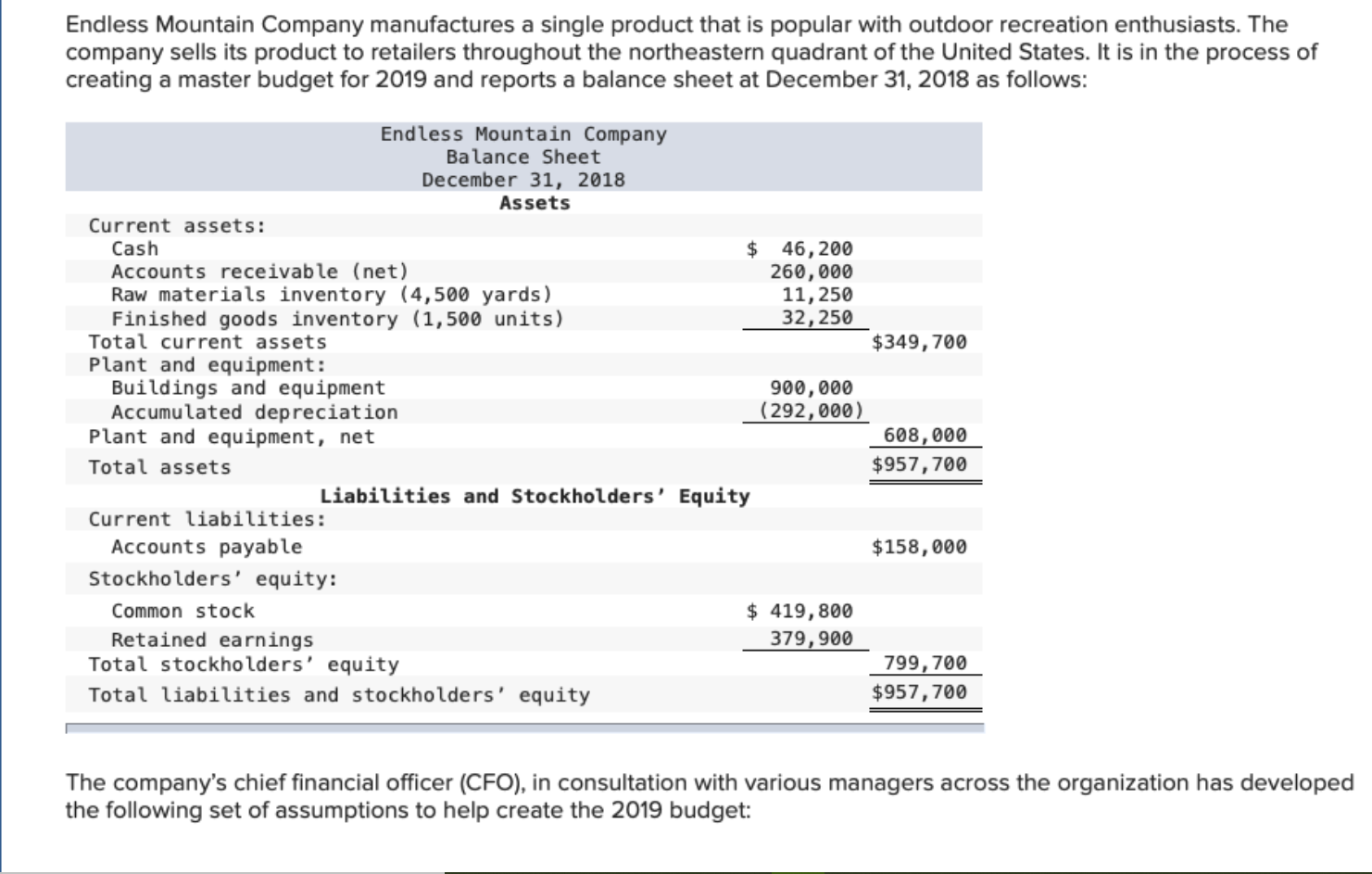
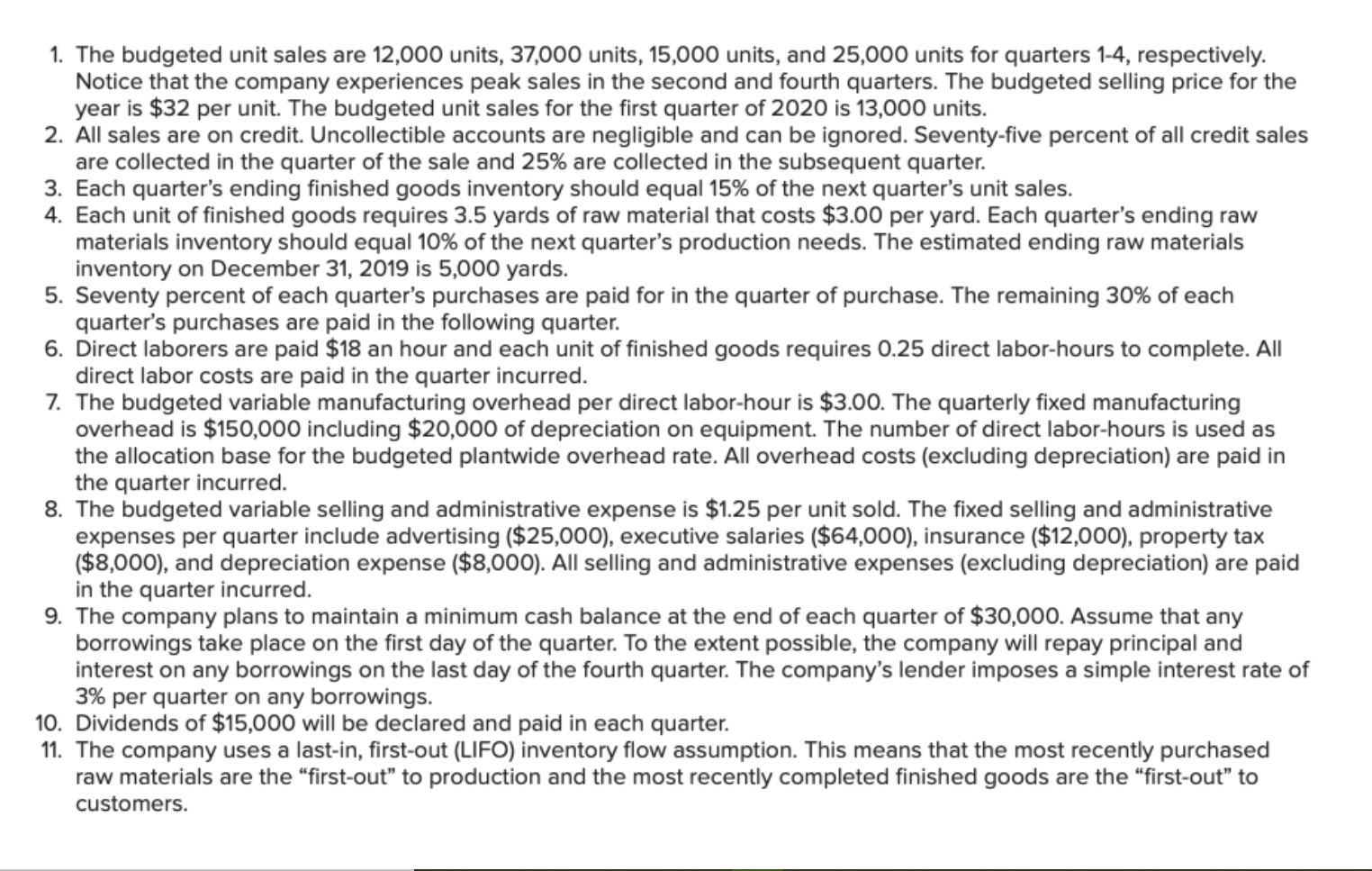
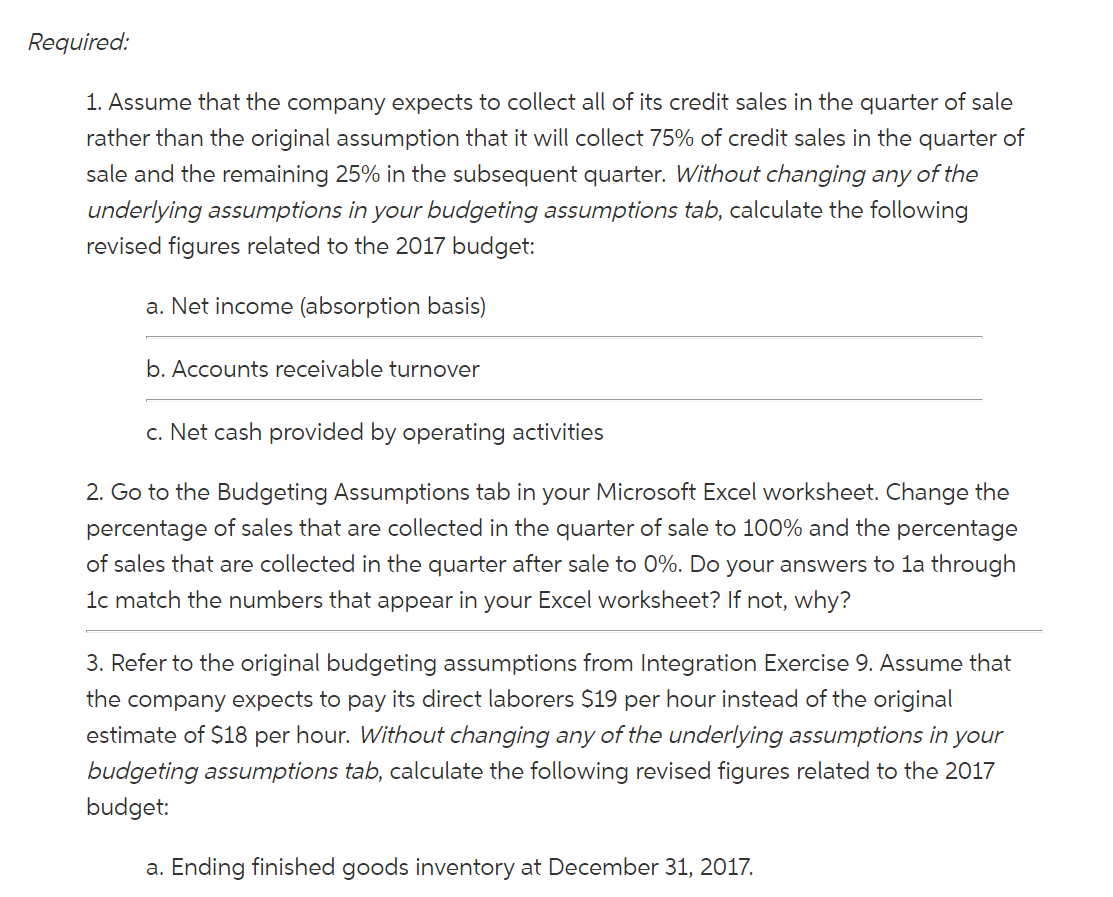
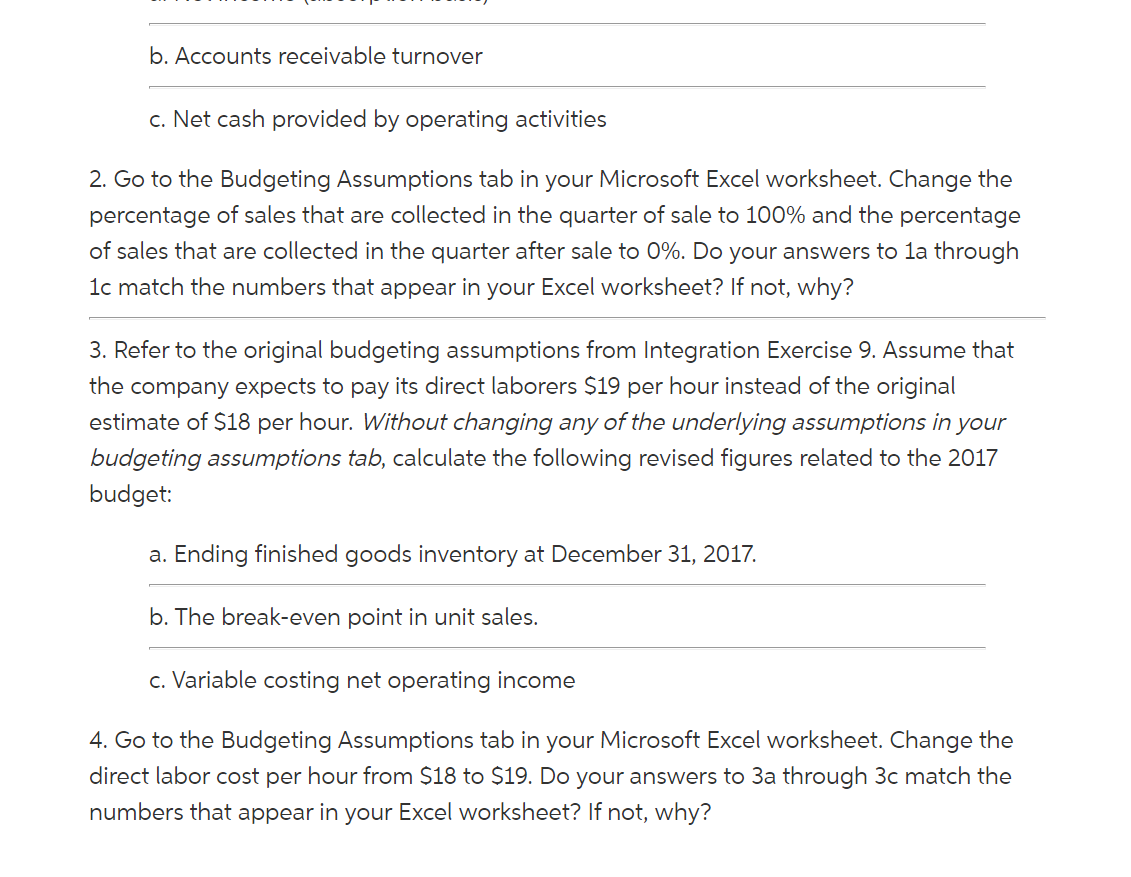
Endless Mountain Company manufactures a single product that is popular with outdoor recreation enthusiasts. The company sells its product to retailers throughout the northeastern quadrant of the United States. It is in the process of creating a master budget for 2019 and reports a balance sheet at December 31, 2018 as follows: Endless Mountain Company Balance Sheet December 31, 2018 Assets Current assets: Cash $ 46,200 Accounts receivable (net) 260,000 Raw materials inventory (4,500 yards) 11,250 Finished goods inventory (1,500 units) 32,250 Total current assets $349,700 Plant and equipment: Buildings and equipment 900,000 Accumulated depreciation (292,000) Plant and equipment, net 608,000 Total assets $957,700 Liabilities and Stockholders' Equity Current liabilities: Accounts payable $ 158,000 Stockholders' equity: Common stock $ 419,800 Retained earnings 379,900 Total stockholders' equity 799,700 Total liabilities and stockholders' equity $957,700 The company's chief financial officer (CFO), in consultation with various managers across the organization has developed the following set of assumptions to help create the 2019 budget: 1. The budgeted unit sales are 12,000 units, 37,000 units, 15,000 units, and 25,000 units for quarters 1-4, respectively. Notice that the company experiences peak sales in the second and fourth quarters. The budgeted selling price for the year is $32 per unit. The budgeted unit sales for the first quarter of 2020 is 13,000 units. 2. All sales are on credit. Uncollectible accounts are negligible and can be ignored. Seventy-five percent of all credit sales are collected in the quarter of the sale and 25% are collected in the subsequent quarter. 3. Each quarter's ending finished goods inventory should equal 15% of the next quarter's unit sales. 4. Each unit of finished goods requires 3.5 yards of raw material that costs $3.00 per yard. Each quarter's ending raw materials inventory should equal 10% of the next quarter's production needs. The estimated ending raw materials inventory on December 31, 2019 is 5,000 yards. 5. Seventy percent of each quarter's purchases are paid for in the quarter of purchase. The remaining 30% of each quarter's purchases are paid in the following quarter. 6. Direct laborers are paid $18 an hour and each unit of finished goods requires 0.25 direct labor-hours to complete. All direct labor costs are paid in the quarter incurred. 7. The budgeted variable manufacturing overhead per direct labor-hour is $3.00. The quarterly fixed manufacturing overhead is $150,000 including $20,000 of depreciation on equipment. The number of direct labor-hours is used as the allocation base for the budgeted plantwide overhead rate. All overhead costs (excluding depreciation) are paid in the quarter incurred. 8. The budgeted variable selling and administrative expense is $1.25 per unit sold. The fixed selling and administrative expenses per quarter include advertising ($25,000), executive salaries ($64,000), insurance ($12,000), property tax ($8,000), and depreciation expense ($8,000). All selling and administrative expenses (excluding depreciation) are paid in the quarter incurred. 9. The company plans to maintain a minimum cash balance at the end of each quarter of $30,000. Assume that any borrowings take place on the first day of the quarter. To the extent possible, the company will repay principal and interest on any borrowings on the last day of the fourth quarter. The company's lender imposes a simple interest rate of 3% per quarter on any borrowings. 10. Dividends of $15,000 will be declared and paid in each quarter. 11. The company uses a last-in, first-out (LIFO) inventory flow assumption. This means that the most recently purchased raw materials are the "first-out" to production and the most recently completed finished goods are the "first-out" to customers. Required: 1. Assume that the company expects to collect all of its credit sales in the quarter of sale rather than the original assumption that it will collect 75% of credit sales in the quarter of sale and the remaining 25% in the subsequent quarter. Without changing any of the underlying assumptions in your budgeting assumptions tab, calculate the following revised figures related to the 2017 budget: a. Net income (absorption basis) b. Accounts receivable turnover c. Net cash provided by operating activities 2. Go to the Budgeting Assumptions tab in your Microsoft Excel worksheet. Change the percentage of sales that are collected in the quarter of sale to 100% and the percentage of sales that are collected in the quarter after sale to 0%. Do your answers to 1a through 1c match the numbers that appear in your Excel worksheet? If not, why? 3. Refer to the original budgeting assumptions from Integration Exercise 9. Assume that the company expects to pay its direct laborers $19 per hour instead of the original estimate of $18 per hour. Without changing any of the underlying assumptions in your budgeting assumptions tab, calculate the following revised figures related to the 2017 budget: a. Ending finished goods inventory at December 31, 2017. b. Accounts receivable turnover c. Net cash provided by operating activities 2. Go to the Budgeting Assumptions tab in your Microsoft Excel worksheet. Change the percentage of sales that are collected in the quarter of sale to 100% and the percentage of sales that are collected in the quarter after sale to 0%. Do your answers to la through 1c match the numbers that appear in your Excel worksheet? If not, why? 3. Refer to the original budgeting assumptions from Integration Exercise 9. Assume that the company expects to pay its direct laborers $19 per hour instead of the original estimate of $18 per hour. Without changing any of the underlying assumptions in your budgeting assumptions tab, calculate the following revised figures related to the 2017 budget: a. Ending finished goods inventory at December 31, 2017. b. The break-even point in unit sales. c. Variable costing net operating income 4. Go to the Budgeting Assumptions tab in your Microsoft Excel worksheet. Change the direct labor cost per hour from $18 to $19. Do your answers to 3a through 3c match the numbers that appear in your Excel worksheet? If not, why? Endless Mountain Company manufactures a single product that is popular with outdoor recreation enthusiasts. The company sells its product to retailers throughout the northeastern quadrant of the United States. It is in the process of creating a master budget for 2019 and reports a balance sheet at December 31, 2018 as follows: Endless Mountain Company Balance Sheet December 31, 2018 Assets Current assets: Cash $ 46,200 Accounts receivable (net) 260,000 Raw materials inventory (4,500 yards) 11,250 Finished goods inventory (1,500 units) 32,250 Total current assets $349,700 Plant and equipment: Buildings and equipment 900,000 Accumulated depreciation (292,000) Plant and equipment, net 608,000 Total assets $957,700 Liabilities and Stockholders' Equity Current liabilities: Accounts payable $ 158,000 Stockholders' equity: Common stock $ 419,800 Retained earnings 379,900 Total stockholders' equity 799,700 Total liabilities and stockholders' equity $957,700 The company's chief financial officer (CFO), in consultation with various managers across the organization has developed the following set of assumptions to help create the 2019 budget: 1. The budgeted unit sales are 12,000 units, 37,000 units, 15,000 units, and 25,000 units for quarters 1-4, respectively. Notice that the company experiences peak sales in the second and fourth quarters. The budgeted selling price for the year is $32 per unit. The budgeted unit sales for the first quarter of 2020 is 13,000 units. 2. All sales are on credit. Uncollectible accounts are negligible and can be ignored. Seventy-five percent of all credit sales are collected in the quarter of the sale and 25% are collected in the subsequent quarter. 3. Each quarter's ending finished goods inventory should equal 15% of the next quarter's unit sales. 4. Each unit of finished goods requires 3.5 yards of raw material that costs $3.00 per yard. Each quarter's ending raw materials inventory should equal 10% of the next quarter's production needs. The estimated ending raw materials inventory on December 31, 2019 is 5,000 yards. 5. Seventy percent of each quarter's purchases are paid for in the quarter of purchase. The remaining 30% of each quarter's purchases are paid in the following quarter. 6. Direct laborers are paid $18 an hour and each unit of finished goods requires 0.25 direct labor-hours to complete. All direct labor costs are paid in the quarter incurred. 7. The budgeted variable manufacturing overhead per direct labor-hour is $3.00. The quarterly fixed manufacturing overhead is $150,000 including $20,000 of depreciation on equipment. The number of direct labor-hours is used as the allocation base for the budgeted plantwide overhead rate. All overhead costs (excluding depreciation) are paid in the quarter incurred. 8. The budgeted variable selling and administrative expense is $1.25 per unit sold. The fixed selling and administrative expenses per quarter include advertising ($25,000), executive salaries ($64,000), insurance ($12,000), property tax ($8,000), and depreciation expense ($8,000). All selling and administrative expenses (excluding depreciation) are paid in the quarter incurred. 9. The company plans to maintain a minimum cash balance at the end of each quarter of $30,000. Assume that any borrowings take place on the first day of the quarter. To the extent possible, the company will repay principal and interest on any borrowings on the last day of the fourth quarter. The company's lender imposes a simple interest rate of 3% per quarter on any borrowings. 10. Dividends of $15,000 will be declared and paid in each quarter. 11. The company uses a last-in, first-out (LIFO) inventory flow assumption. This means that the most recently purchased raw materials are the "first-out" to production and the most recently completed finished goods are the "first-out" to customers. Required: 1. Assume that the company expects to collect all of its credit sales in the quarter of sale rather than the original assumption that it will collect 75% of credit sales in the quarter of sale and the remaining 25% in the subsequent quarter. Without changing any of the underlying assumptions in your budgeting assumptions tab, calculate the following revised figures related to the 2017 budget: a. Net income (absorption basis) b. Accounts receivable turnover c. Net cash provided by operating activities 2. Go to the Budgeting Assumptions tab in your Microsoft Excel worksheet. Change the percentage of sales that are collected in the quarter of sale to 100% and the percentage of sales that are collected in the quarter after sale to 0%. Do your answers to 1a through 1c match the numbers that appear in your Excel worksheet? If not, why? 3. Refer to the original budgeting assumptions from Integration Exercise 9. Assume that the company expects to pay its direct laborers $19 per hour instead of the original estimate of $18 per hour. Without changing any of the underlying assumptions in your budgeting assumptions tab, calculate the following revised figures related to the 2017 budget: a. Ending finished goods inventory at December 31, 2017. b. Accounts receivable turnover c. Net cash provided by operating activities 2. Go to the Budgeting Assumptions tab in your Microsoft Excel worksheet. Change the percentage of sales that are collected in the quarter of sale to 100% and the percentage of sales that are collected in the quarter after sale to 0%. Do your answers to la through 1c match the numbers that appear in your Excel worksheet? If not, why? 3. Refer to the original budgeting assumptions from Integration Exercise 9. Assume that the company expects to pay its direct laborers $19 per hour instead of the original estimate of $18 per hour. Without changing any of the underlying assumptions in your budgeting assumptions tab, calculate the following revised figures related to the 2017 budget: a. Ending finished goods inventory at December 31, 2017. b. The break-even point in unit sales. c. Variable costing net operating income 4. Go to the Budgeting Assumptions tab in your Microsoft Excel worksheet. Change the direct labor cost per hour from $18 to $19. Do your answers to 3a through 3c match the numbers that appear in your Excel worksheet? If not, why
Step by Step Solution
There are 3 Steps involved in it

Get step-by-step solutions from verified subject matter experts
 Study Help