Question: Activity 5 Allow 20 minutes for this action, This activity is designed to identify one main pressure a stress in your work as a manager
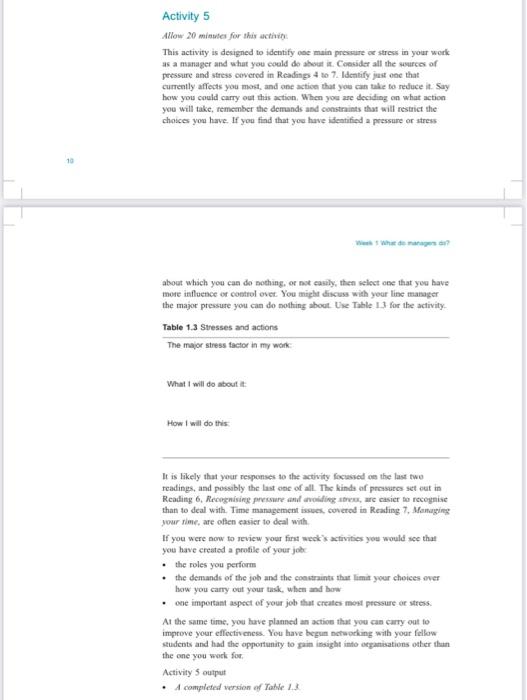
Activity 5 Allow 20 minutes for this action, This activity is designed to identify one main pressure a stress in your work as a manager and what you could do about it. Consider all the sources of pressure and stress covered in Readings 4 to 7. Identify just one that currently affects you most, and one action that you can take to reduce it. Say how you could carry out this action. When you are deciding on what action you will take, remember the demands and constraints that will restrict the choices you have. If you find that you have identified a pressure or stress about which you can do nothing, or not casily, then select one that you have more influence or control over. You might discuss with your line manager the major pressure you can do nothing about. Use Tohle 13 for the activity Table 1.3 Stresses and actions The major stress factor in my work What I will do about it How I will do this It is likely that your responses to the activity focused on the last two readings, and possibly the last one of all The kinds of pressures set out in Reading 6. Recognising pressure and avoiding, we easier to recognise than to deal with. Time management issues, covered in Reading 7. Managing your time are often casier to deal with If you were now to review your first week's activities you would see that you have created a profile of your job . the roles you perform the demands of the job and the constraints that limit your choices over how you carry out your task, when and how one important aspect of your job that creates most pressure or stress At the same time, you have planned an action that you can carry out to improve your effectiveness. You have begun networking with your fellow students and had the opportunity to gain insight into segnisations other than the one you work for Activity 5 output A completed wrsion of Table 1 Readings 4, 5, 6 and 7 These readings all deal with pressure on managers and the stress that can result from too much pressure. If you have been trained in managing pressure, stress and time, it is appropriate for you to skim read here. Skim reading is explained in The Manager's Good Study Guide on p. 34. Reading 4, Your management skills in Chapter 1, sets out some recognised skills that managers need in order to be effective. Note that if your capabilities don't match what your job requires, then the result is likely to be frustration and stress. However, the reason you are studying this module is likely to be to improve your skills and capabilities. In this case, you are taking active steps to remedy this situation. Reading 5, Transition into management in Chapter 1, deals with a particular situation: that of the new manager moving from operating to managing. Any transition has the potential to cause stress. However, the understanding that the transition is a process and that there are actions a person can take to become an effective manager is likely to be stress-reducing. You may have already experienced this particular transition. If you are experiencing it now, however, or made the transition some time ago but not entirely successfully, consider what kinds of adjustments you could make. Reading 6, Recognising pressure and avoiding stress in Chapter 1, considers common causes of stress with the emphasis on management and managers. This reading will be useful however long you have been a manager. What particular pressures are you under this week? What methods of reducing stress are open to you? Reading 7, Managing your time in Chapter 1, takes you through the main points of time management. As you read, make a note of the ways in which your time is used and what you might do to save time. The notes you make while you are reading will help you to carry out Activity 5. Activity 5 Allow 20 minutes for this action, This activity is designed to identify one main pressure a stress in your work as a manager and what you could do about it. Consider all the sources of pressure and stress covered in Readings 4 to 7. Identify just one that currently affects you most, and one action that you can take to reduce it. Say how you could carry out this action. When you are deciding on what action you will take, remember the demands and constraints that will restrict the choices you have. If you find that you have identified a pressure or stress about which you can do nothing, or not casily, then select one that you have more influence or control over. You might discuss with your line manager the major pressure you can do nothing about. Use Tohle 13 for the activity Table 1.3 Stresses and actions The major stress factor in my work What I will do about it How I will do this It is likely that your responses to the activity focused on the last two readings, and possibly the last one of all The kinds of pressures set out in Reading 6. Recognising pressure and avoiding, we easier to recognise than to deal with. Time management issues, covered in Reading 7. Managing your time are often casier to deal with If you were now to review your first week's activities you would see that you have created a profile of your job . the roles you perform the demands of the job and the constraints that limit your choices over how you carry out your task, when and how one important aspect of your job that creates most pressure or stress At the same time, you have planned an action that you can carry out to improve your effectiveness. You have begun networking with your fellow students and had the opportunity to gain insight into segnisations other than the one you work for Activity 5 output A completed wrsion of Table 1 Readings 4, 5, 6 and 7 These readings all deal with pressure on managers and the stress that can result from too much pressure. If you have been trained in managing pressure, stress and time, it is appropriate for you to skim read here. Skim reading is explained in The Manager's Good Study Guide on p. 34. Reading 4, Your management skills in Chapter 1, sets out some recognised skills that managers need in order to be effective. Note that if your capabilities don't match what your job requires, then the result is likely to be frustration and stress. However, the reason you are studying this module is likely to be to improve your skills and capabilities. In this case, you are taking active steps to remedy this situation. Reading 5, Transition into management in Chapter 1, deals with a particular situation: that of the new manager moving from operating to managing. Any transition has the potential to cause stress. However, the understanding that the transition is a process and that there are actions a person can take to become an effective manager is likely to be stress-reducing. You may have already experienced this particular transition. If you are experiencing it now, however, or made the transition some time ago but not entirely successfully, consider what kinds of adjustments you could make. Reading 6, Recognising pressure and avoiding stress in Chapter 1, considers common causes of stress with the emphasis on management and managers. This reading will be useful however long you have been a manager. What particular pressures are you under this week? What methods of reducing stress are open to you? Reading 7, Managing your time in Chapter 1, takes you through the main points of time management. As you read, make a note of the ways in which your time is used and what you might do to save time. The notes you make while you are reading will help you to carry out Activity 5









 Study Help