







Question: ACTIVITY 6.2 DOES AN INTERVENTION REDUCE INTENT TO USE HANDS- FREE CELL PHONES WHILE DRIVING? You are interested in conducting a study on effect tive
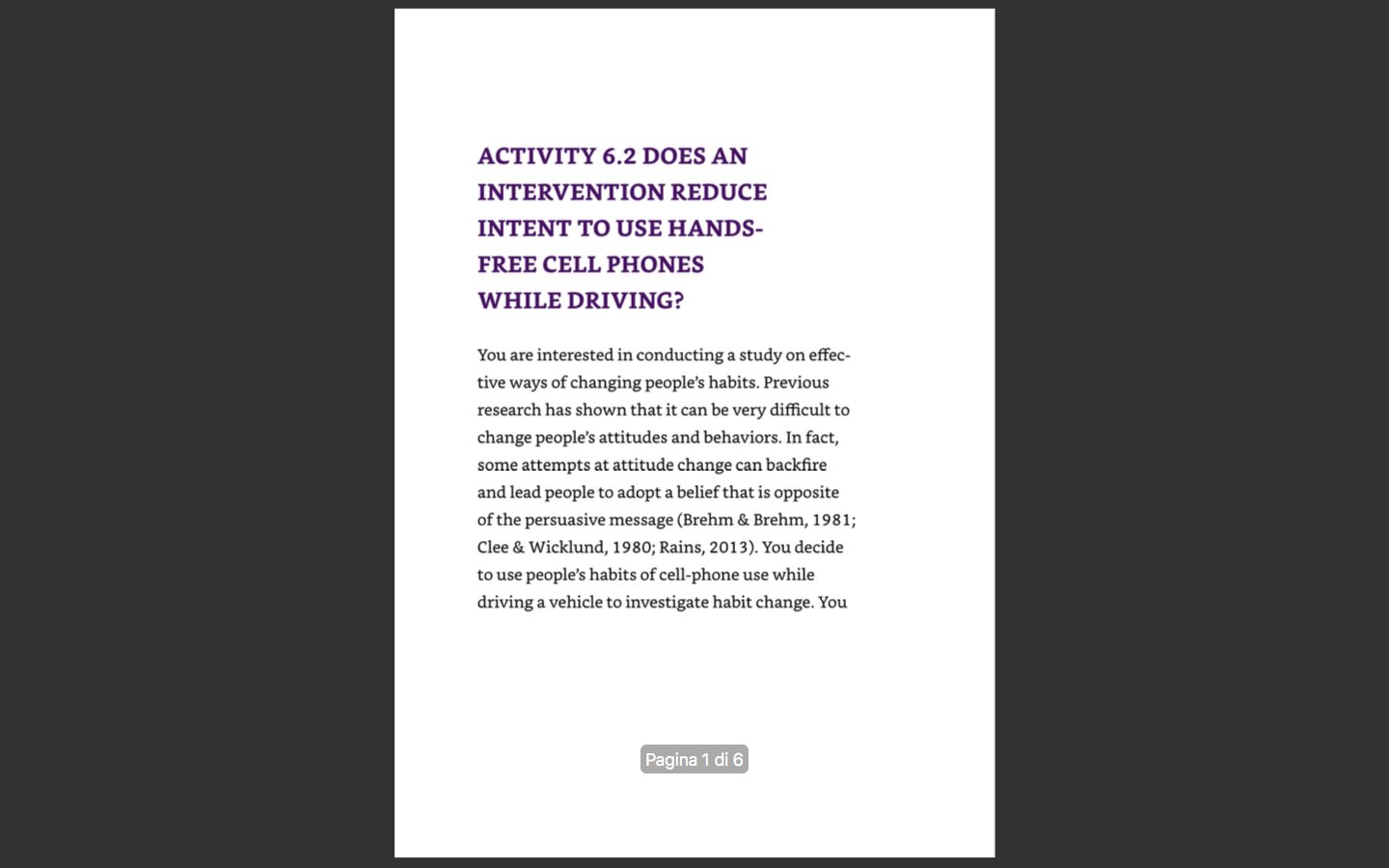
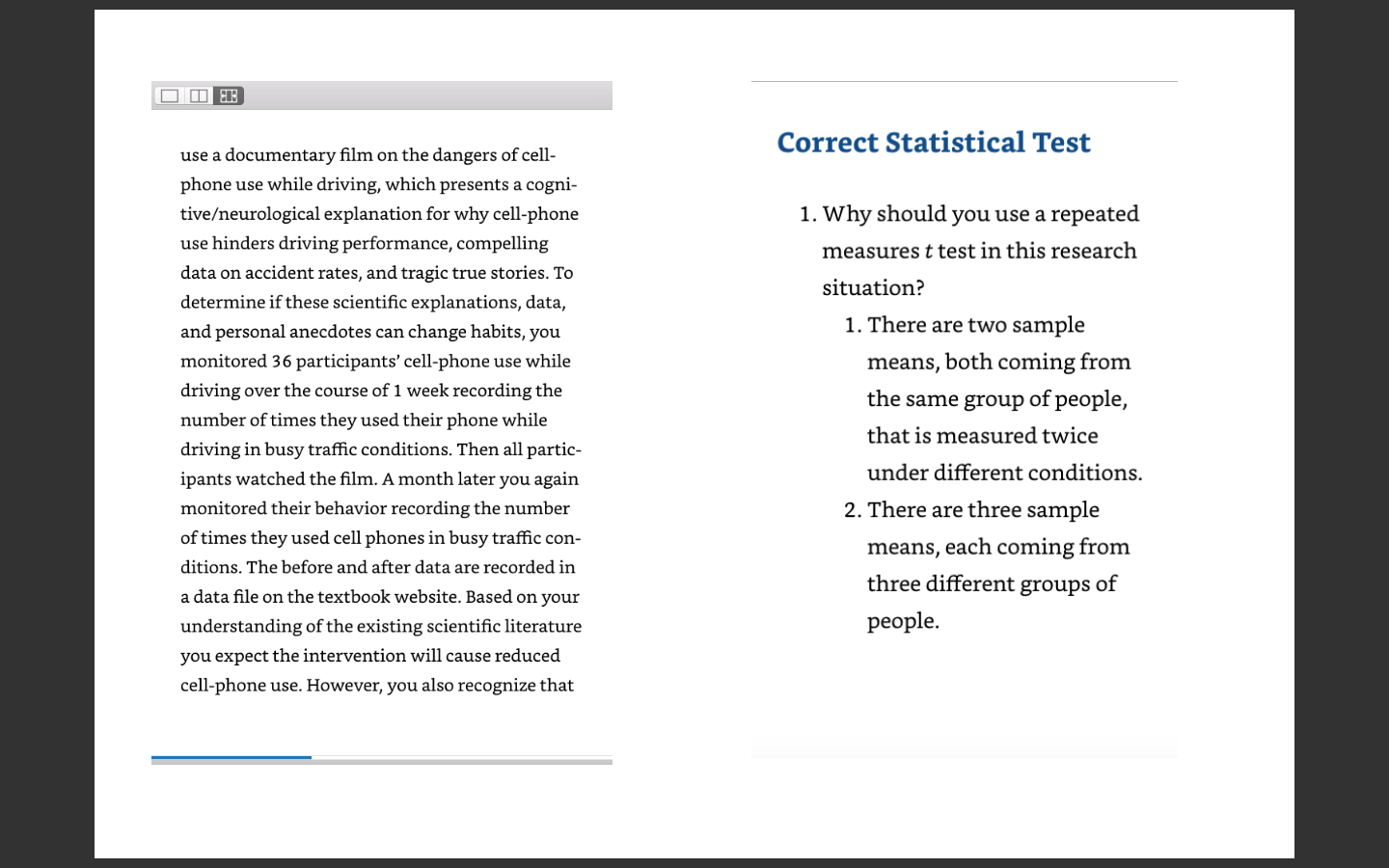
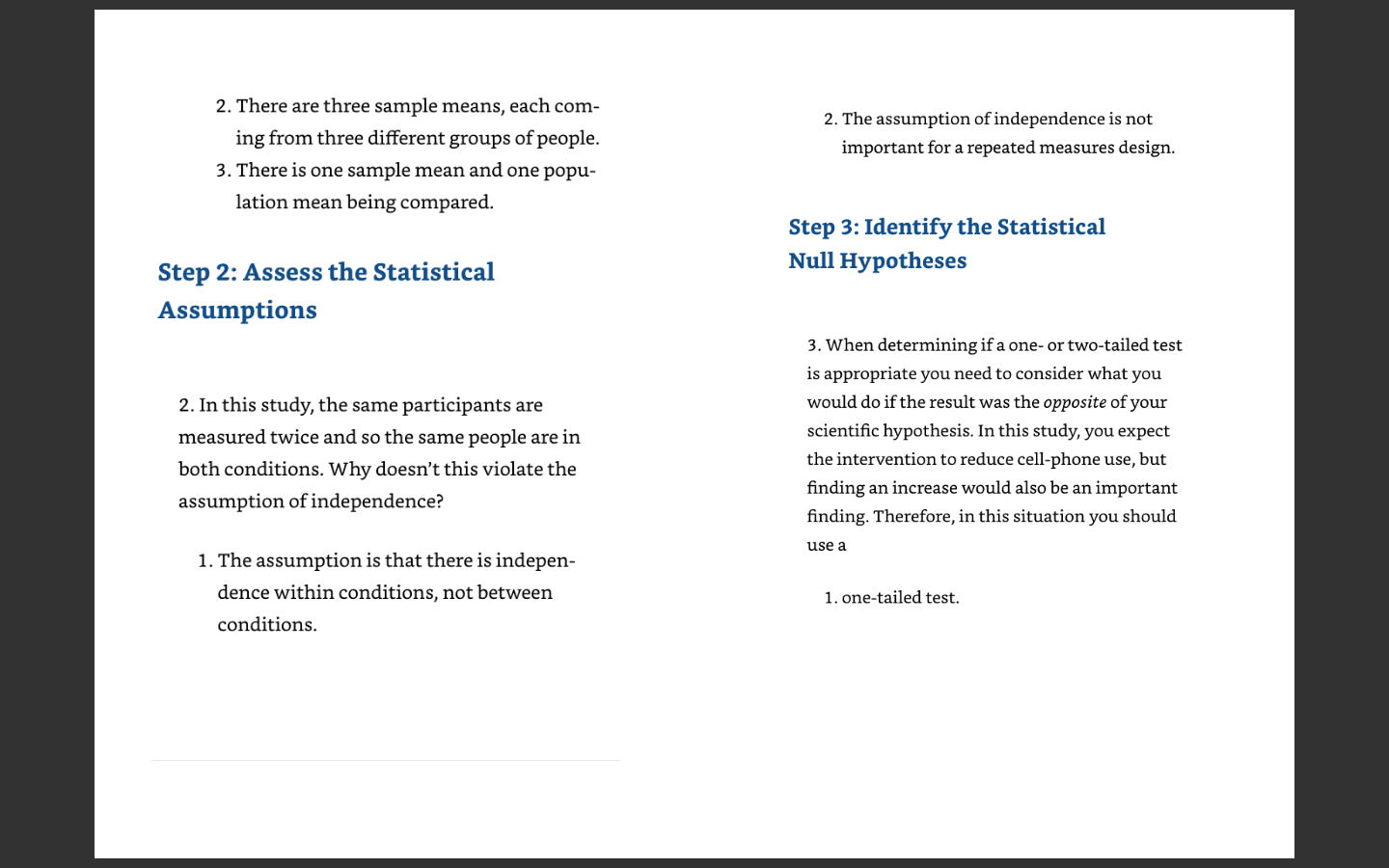
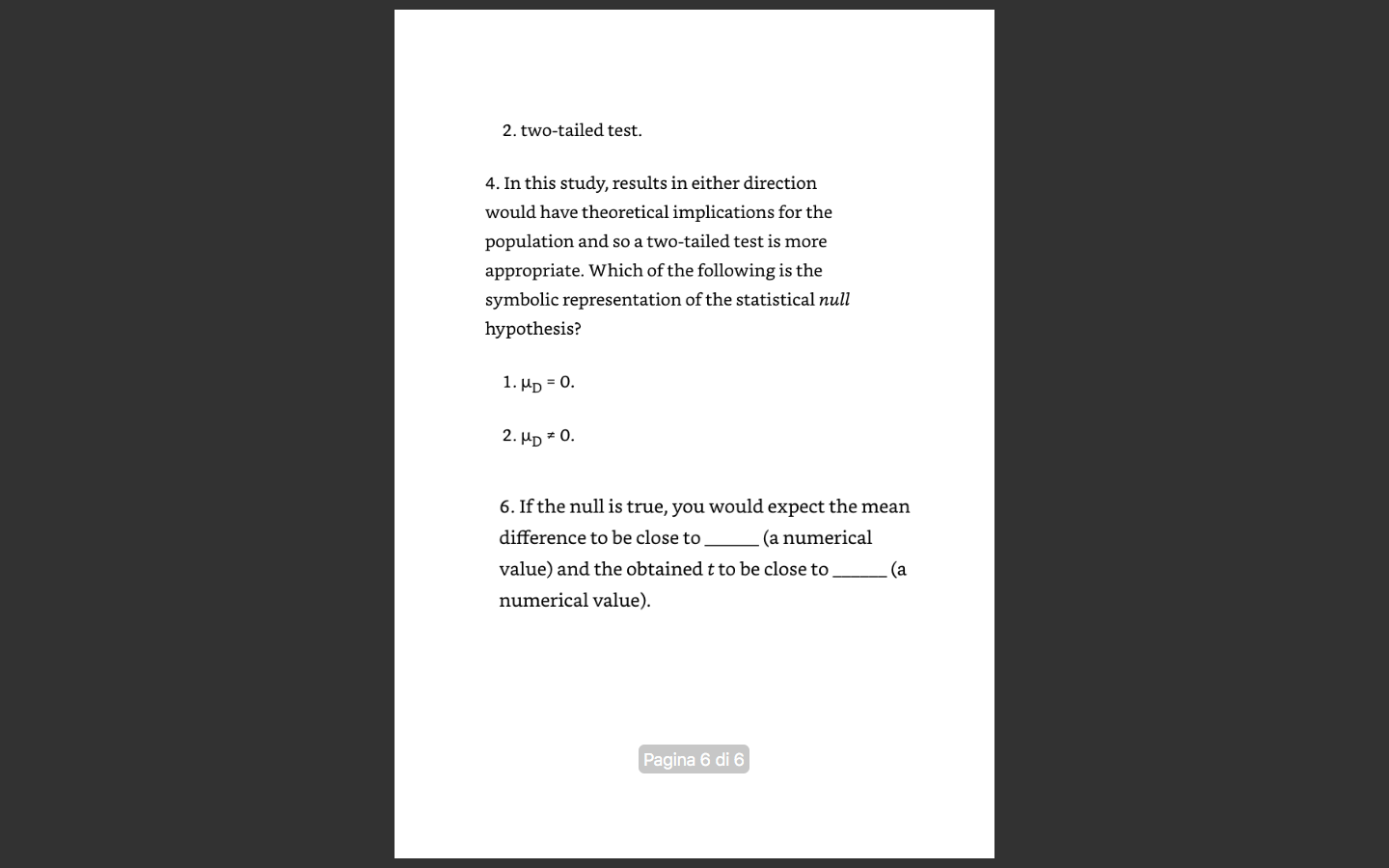
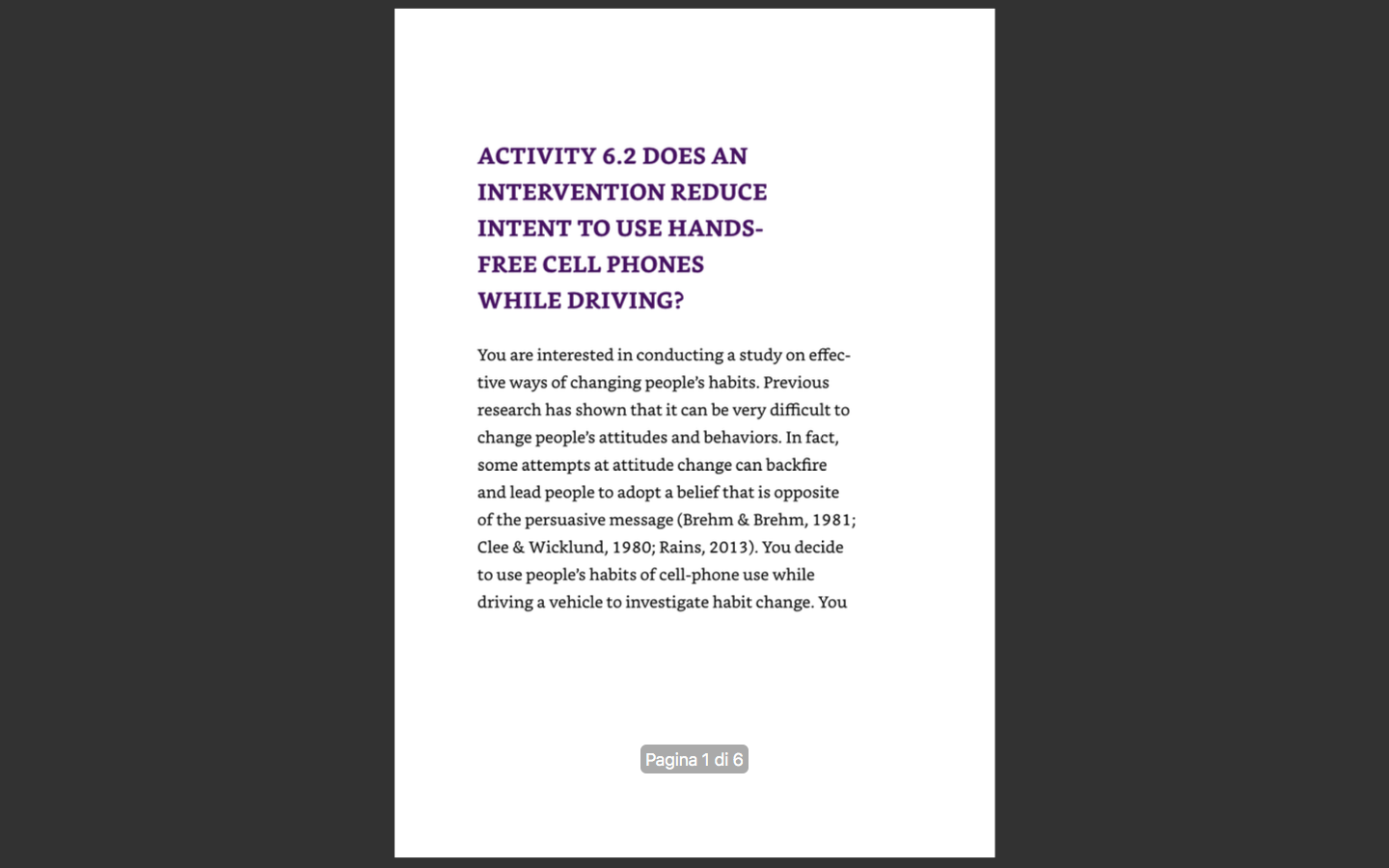
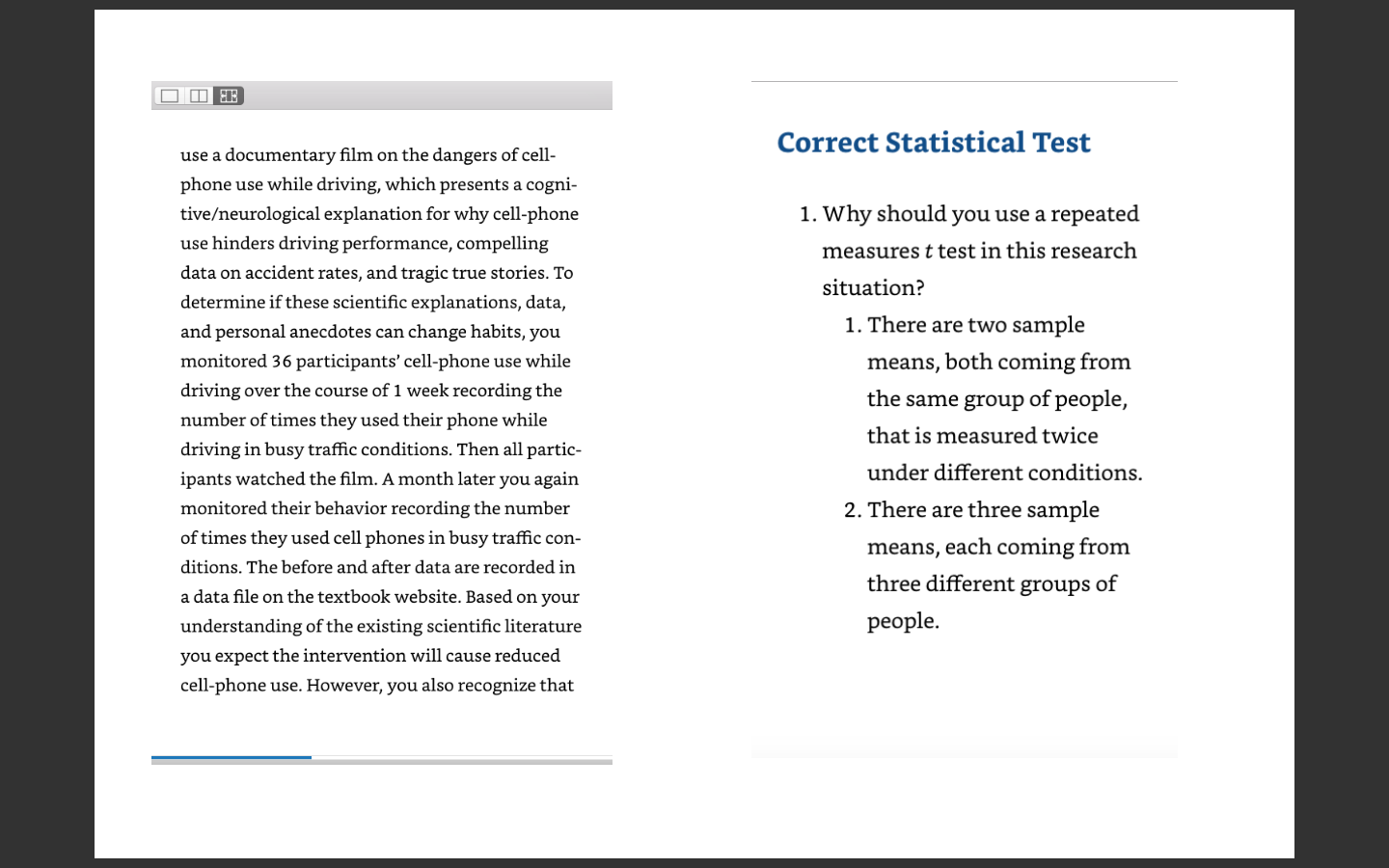
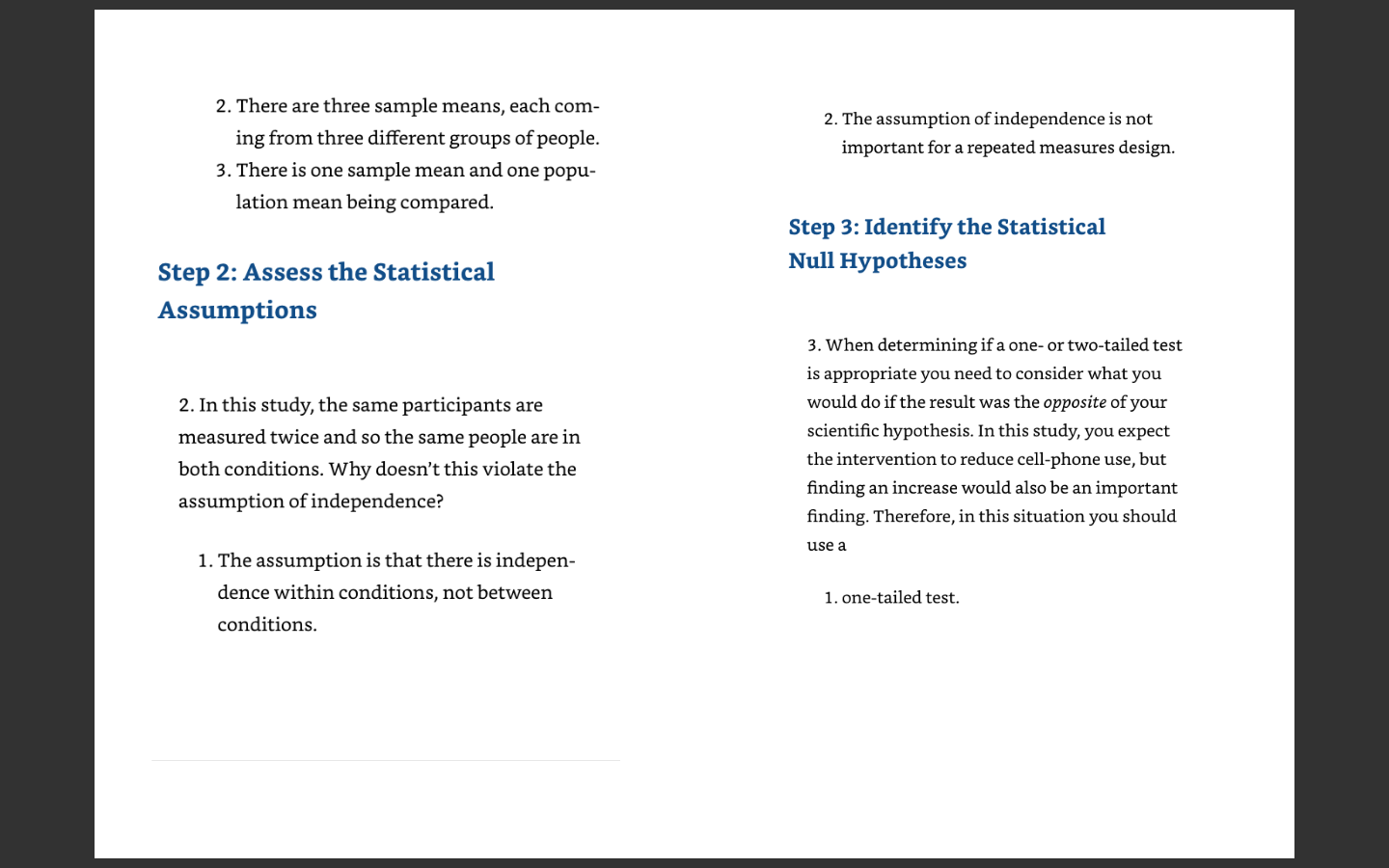
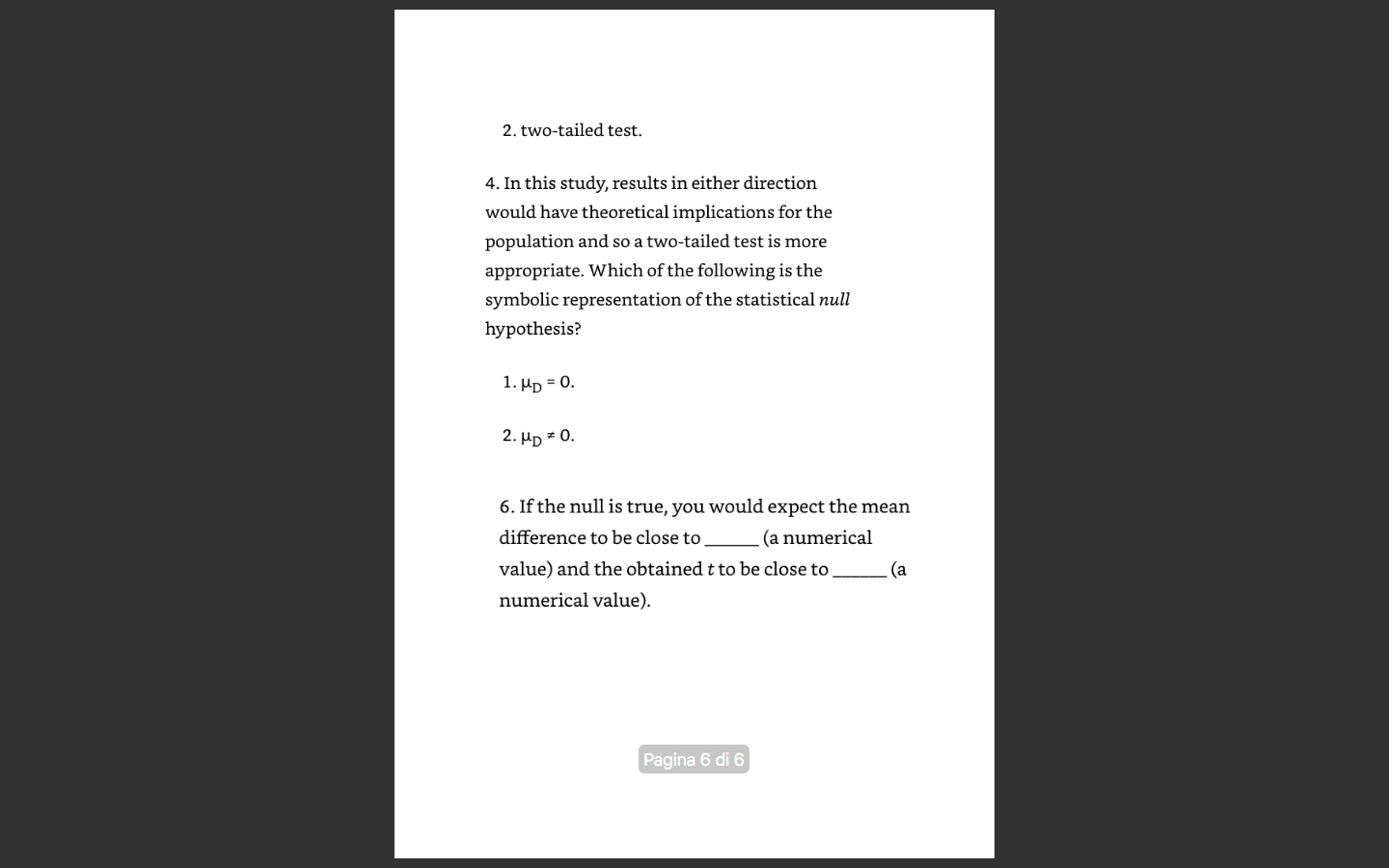
ACTIVITY 6.2 DOES AN INTERVENTION REDUCE INTENT TO USE HANDS- FREE CELL PHONES WHILE DRIVING? You are interested in conducting a study on effect tive ways of changing people's habits. Previous research has shown that it can be very difficult to change people's attitudes and behaviors. In fact, some attempts at attitude change can backfire and lead people to adopt a belief that is opposite of the persuasive message (Brehm & Brehm, 1981; Clee & Wicklund, 1980; Rains, 2013). You decide to use people's habits of cell-phone use while driving a vehicle to investigate habit change. You Pagina 1 di 6use a documentary film on the dangers of cell- Correct Statistical Test phone use while driving, which presents a cogni- tiveeurological explanation for why cell-phone 1. Why should you use a repeated use hinders driving performance, compelling measures t test in this research data on accident rates, and tragic true stories. To situation? determine if these scientific explanations, data, and personal anecdotes can change habits, you 1. There are two sample monitored 36 participants' cell-phone use while means, both coming from driving over the course of 1 week recording the the same group of people, number of times they used their phone while driving in busy traffic conditions. Then all partic- that is measured twice ipants watched the film. A month later you again under different conditions. monitored their behavior recording the number 2. There are three sample of times they used cell phones in busy traffic con- means, each coming from ditions. The before and after data are recorded in a data file on the textbook website. Based on your three different groups of understanding of the existing scientific literature people. you expect the intervention will cause reduced cell-phone use. However, you also recognize that2. There are three sample means, each com ing from three different groups of people. 3. There is one sample mean and one popu- lation mean being compared. Step 2: Assess the Statistical Assumptions 2. In this study, the same participants are measured twice and so the same people are in both conditions. Why doesn't this violate the assumption of independence? 1. The assumption is that there is indepen- dence within conditions, not between conditions. 2. The assumption of independence is not important for a repeated measures design. Step 3: Identify the Statistical Null Hypotheses 3. When determining if a one- or two-t ailecl test is appropriate you need to consider what you would do if the result was the opposite of your scientic hypothesis. In this study, you expect the intervention to reduce cellphone use, but nding an increase would also be an important nding. Therefore, in this situation you should use a 1. one-tailed test, 2. two tailed test. 4. In this study, results in either direction would have theoretical implications for the population and so a two-tailed test is more appropriate. Which of the following is the symbolic representation of the statistical null hypothesis? 1, on = 0' E'PD'O' 6. If the null is true, you would expect the mean difference to be close to (a numerical value) and the obtained It to be close to (a numerical value)
Step by Step Solution
There are 3 Steps involved in it

Get step-by-step solutions from verified subject matter experts
 Study Help