







Question: Activity - Based Costing Versus Traditional Approach, Activity - Based Management. Torres, Inc., produces a wood desk that sells for $ 5 0 0 and
ActivityBased Costing Versus Traditional Approach, ActivityBased Management. Torres, Inc., produces a wood desk that sells for $ and a wood table that sells for $ Last year, total overhead costs of $ were allocated based on direct labor costs. Direct labor costs totaled $ last year, and the company produced desks and tables. Total direct labor and direct materials costs by product for last year were as follows:
Desk Table
Direct materials $ $
Direct labor $ $
The management of Torres, Inc., would like to use activitybased costing to allocate overhead rather than one plantwide rate based on direct labor costs. The following estimates are for the activities and related cost drivers identified as having the greatest impact on overhead costs:
Estimated Cost Driver Activity
Activity Cost Driver Estimated Overhead Costs Desk Table Total
Purchase orders Number of purchase orders $
Machine setups Number of setups
Machine maintenance Machine hours
Quality inspections Number of inspections
Total
$
Required:
Calculate the direct materials cost per unit and direct labor cost per unit for each product.
Using the plantwide allocation method, calculate the predetermined overhead rate and determine the overhead cost per unit allocated to the desk and table products.
Using the plantwide allocation method, calculate the product cost per unit for the desk and table products.
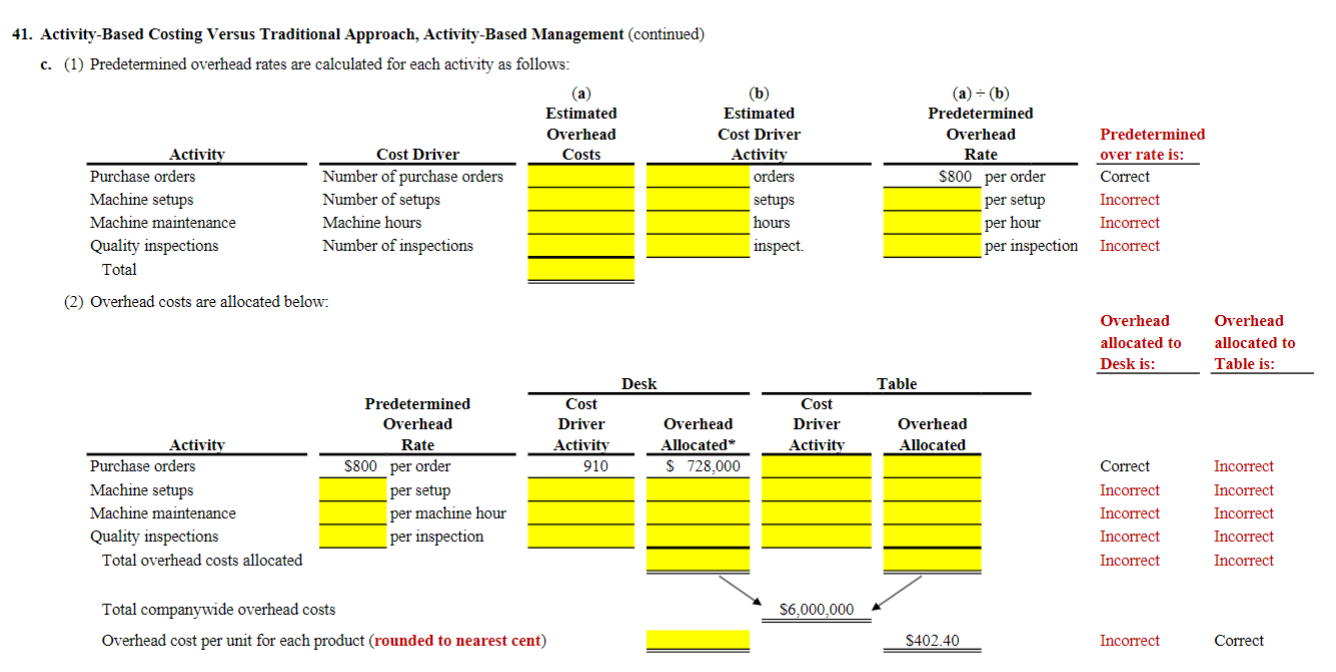
Using the activitybased costing allocation method, calculate the predetermined overhead rate for each activity. Hint: step through step in the activitybased costing process have already been done for you; this is step
Using the activitybased costing allocation method, allocate overhead to each product. Hint: This is step in the activitybased costing process. Determine the overhead cost per unit. Round results to the nearest dollar.
What is the product cost per unit for the desk and table products?
Calculate the per unit profit for each product using the plantwide approach and the activitybased costing approach. How much did the per unit profit change when moving from one approach to the other?
Refer to the estimated cost driver activity provided. Calculate the percent of each activity consumed by each product for example, the desk product issued of the purchase orders issued in total and therefore consumes percent of this activity These percentages represent the amount of overhead costs allocated to each product using activitybased costing. Using the plantwide approach, percent of all overhead costs are allocated to the desk and percent to the table. Compare the activitybased costing percentages to the percentage of overhead allocated to each product using the plantwide approach. Use this information to explain what caused the shift in overhead costs to the desk product using activitybased costing. ActivityBased Costing Versus Traditional Approach, ActivityBased Management. Torres,
Inc., produces a wood desk that sells for $ and a wood table that sells for $ Last year,
total overhead costs of $ were allocated based on direct labor costs. Direct labor costs
totaled $ last year, and the company produced desks and tables. Total
direct labor and direct materials costs by product for last year were as follows:
The management of Torres, Inc., would like to use activitybased costing to allocate overhead
rather than one plantwide rate based on direct labor costs. The following estimates are for the
activities and related cost drivers identified as having the greatest impact on overhead costs:
Step by Step Solution
There are 3 Steps involved in it
1 Expert Approved Answer
Step: 1 Unlock

Question Has Been Solved by an Expert!
Get step-by-step solutions from verified subject matter experts
Step: 2 Unlock
Step: 3 Unlock
 Study Help