



Question: After extensive research and development, Goodweek Tires, Inc., has recently developed a new tire, the Super Tread, and must decide whether to make the necessary
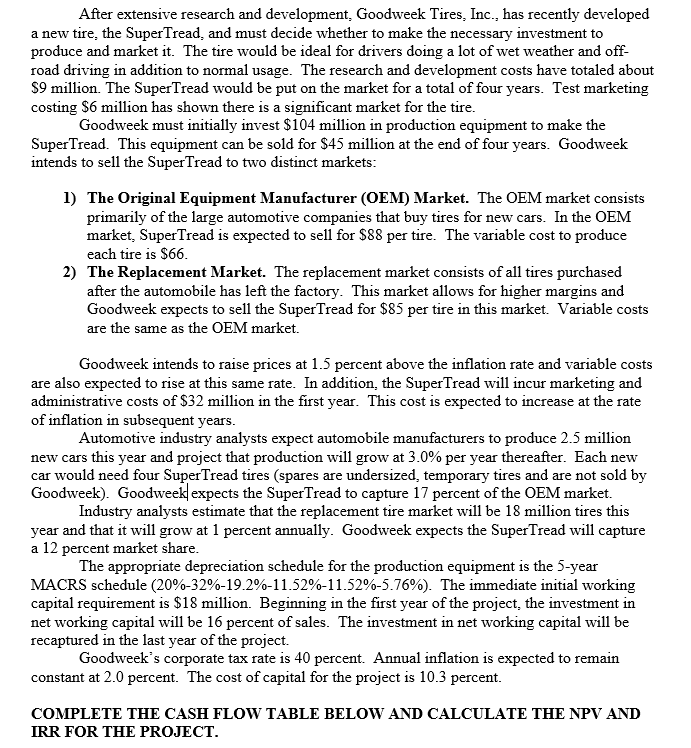
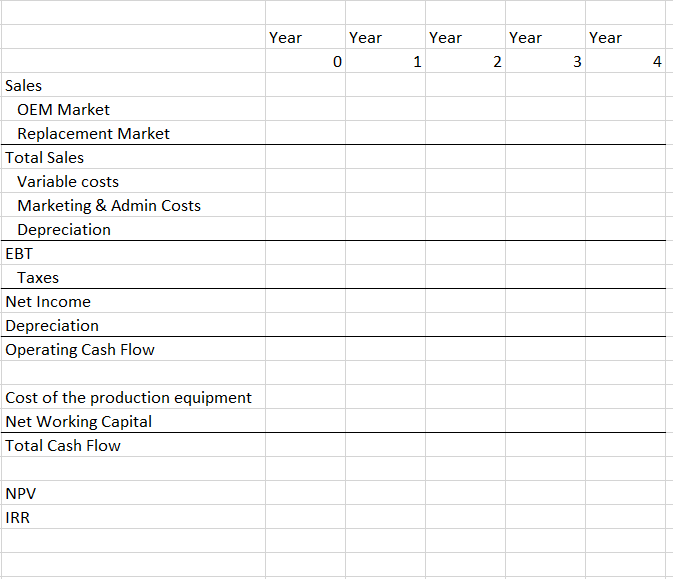
After extensive research and development, Goodweek Tires, Inc., has recently developed a new tire, the Super Tread, and must decide whether to make the necessary investment to produce and market it. The tire would be ideal for drivers doing a lot of wet weather and off- road driving in addition to normal usage. The research and development costs have totaled about $9 million. The Super Tread would be put on the market for a total of four years. Test marketing costing $6 million has shown there is a significant market for the tire. Goodweek must initially invest $104 million in production equipment to make the Super Tread. This equipment can be sold for $45 million at the end of four years. Goodweek intends to sell the SuperTread to two distinct markets: 1) The Original Equipment Manufacturer (OEM) Market. The OEM market consists primarily of the large automotive companies that buy tires for new cars. In the OEM market. Super Tread is expected to sell for $88 per tire. The variable cost to produce each tire is $66. 2) The Replacement Market. The replacement market consists of all tires purchased after the automobile has left the factory. This market allows for higher margins and Goodweek expects to sell the Super Tread for $85 per tire in this market. Variable costs are the same as the OEM market. Goodweek intends to raise prices at 1.5 percent above the inflation rate and variable costs are also expected to rise at this same rate. In addition, the Super Tread will incur marketing and administrative costs of $32 million in the first year. This cost is expected to increase at the rate of inflation in subsequent years. Automotive industry analysts expect automobile manufacturers to produce 2.5 million new cars this year and project that production will grow at 3.0% per year thereafter. Each new car would need four Super Tread tires (spares are undersized, temporary tires and are not sold by Goodweek). Goodweek expects the SuperTread to capture 17 percent of the OEM market. Industry analysts estimate that the replacement tire market will be 18 million tires this year and that it will grow at 1 percent annually. Goodweek expects the Super Tread will capture a 12 percent market share. The appropriate depreciation schedule for the production equipment is the 5-year MACRS schedule (20%-32%-19.2%-11.52%-11.52%-5.76%). The immediate initial working capital requirement is $18 million. Beginning in the first year of the project, the investment in net working capital will be 16 percent of sales. The investment in net working capital will be recaptured in the last year of the project. Goodweek's corporate tax rate is 40 percent. Annual inflation is expected to remain constant at 2.0 percent. The cost of capital for the project is 10.3 percent. COMPLETE THE CASH FLOW TABLE BELOW AND CALCULATE THE NPV AND IRR FOR THE PROJECT. Year Year Year Year Year 2 Sales OEM Market Replacement Market Total Sales Variable costs Marketing & Admin Costs Depreciation EBT Taxes Net Income Depreciation Operating Cash Flow Cost of the production equipment Net Working Capital Total Cash Flow NPV IRR After extensive research and development, Goodweek Tires, Inc., has recently developed a new tire, the Super Tread, and must decide whether to make the necessary investment to produce and market it. The tire would be ideal for drivers doing a lot of wet weather and off- road driving in addition to normal usage. The research and development costs have totaled about $9 million. The Super Tread would be put on the market for a total of four years. Test marketing costing $6 million has shown there is a significant market for the tire. Goodweek must initially invest $104 million in production equipment to make the Super Tread. This equipment can be sold for $45 million at the end of four years. Goodweek intends to sell the SuperTread to two distinct markets: 1) The Original Equipment Manufacturer (OEM) Market. The OEM market consists primarily of the large automotive companies that buy tires for new cars. In the OEM market. Super Tread is expected to sell for $88 per tire. The variable cost to produce each tire is $66. 2) The Replacement Market. The replacement market consists of all tires purchased after the automobile has left the factory. This market allows for higher margins and Goodweek expects to sell the Super Tread for $85 per tire in this market. Variable costs are the same as the OEM market. Goodweek intends to raise prices at 1.5 percent above the inflation rate and variable costs are also expected to rise at this same rate. In addition, the Super Tread will incur marketing and administrative costs of $32 million in the first year. This cost is expected to increase at the rate of inflation in subsequent years. Automotive industry analysts expect automobile manufacturers to produce 2.5 million new cars this year and project that production will grow at 3.0% per year thereafter. Each new car would need four Super Tread tires (spares are undersized, temporary tires and are not sold by Goodweek). Goodweek expects the SuperTread to capture 17 percent of the OEM market. Industry analysts estimate that the replacement tire market will be 18 million tires this year and that it will grow at 1 percent annually. Goodweek expects the Super Tread will capture a 12 percent market share. The appropriate depreciation schedule for the production equipment is the 5-year MACRS schedule (20%-32%-19.2%-11.52%-11.52%-5.76%). The immediate initial working capital requirement is $18 million. Beginning in the first year of the project, the investment in net working capital will be 16 percent of sales. The investment in net working capital will be recaptured in the last year of the project. Goodweek's corporate tax rate is 40 percent. Annual inflation is expected to remain constant at 2.0 percent. The cost of capital for the project is 10.3 percent. COMPLETE THE CASH FLOW TABLE BELOW AND CALCULATE THE NPV AND IRR FOR THE PROJECT. Year Year Year Year Year 2 Sales OEM Market Replacement Market Total Sales Variable costs Marketing & Admin Costs Depreciation EBT Taxes Net Income Depreciation Operating Cash Flow Cost of the production equipment Net Working Capital Total Cash Flow NPV IRR
Step by Step Solution
There are 3 Steps involved in it

Get step-by-step solutions from verified subject matter experts