Question: After reading Note 1: Understanding Case Method in your Coursepack, mention at least four salient features of the Case Analysis Method. I am looking for
After reading Note 1: Understanding Case Method in your Coursepack, mention at least four salient features of the Case Analysis Method. I am looking for 4 - 6 sentences either in a paragraph or in bullet points. Use complete sentences.
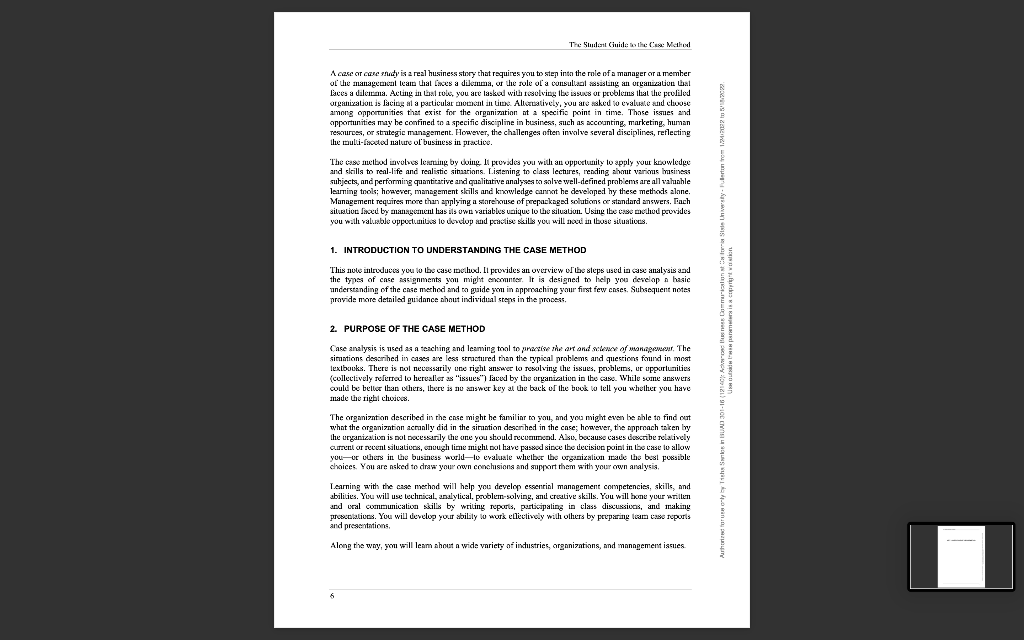
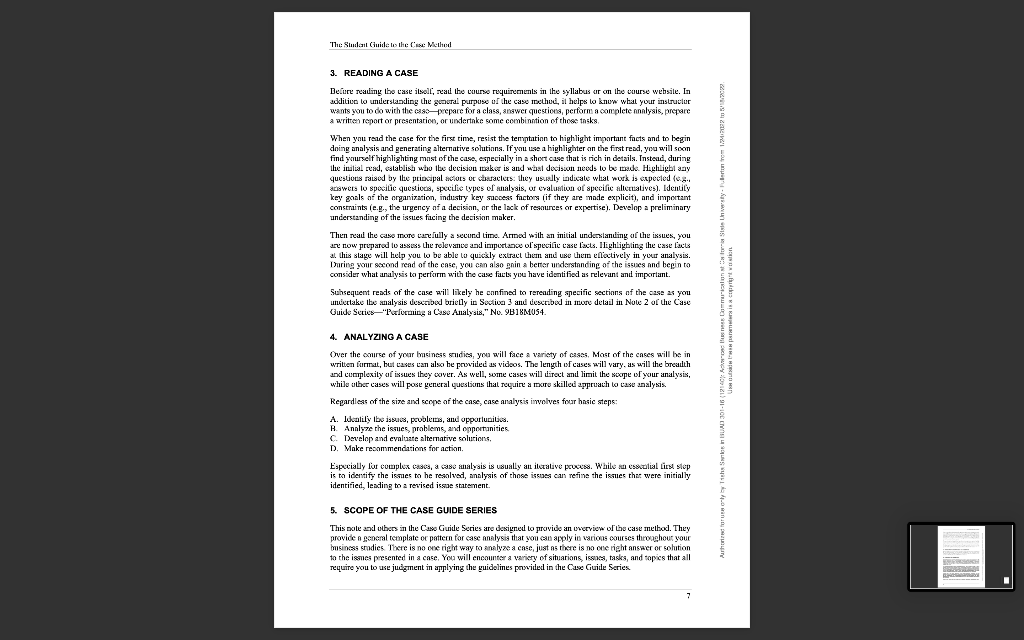
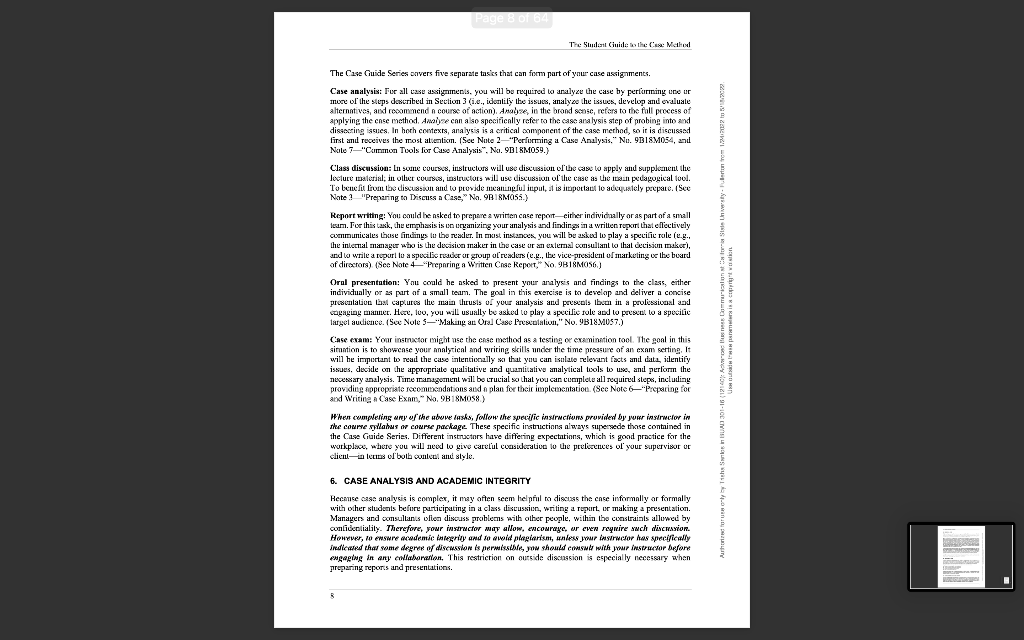
The Simulate the Method NOTE 1: UNDERSTANDING THE CASE METHOD The Sul Ciuide to the ex: Mathew A case of Care Trudy is a real husiness story that requires you to sten into the role of a manager or a member of the image calcat hal Laces a dilunma, or the role of a consultanissling all organization that laces a dalim. Acting in alcule, you acelaskol with resolving be issues or problems at the profiled Organization is lacing al a particular on in Lite Alicatively, you are asked to evaluate and choose among opportunities that exist for the organization at a specific point in time. Those issues and opportunities may be confined to a specific discipline in business, such as accounting, marketing, hurnan Tesources, or strategic management. However, the challenges often involve several disciplines, reflecting ile multi-coloure of business in practice. The case mucbod vores learning by doing lu provides you with an opportunity to apply your knowledge and skills to real-life and realistic sitaarians. Listening to class lectures, reading about varius lasiness subjects, and performing quantitative and qualitative analyses to solve well-defined problems are all valuable learning tools; however, management skills and kwwledge cannot he developed hy these methods alone. Management requires more than applying a starehouse of prepackaged solutions ce standard answers. Tach silukaliud faced by management has its own variables unique to the situation. Using ibo case method provides you wat valuable opportuulis to desclup and practise skills you will not in use situatics. 1. INTRODUCTION TO UNDERSTANDING THE CASE METHOD This nule introduces you to the case chod. Il provides an overview of the steps used in case analysis and you eneminder. It a the type of care anmuide you in apmachine aur first melaphate of and . pravide more detiled guidance about individual steps in the process, 2. PURPOSE OF THE CASE METHOD Case analysis is used as a teaching and leaming tool to praise the art ond slew of morapar. The simations described in cases are less structured than the typical problems and questions found in most lextbooks. There is no necessarily be right answer to resolving the issues, problems, ur uppurtunities (collectively referred to her allar as "issues" faced by the uryanication in the case. While some answers would be bello than others, there is no answer key at the back of the book to tell you whether you have made the righi cho The organization described in the case might he familiar to you, and you might even be able to find out what the organizntion acraally did in the situation described in the case; however, the approach takenly the uryanicalica is bol necessarily the one you should recununead. Alsu, because cases describe relatively . Current or recent situatics, cough time might not have passed since the decision point in the case to allow your others in the business world-lo evaluate whelber the wrganization cate the best possible choices. You are nsked to draw your own conclusions and support them with your own analysis, Learning with the case merhad will help you develop essencial management competencies, skills, and abilities. You will use technical analytical, problem-solving, and creative skills. You will bone your wrillen and Ural communication skills by writing reports, purticipating in class discussions, and making proscetulives. You will develop your ability to work electively with others by preparing team case reports and presentations Along the way, you will leam about a wide variety of industries, organizations, and management issues The Sindal Ciuide to the Ce Muthod 3. READING A CASE Delure reading the case itsell, au the curso requirements in the syllabus vir on the course website. In addition to understanding the general purpose of the case method, al helps to knw what your instruclur wants you to do with the casos prepare for a class, answer questions, perform a complete analysis, prepare a written report or prescntarion, or undertnke some combination of those tasks When you read the case for the first time, resist the temptation to highlight important facts and to begin dning analysis and generating alternative solutinns. If you use a highligister on the first read, you will soon find yourself highlighting most of the case, especially in a short case that is rich in details. Instead, during ile inalial read, establish who ibe decision maker is and what decision needs to be trade Highlight any questions raised by ile principal clots of characters, they usually indicale wlal vurk is expected le.. answers to spoilic questions, specilie Lypes of analysis, or evaluation of specific allcuatives). Identity key goals of the organization, industry key success factors if they are made explicit), and important constraints (eg, the urgency of a decision, or the lack of resources or expertise). Develop a preliminary understanding of the issues facing the decision maker. Then read the caso mare care ully a secund time. Armed with an initial understanding of the issues, you are now prepared to assess the relevance and importance of specilit esse facts. Highlighting the case Lacts at this stage will help you to be able to quickly extract them and use them eflectively in your analysis. During your second read of the case, you can also gnin a better understanding of the issues and begin to consider what analysis to perform with the case facts you have identified as relevant and important. Subsequent reads of the case will likely he confined to rereading specific sections of the case as you uncetake ibe analysis described brielly in Soctiva 3 and described in more detail in Nole 2 of the Case Guide Series "Pluring a Case Analysis," No. 9B18M054. 4. ANALYZING A CASE Over the course of your vasiness studies, you will face a variety of cases. Most of the cases will be in written format, hul cases can also he provided as videos. The length of cases will vary, as will the breath and complexity of issues they cover. As well, some cases will direct and limit the socpe of your analysis, while other cases will pose general questions that require a more skilled approach to case analysis. Regardless of the size and scope of the case, case analysis involves four hasic steps: A. Idenlily be issues, problems, and opportunitics. B. Annlyze the issues, problems, and opportunities C. Develop and evaluate alternative solutions, D. Make recommendations for action. Especially for complex cases, a case analysis is usually an ilalive process. While sa scotial Liese step identified, leading to revised issa maynis of those ice can retina the issues that were initially , a . 5. SCOPE OF THE CASE GUIDE SERIES This pole and others in the Care Guide Series are designed to provide an overview of the case method. They provide a general remplate or pattern for case analysis that you can apply in various courses thaghout your business smadies. There is no one right way to analyze a casc, just as there is no one night answer or solution to the intes presented in a case. You will encounter a variery of situations, issues, tasks, and topics that all Tequire you to use judgment in applying thu yuidelines powvided in the Case Guide Series 7 Page 8 of 64 The Student Ciuide the Ce: Method Sims The Case Guide Series covers five separate tasies that can form part of your case assignments. Case analysis: For all case assignments, you will be required to analyze the case by perfurning ur more of the steps described in Section 3 (i.e., idenlily the issues, analyze the issues, develop and evaluate alternatives, and recommend n course of action). Ambae, in the brand scasc, refers to the fall process of applying the case method Analyse can also specifically refer to the case analysis step of probing into and dissering issues, In hoch contexts, analysis is a critical component of the case merhad, so it is discussed first and receives the most attention. (See Nute 2 "Performing a Case Analysis." No. 9BI&M054, and Note 7-"Cammon Tools for Case Analysis". No. 9D 18M059.) Class discussion: In some courses, instructors will use discussion of the case lo apply and supplemen the lecture material in vllict courses, instructors will use discussion of the case as the i pedagogical tool. To bouclit liom be discussion and to provide mocangful inpul, al is ditsportaal do adequately prepare. (See Nate ? "Preparing to Discuss a Case, No. 97 MOSS.) Report writing: You could he asked to prepare a written case report citer individually or as part of a small leum. For this taxk, the emphasis is ouryanizing your analysis and findings in a written report that effectively a communicales Luse findings to the reader. In mest instances, you will be asked to play a specific role in... the internal manager who is the decision maker in the case uram external comsullal to that decision mako), and to wrile a repurila a spucalic reader or group of readers (e.g., be vice-president of marketing u be beard of directors) (See Note 4"Preparing a Written Case Report, No 9B18MOSG) Oral presentation: You could he asked to present your analysis and findings to the class, either individually or as part of a small tear. The goal in this exercise is to develop and deliver a concise presentation that captures the main thrusts of your analysis and prescols bal in a prolissiwaal and copaging manner. Heze, luo, you will usually be asked to play a specilic role and to presen. w a specilic , a Lo Target audience. See Note 5"Making an Oral Case Presco," No.9B18MUS7.) Case exam: Yoar insmactor might use the case method as a testing or examination tool. The goal in this simation is to showcase your analytical and writing skills under the time pressure of an exam serting. It will he important to read the case intentionally so that you can isulate relevant facts and data identify issues, decide on the appropriate qualitative and quantitative analytical tools to us, and perform the necessary analysis. Tie angement will be crucial so that you can complete all required steps, including providing appropriate recommendations and a plan for their implementation. (See Note 6"Preparing for and Writing a Case Exam," No. 9B18M058) When completing any of the above lasks, follow the specific instructions provided by your instructor in the course yllabus or course package These specific instructions always supexede those contained in the Case Guide Series. Different instructors have differing expectations, which is good practice for the workplace, where you will need to give careful consideration to the prelicences of your supervisor ur clients of both content and style. 6. CASE ANALYSIS AND ACADEMIC INTEGRITY Recanice case analysis is complex, it may aften seem helpful to discuss the case informally or formally with other students before participating in a class discussion, writing a report, ur making a presentation. Managers and consultanis olien discuss problems with other people, within the constraints allowed by conlidentiality. Therefore, your instructor way allow, encourageor even remeire wuch dixcration. However, to ensure wwdemic integrity and to ewid plagiarism, unless your instructor has specifically indicated thar some degree of discussion is permissible, you should cons with your instructor before engaging in any collaboration. This restriction on outside discussion is especially necessary when preparing reports and presentations. The Sun Cike the C: Method It may also seem helpful to search the Internet for teaching notes for cases or for case reports or slide preaculations prepared by other students. Academic integrily requires ibal you zeliain live using such Resouros, ull or in parl. Any atteinpl lo use the work of others and to pass it of your own is plagiarist. If the instructor is suspicious that plagsara night be involved, you may be asked to upload a copy of y of your case report through Turnitin.com While using the wark of others may appear to provide a shortcut to a good grade, the quality of online sources and the work of other students is often suspect, at besi. Most importantly, you veprive yourself or ilue Lacing opportunities the case method ollurs









 Study Help