Question: After reading this chapter, it isn't surprising that you're becoming an investment wizard. With your newfound expertise, you purchase 100 shares of KSU Corporation for


After reading this chapter, it isn'tAfter reading this chapter, it isn'tAfter reading this chapter, it isn'tAfter reading this chapter, it isn't
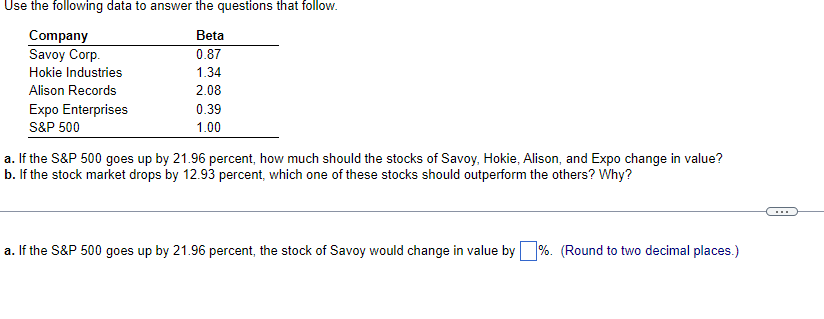
After reading this chapter, it isn't surprising that you're becoming an investment wizard. With your newfound expertise, you purchase 100 shares of KSU Corporation for $38.37 per share. Assume the price goes up to $48.57 per share over the next 12 months and you receive a qualified dividend of $0.63 per share. What would be your total return on your KSU Corporation investment? Assuming you continue to hold the stock, calculate your after-tax return. How is your realized after-tax return different if you sell the stock? In both cases assume you are in the 25 percent federal marginal tax bracket and 15 percent long-term capital gains and qualified dividends tax bracket and there is no state income tax on investment income. Your total rate of return on your KSU Corporation investment is %. (Round to two decimal places.)Last year you sold short 400 shares of stock selling at $84.79 per share. Six months later the stock had fallen to $38.98 per share. Over the six-month period, the company paid out two dividends of $0.96 per share. Your total commission cost for selling and buying the shares came to $125. Determine your profit or loss from these transactions. Your profit (or loss) from these transactions is $ . (Round to the nearest dollar.)An investor is considering purchasing one of the following three stocks. Stock X has a market capitalization of $7 billion, pays a relatively high dividend with little increase in earnings, and has a P/E ratio of 11. Stock Y has a market capitalization of $60 billion but does not currently pay a dividend. Stock Y has a P/E ratio of 37. Stock Z, a housing industry company, has a market capitalization of $795 million and a P/E of 19. a. Classify these stocks according to their market capitalizations. b. Which of the three would you classify as a growth stock? Why? c. Which stock would be most appropriate for an aggressive investor? d. Which stock would be most appropriate for someone seeking a combination of safety and earnings? a. Stock X is classified as a stock. (Select from the drop-down menu.)Use the following data to answer the questions that follow. Company Beta Savoy Corp. 0.87 Hokie Industries 1.34 Alison Records 2.08 Expo Enterprises 0.39 S&P 500 1.00 a. If the S&P 500 goes up by 21.96 percent, how much should the stocks of Savoy, Hokie, Alison, and Expo change in value? b. If the stock market drops by 12.93 percent, which one of these stocks should outperform the others? Why? a. If the S&P 500 goes up by 21.96 percent, the stock of Savoy would change in value by %. (Round to two decimal places.)

Step by Step Solution

There are 3 Steps involved in it

1 Expert Approved Answer
Step: 1 Unlock blur-text-image

Question Has Been Solved by an Expert!

Get step-by-step solutions from verified subject matter experts

Step: 2 Unlock
Step: 3 Unlock

Students Have Also Explored These Related Accounting Questions!