



Question: All information for the question is there. In b) where it refers to 'a)' that is just the question above. 2) The following is taken
All information for the question is there. In b) where it refers to 'a)' that is just the question above.
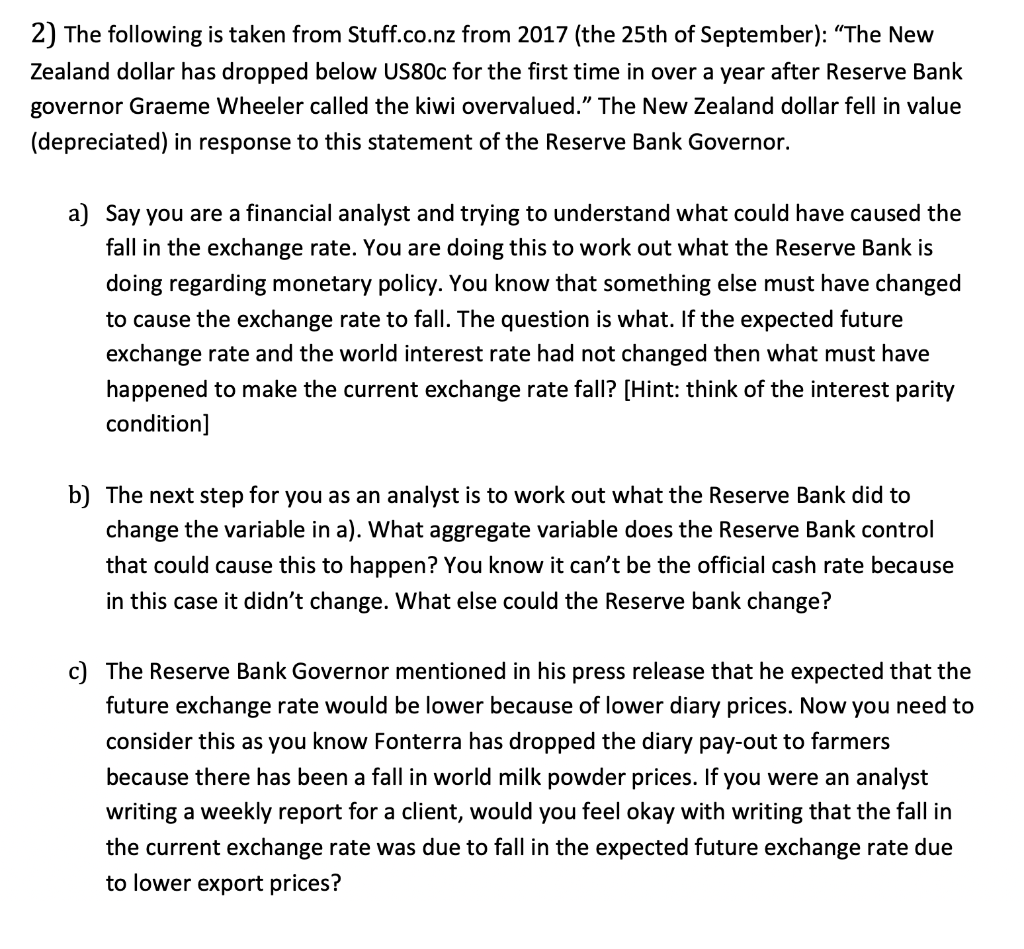
2) The following is taken from Stuff.co.nz from 2017 (the 25th of September): The New Zealand dollar has dropped below US80c for the first time in over a year after Reserve Bank governor Graeme Wheeler called the kiwi overvalued. The New Zealand dollar fell in value (depreciated) in response to this statement of the Reserve Bank Governor. a) Say you are a financial analyst and trying to understand what could have caused the fall in the exchange rate. You are doing this to work out what the Reserve Bank is doing regarding monetary policy. You know that something else must have changed to cause the exchange rate to fall. The question is what. If the expected future exchange rate and the world interest rate had not changed then what must have happened to make the current exchange rate fall? (Hint: think of the interest parity condition] b) The next step for you as an analyst is to work out what the Reserve Bank did to change the variable in a). What aggregate variable does the Reserve Bank control that could cause this to happen? You know it can't be the official cash rate because in this case it didn't change. What else could the Reserve bank change? c) The Reserve Bank Governor mentioned in his press release that he expected that the future exchange rate would be lower because of lower diary prices. Now you need to consider this as you know Fonterra has dropped the diary pay-out to farmers because there has been a fall in world milk powder prices. If you were an analyst writing a weekly report for a client, would you feel okay with writing that the fall in the current exchange rate was due to fall in the expected future exchange rate due to lower export prices? 2) The following is taken from Stuff.co.nz from 2017 (the 25th of September): The New Zealand dollar has dropped below US80c for the first time in over a year after Reserve Bank governor Graeme Wheeler called the kiwi overvalued. The New Zealand dollar fell in value (depreciated) in response to this statement of the Reserve Bank Governor. a) Say you are a financial analyst and trying to understand what could have caused the fall in the exchange rate. You are doing this to work out what the Reserve Bank is doing regarding monetary policy. You know that something else must have changed to cause the exchange rate to fall. The question is what. If the expected future exchange rate and the world interest rate had not changed then what must have happened to make the current exchange rate fall? (Hint: think of the interest parity condition] b) The next step for you as an analyst is to work out what the Reserve Bank did to change the variable in a). What aggregate variable does the Reserve Bank control that could cause this to happen? You know it can't be the official cash rate because in this case it didn't change. What else could the Reserve bank change? c) The Reserve Bank Governor mentioned in his press release that he expected that the future exchange rate would be lower because of lower diary prices. Now you need to consider this as you know Fonterra has dropped the diary pay-out to farmers because there has been a fall in world milk powder prices. If you were an analyst writing a weekly report for a client, would you feel okay with writing that the fall in the current exchange rate was due to fall in the expected future exchange rate due to lower export prices
Step by Step Solution
There are 3 Steps involved in it

Get step-by-step solutions from verified subject matter experts