







Question: All questions are multiple-choice: Multiple Choice: Circle the correct answer. 1. Evaluate lim - f ( 4 +h)-f(4) h -0 h , where f (x)
All questions are multiple-choice:
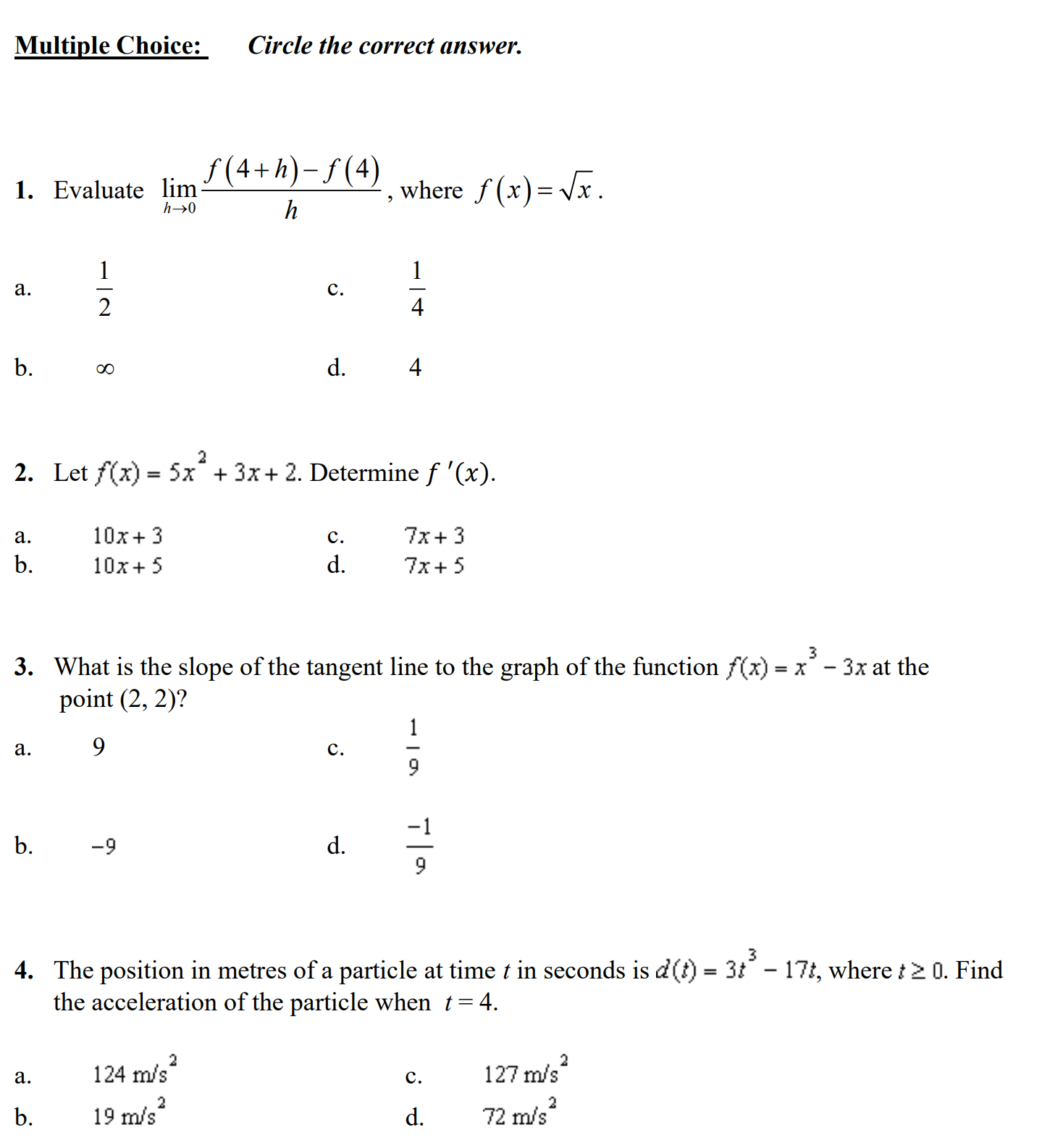
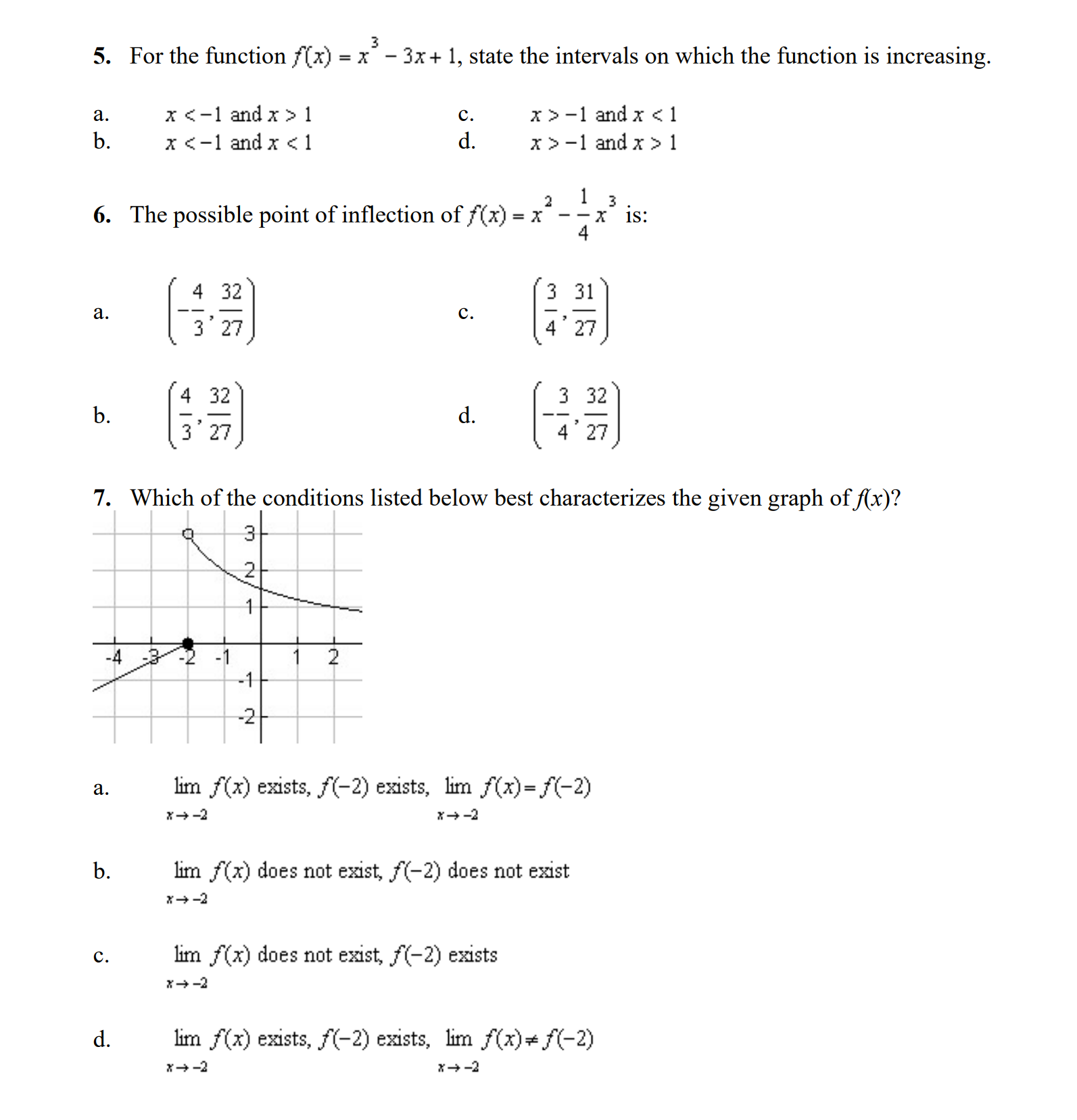
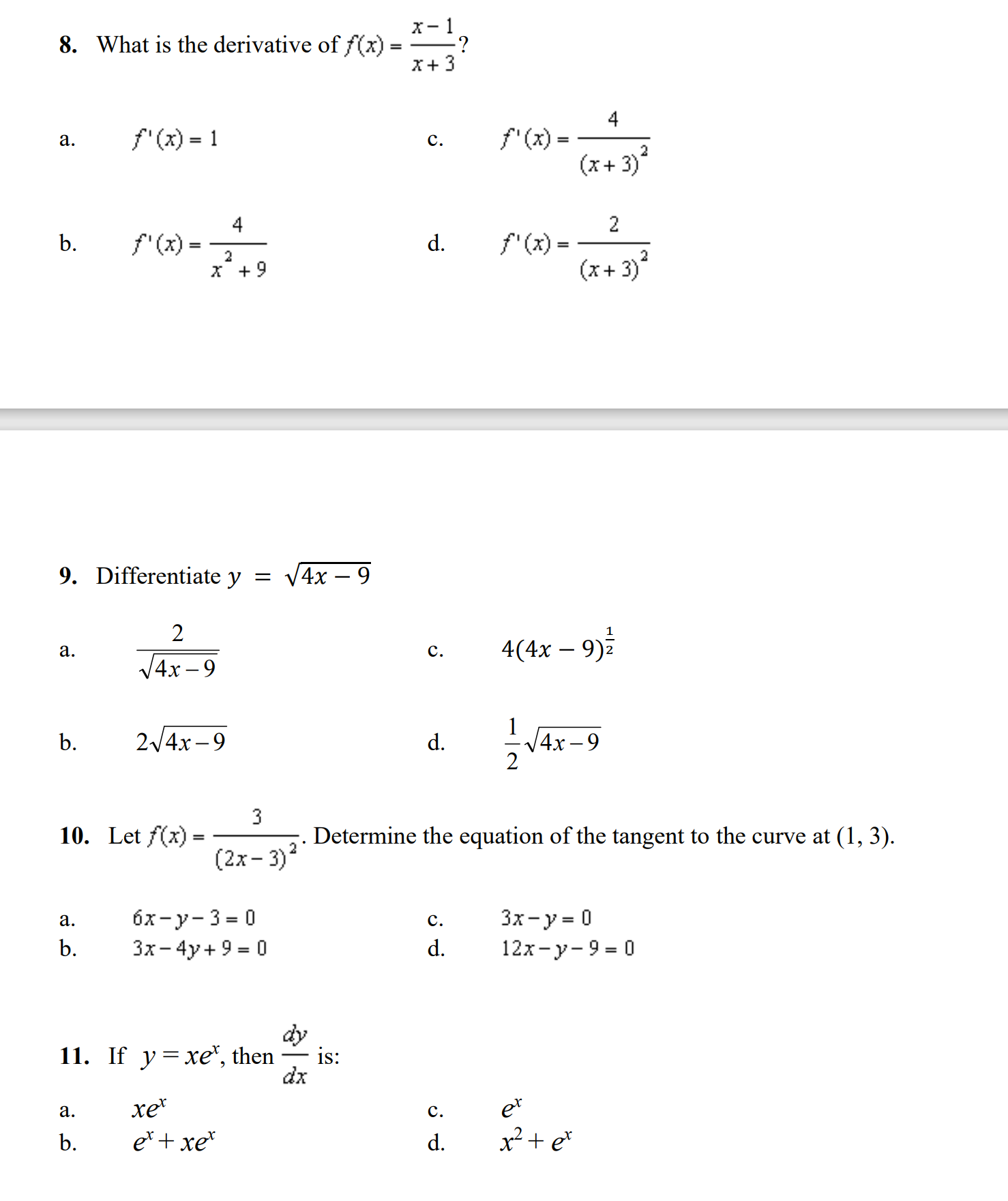
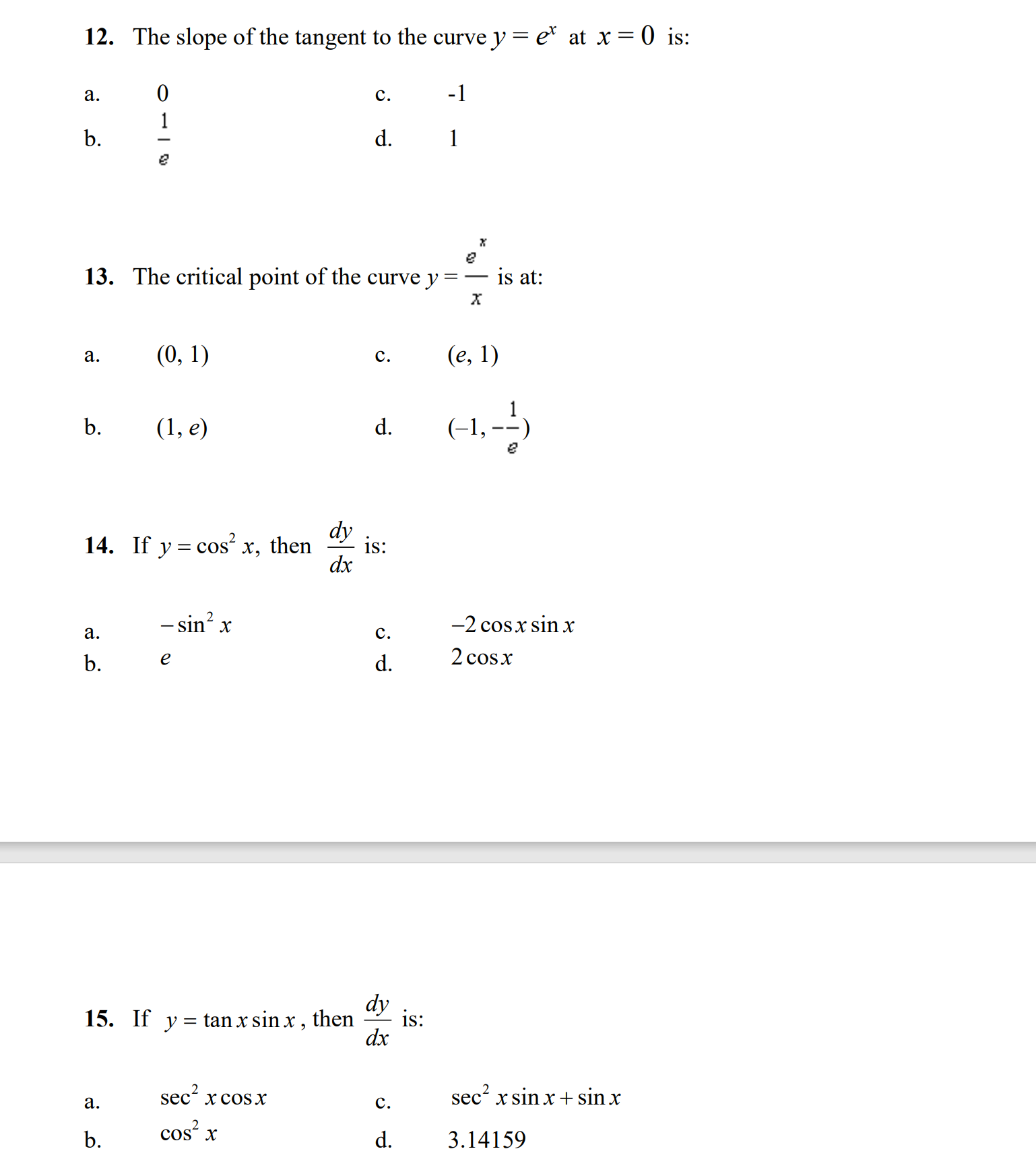
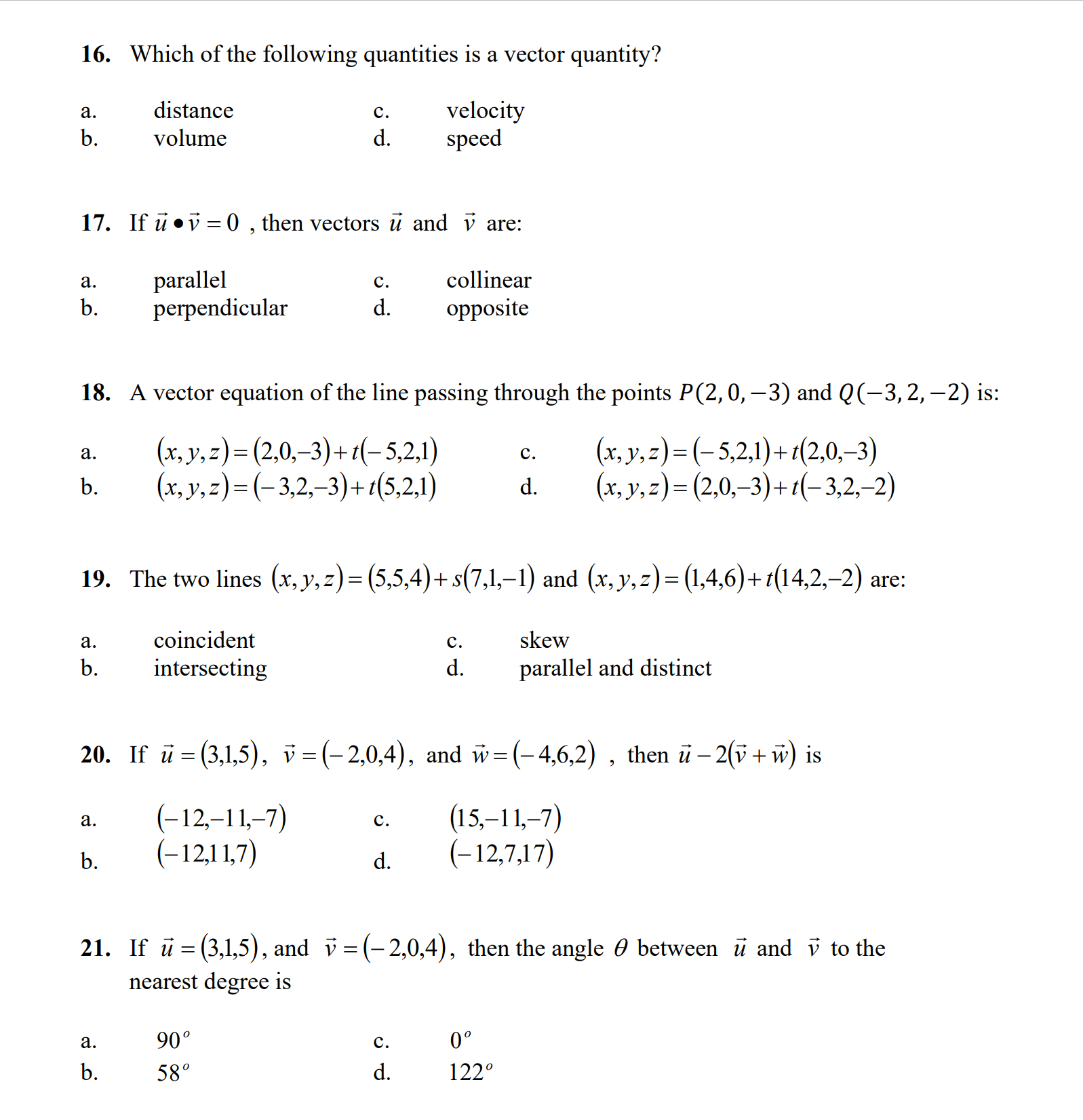
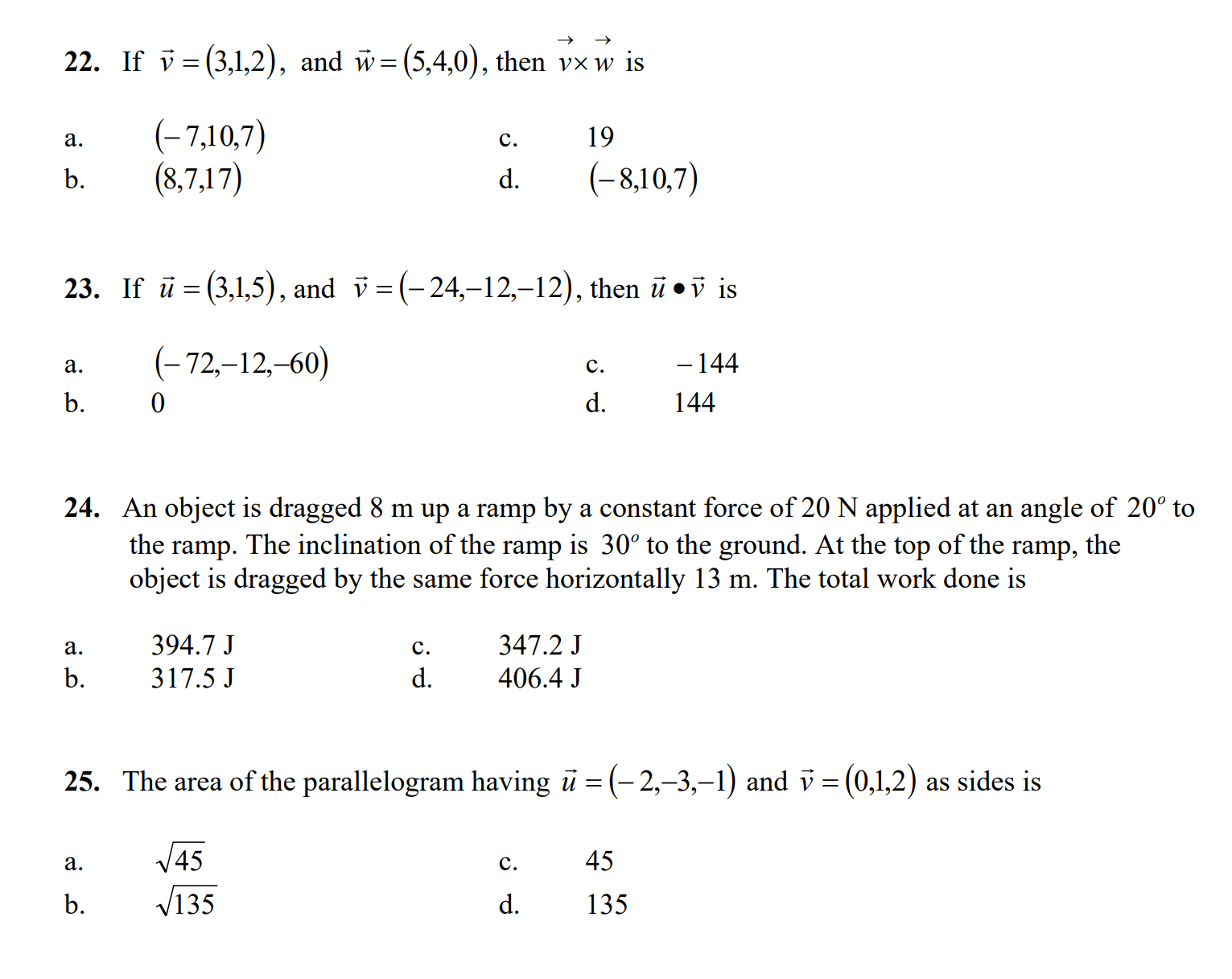
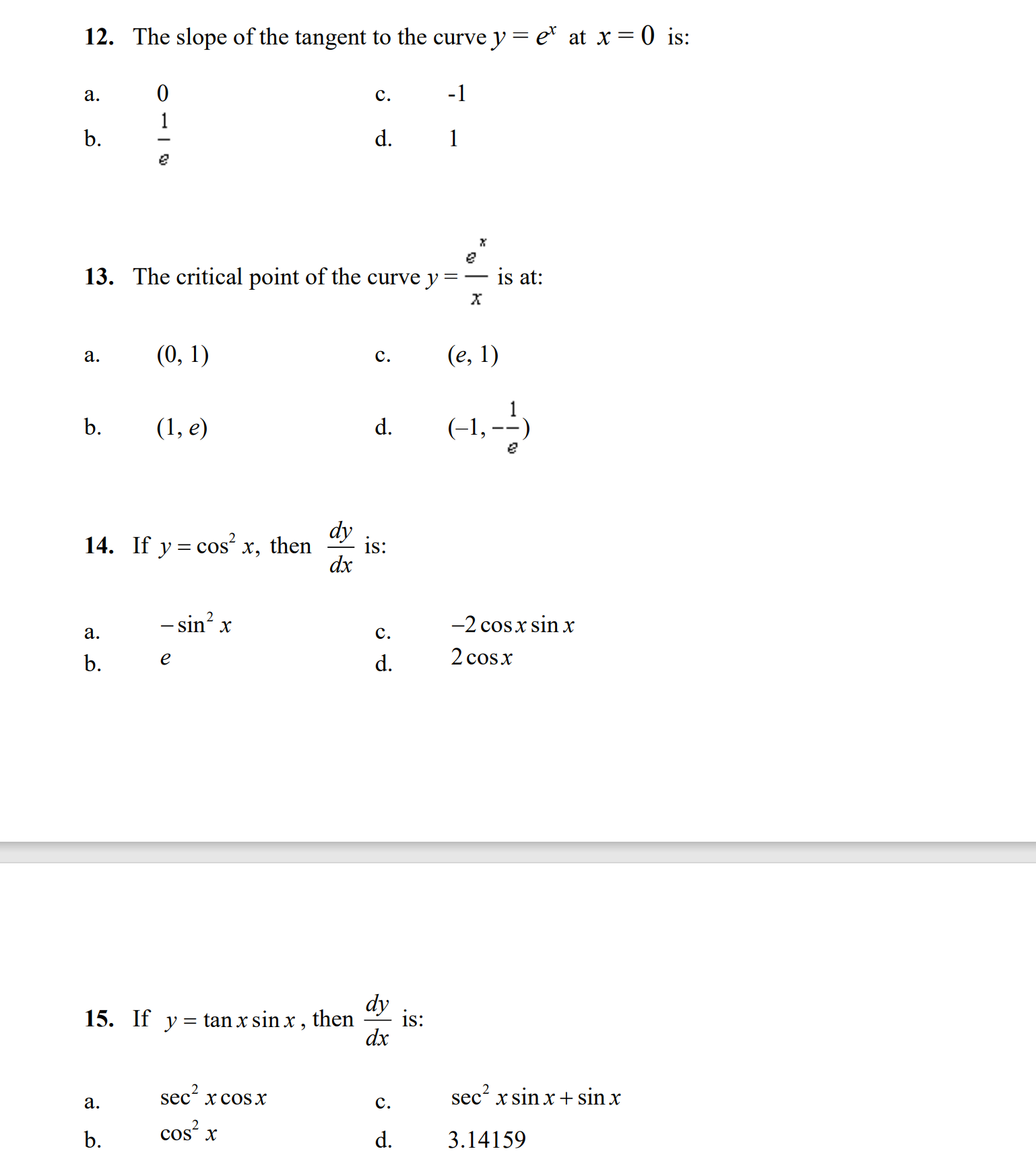
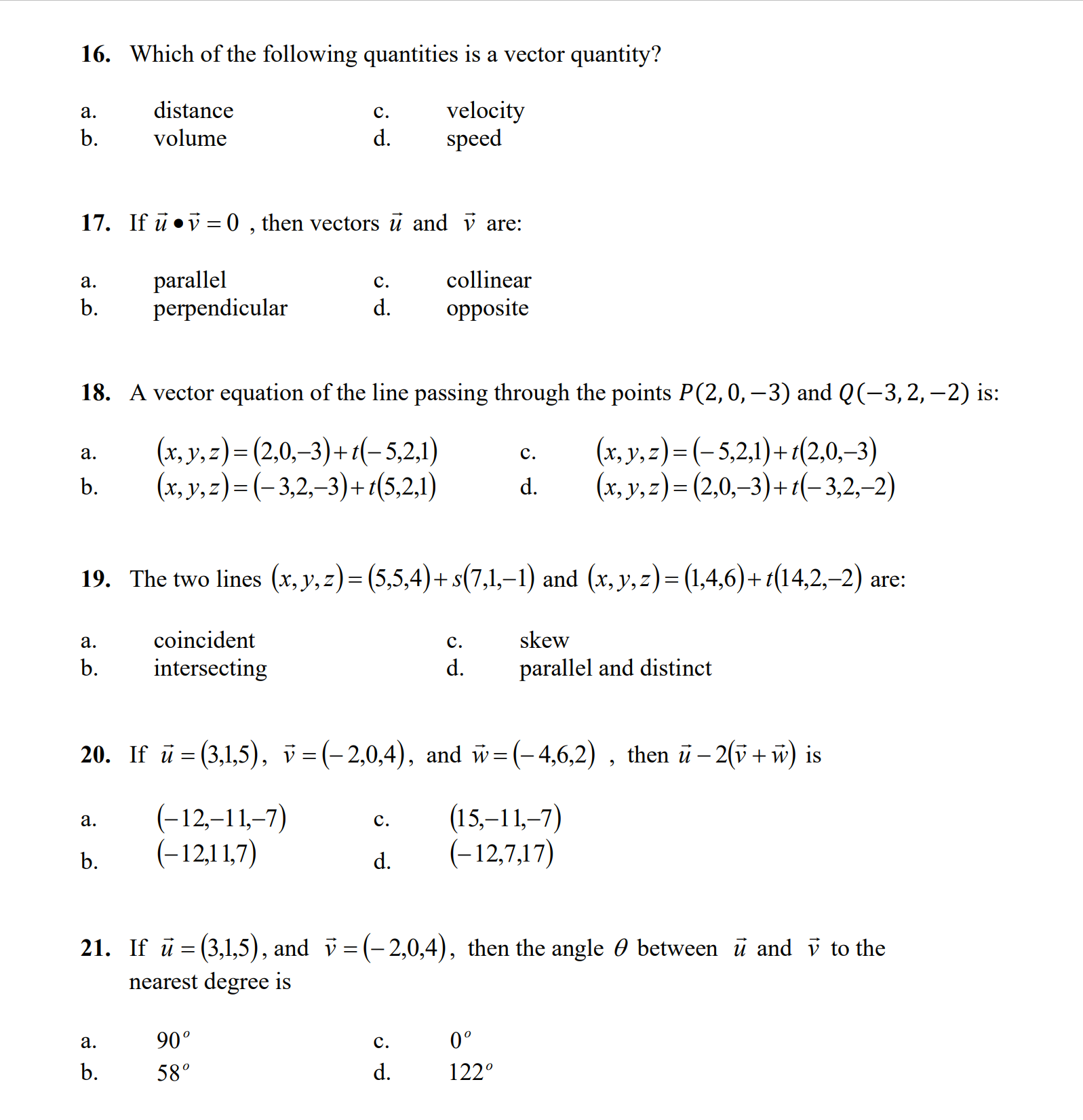
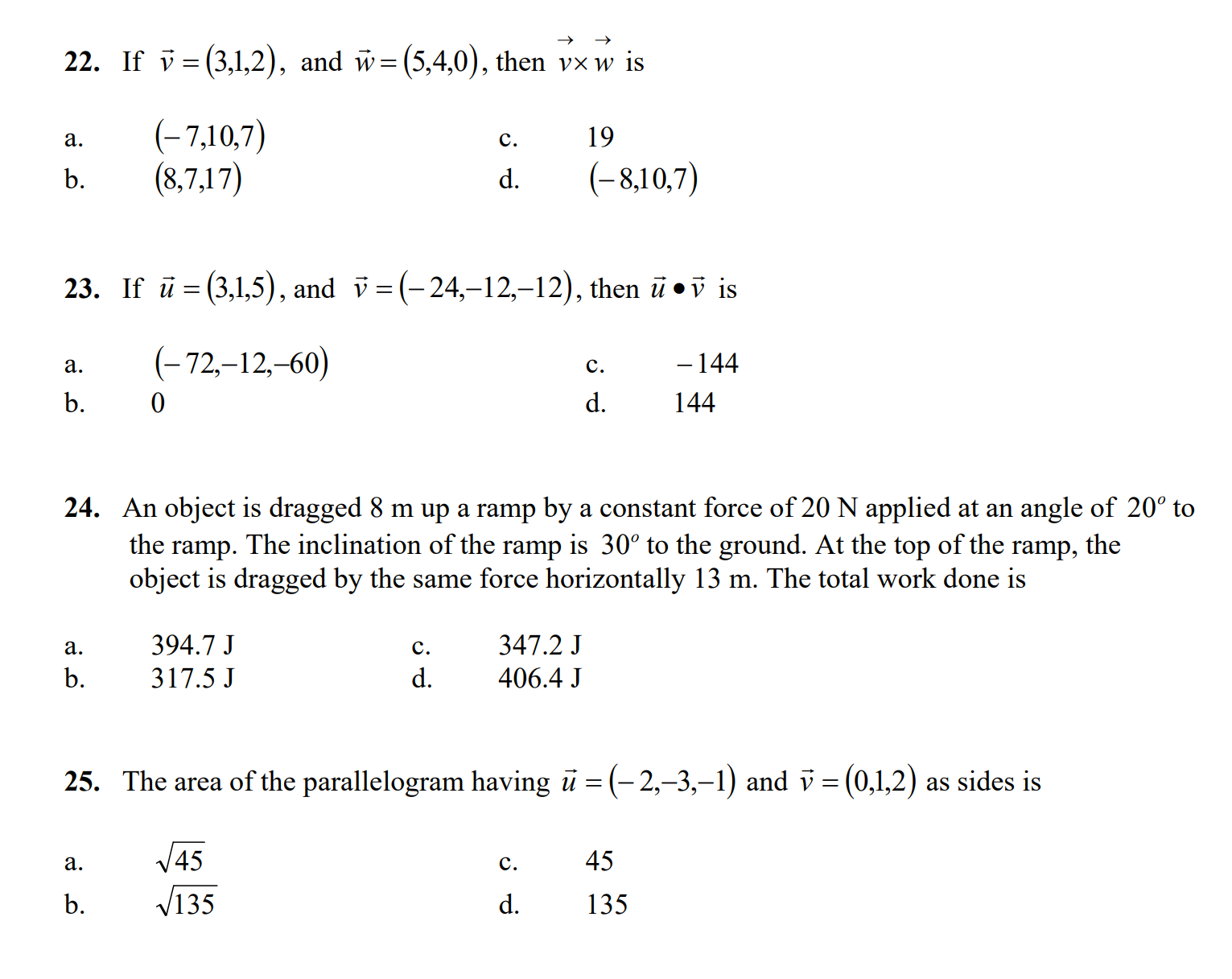
Multiple Choice: Circle the correct answer. 1. Evaluate lim - f ( 4 +h)-f(4) h -0 h , where f (x) = Vx. a. C. b. OO d. 2. Let f(x) = 5x*+ 3x + 2. Determine f ' (x). a. 10x + 3 C. 7x + 3 b. 10x + 5 d. 7x + 5 3. What is the slope of the tangent line to the graph of the function /(x) = x - 3x at the point (2, 2)? a. 9 C. b. -9 d. 9 4. The position in metres of a particle at time t in seconds is d(!) = 31 - 17t, where 2 0. Find the acceleration of the particle when t= 4. a. 124 m/s C. 127 m/s b. 19 m/'s d. 72 mis5. For the function f(x) = x - 3x + 1, state the intervals on which the function is increasing. a. x 1 x > -1 and x -1 and x > 1 6. The possible point of inflection of f(x) = x - - x is: 4 32 a. 3' 27 C. 4 b. 27 d. 7. Which of the conditions listed below best characterizes the given graph of f(x)? a. lim f(x) exists, f(-2) exists, lim f(x) = f(-2) * - - 2 * - - 2 b. lim f(x) does not exist, f(-2) does not exist * - -2 C. lim f(x) does not exist, f(-2) exists * - - 2 d. lim f(x) exists, f(-2) exists, lim f(x) = f(-2) * - -2 * - -28. What is the derivative of f(x) = x-1 x+ 3 a. f' (x) = 1 4 C . f' (x) = (x + 3)- 4 b. f' ( x) = 2 d. f'(x) = x +9 (x + 3) 9. Differentiate y = V4x - 9 2 a. V4x -9 C. 4(4x - 9)2 b. 2V4x-9 d. - V 4 x - 9 3 10. Let f(x) = (2x - 3)2 Determine the equation of the tangent to the curve at (1, 3). a. 6x-y - 3=0 b. C. 3x- y = 0 3x - 4y+9 = 0 d. 12x -y - 9 = 0 11. If y = xet, then - is: dy dx a. xet C. b et xet d.12. The slope of the tangent to the curve y = ex at x = 0 is: a. C . b. d. e 13. The critical point of the curve y = - is at: X a. (0, 1) C . (e, 1) b. (1, e) d. ( - 1 , - - ) 14. If y = cos x, then dy is: dx a. - sin x C. -2 cos x sin x b e d. 2 cosx 15. If y = tan x sin x , then is : dx a. sec x cosx C. sec x sin x + sin x cos x d. 3.1415916. Which of the following quantities is a vector quantity? a. distance C. velocity b . volume d. speed 17. If u . v =0 , then vectors u and v are: a. parallel collinear b . perpendicular d . opposite 18. A vector equation of the line passing through the points P(2, 0, -3) and Q (-3, 2, -2) is: a. (x, y, z) =(2,0,-3) + 1(-5,2,1) C. (x, y, z) = (-5,2,1) +1(2, 0,-3) b . (x, y, z) =(-3, 2, -3)+1(5, 2,1) d. (x, y, z) = (2,0,-3) +1(-3, 2,-2) 19. The two lines (x, y, z) = (5,5,4) + s(7,1,-1) and (x, y, z) = (1,4,6) + t(14,2,-2) are: a. coincident skew b. intersecting parallel and distinct 20. If u = (3,1,5), v =(-2,0,4), and w =(-4,6,2) , then u - 2(v + w) is a. (-12,-11,-7) C. (15,-11,-7) b . (-12,1 1,7) d. (-12,7,17) 21. If u = (3,1,5), and v =(-2,0,4), then the angle O between u and v to the nearest degree is a. 90 0 b 580 d. 122022. If v = (3,1,2), and w= (5,4,0), then vx w is a. (-7,10,7) C . 19 b. (8, 7,17) d. (-8,10,7) 23. If u = (3,1,5), and v = (-24,-12,-12), then u . v is a. (-72,-12,-60) - 144 b. 0 144 24. An object is dragged 8 m up a ramp by a constant force of 20 N applied at an angle of 20 to the ramp. The inclination of the ramp is 30 to the ground. At the top of the ramp, the object is dragged by the same force horizontally 13 m. The total work done is a. 394.7 J 347.2 J b. 317.5 J 406.4 J 25. The area of the parallelogram having u = (-2,-3,-1) and v = (0,1,2) as sides is a. V45 C. 45 b. V135 d. 135
Step by Step Solution
There are 3 Steps involved in it

Get step-by-step solutions from verified subject matter experts
 Study Help