



Question: all questions please Outlook will 3:47 PS 2 51% Case Study Analysis (10 Marks] Microlending Helps Small Entrepreneurs Start Businesses Sending food and money to
all questions please 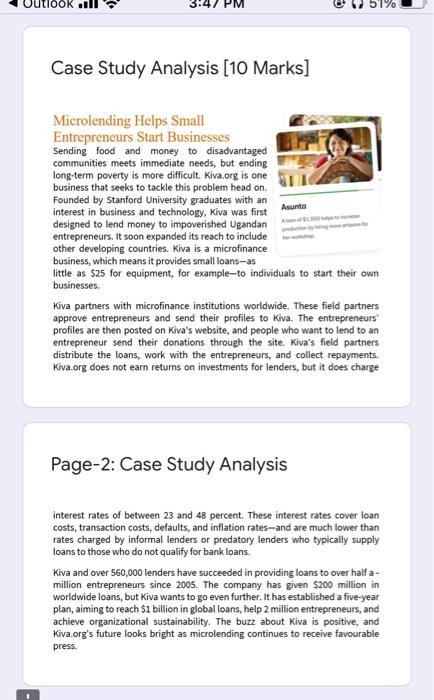
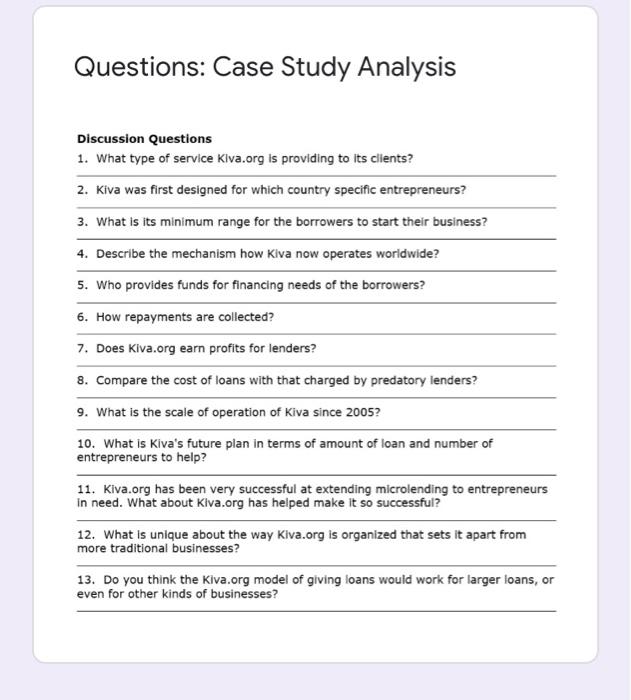
Outlook will 3:47 PS 2 51% Case Study Analysis (10 Marks] Microlending Helps Small Entrepreneurs Start Businesses Sending food and money to disadvantaged communities meets immediate needs, but ending long-term poverty is more difficult. Kiva.org is one business that seeks to tackle this problem head on. Founded by Stanford University graduates with an interest in business and technology, Kiva was first Asunto designed to lend money to impoverished Ugandan entrepreneurs. It soon expanded its reach to include other developing countries. Kiva is a microfinance business, which means it provides small loans-as little as $25 for equipment, for example-to individuals to start their own businesses Kiva partners with microfinance institutions worldwide. These field partners approve entrepreneurs and send their profiles to Kiva. The entrepreneurs profiles are then posted on Kiva's website, and people who want to lend to an entrepreneur send their donations through the site. Kiva's field partners distribute the loans, work with the entrepreneurs, and collect repayments. Kiva.org does not earn returns on investments for lenders, but it does charge Page-2: Case Study Analysis interest rates of between 23 and 48 percent. These interest rates cover loan costs, transaction costs, defaults, and inflation rates and are much lower than rates charged by informal lenders or predatory lenders who typically supply loans to those who do not qualify for bank loans Kiva and over 560,000 lenders have succeeded in providing loans to over halfa- million entrepreneurs since 2005. The company has given $200 million in worldwide loans, but Kiva wants to go even further. It has established a five-year plan, aiming to reach $1 billion in global loans, help 2 million entrepreneurs, and achieve organizational sustainability. The buzz about Kiva is positive, and Kiva.org's future looks bright as microlending continues to receive favourable press. Questions: Case Study Analysis Discussion Questions 1. What type of service Kiva.org is providing to its clients? 2. Kiva was first designed for which country specific entrepreneurs? 3. What is its minimum range for the borrowers to start their business? 4. Describe the mechanism how Kiva now operates worldwide? 5. Who provides funds for financing needs of the borrowers? 6. How repayments are collected? 7. Does Kiva.org earn profits for lenders? 8. Compare the cost of loans with that charged by predatory lenders? 9. What is the scale of operation of Kiva since 2005? 10. What is kiva's future plan in terms of amount of loan and number of entrepreneurs to help? 11. Kiva.org has been very successful at extending microlending to entrepreneurs in need. What about Kiva.org has helped make it so successful? 12. What is unique about the way Kiva.org is organized that sets it apart from more traditional businesses? 13. Do you think the Kiva.org model of giving loans would work for larger loans, or even for other kinds of businesses
Step by Step Solution
There are 3 Steps involved in it
1 Expert Approved Answer
Step: 1 Unlock

Question Has Been Solved by an Expert!
Get step-by-step solutions from verified subject matter experts
Step: 2 Unlock
Step: 3 Unlock