







Question: All working out must be shown All work must be presented in a neat and tidy manne 2. Given Figure 2 below, complete the following
All working out must be shown All work must be presented in a neat and tidy manne
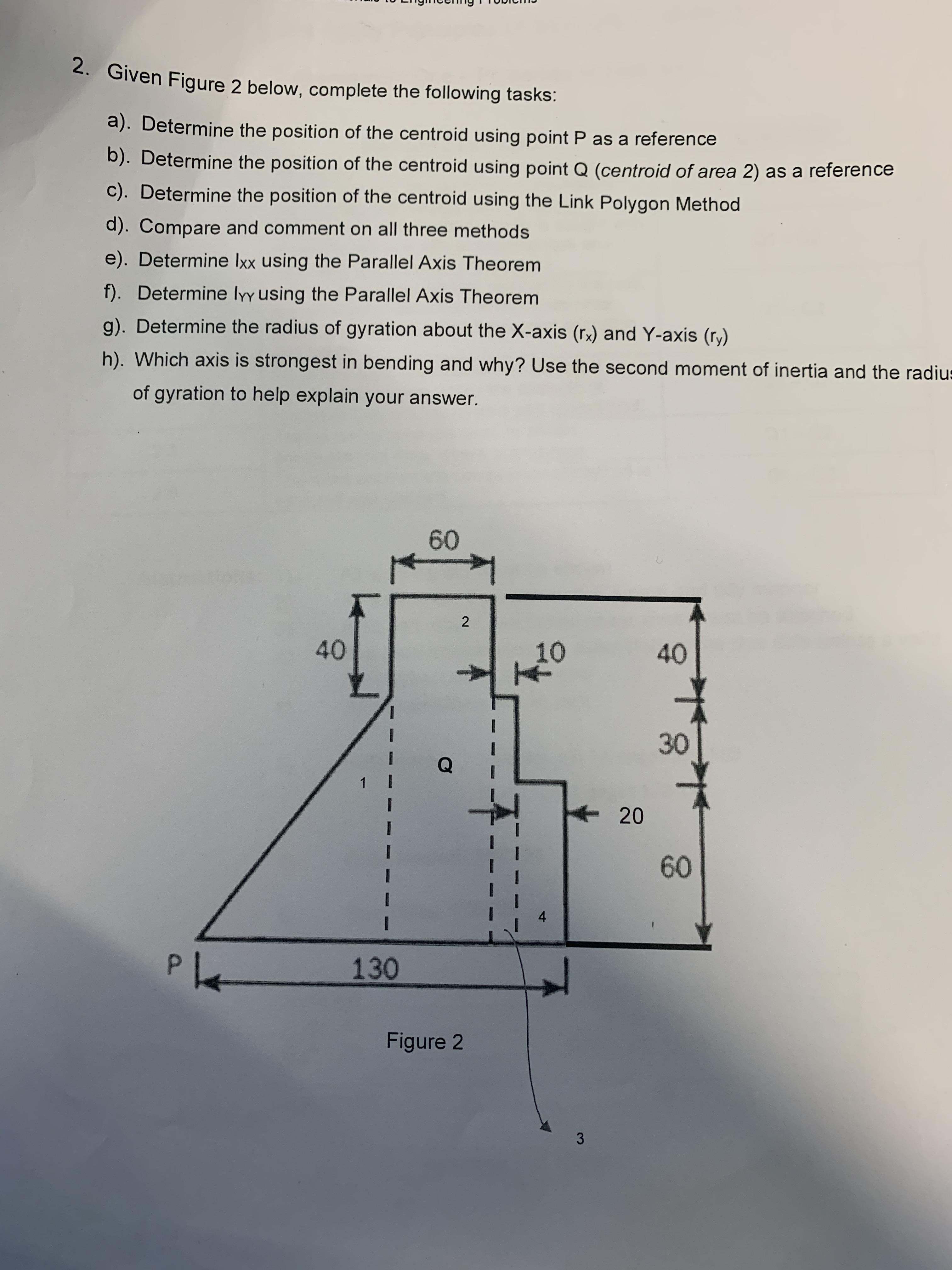
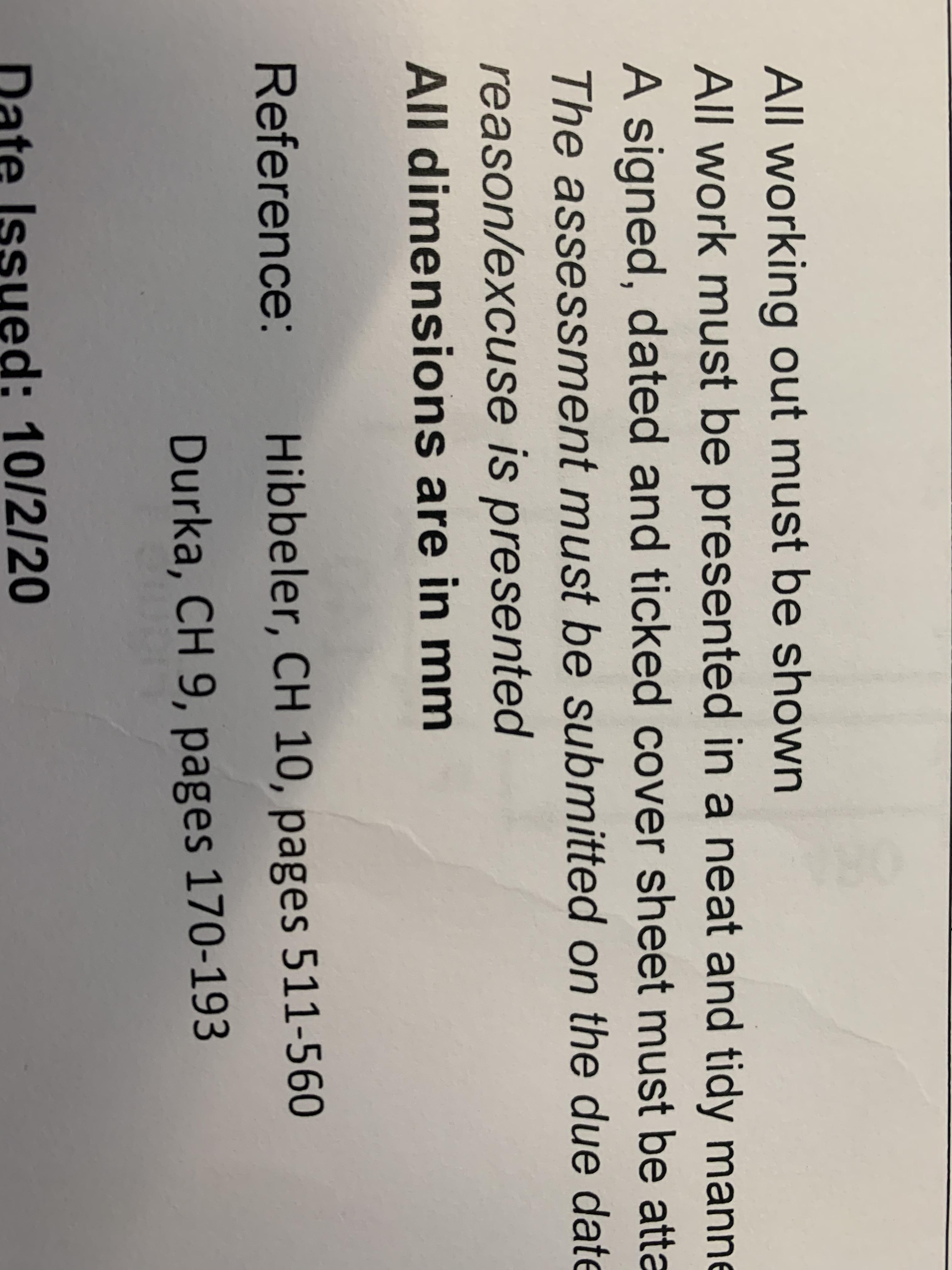
2. Given Figure 2 below, complete the following tasks: a). Determine the position of the centroid using point P as a reference b). Determine the position of the centroid using point Q (centroid of area 2) as a reference c). Determine the position of the centroid using the Link Polygon Method d). Compare and comment on all three methods e). Determine Ixx using the Parallel Axis Theorem f). Determine lyy using the Parallel Axis Theorem g). Determine the radius of gyration about the X-axis (rx) and Y-axis (ry) h). Which axis is strongest in bending and why? Use the second moment of inertia and the radius of gyration to help explain your answer. 60 40 10 40 30 20 60 4 PL 130 Figure 2 2. All working out must be shown All work must be presented in a neat and tidy manne A signed, dated and ticked cover sheet must be atta The assessment must be submitted on the due date reason/excuse is presented All dimensions are in mm Reference: Hibbeler, CH 10, pages 511-560 Durka, CH 9, pages 170-193 Date Issued: 10/2/20 2. Given Figure 2 below, complete the following tasks: a). Determine the position of the centroid using point P as a reference b). Determine the position of the centroid using point Q (centroid of area 2) as a reference c). Determine the position of the centroid using the Link Polygon Method d). Compare and comment on all three methods e). Determine Ixx using the Parallel Axis Theorem f). Determine lyy using the Parallel Axis Theorem g). Determine the radius of gyration about the X-axis (rx) and Y-axis (ry) h). Which axis is strongest in bending and why? Use the second moment of inertia and the radius of gyration to help explain your answer. 60 40 10 40 30 20 60 4 PL 130 Figure 2 2. All working out must be shown All work must be presented in a neat and tidy manne A signed, dated and ticked cover sheet must be atta The assessment must be submitted on the due date reason/excuse is presented All dimensions are in mm Reference: Hibbeler, CH 10, pages 511-560 Durka, CH 9, pages 170-193 Date Issued: 10/2/20 2. Given Figure 2 below, complete the following tasks: a). Determine the position of the centroid using point P as a reference b). Determine the position of the centroid using point Q (centroid of area 2) as a reference c). Determine the position of the centroid using the Link Polygon Method d). Compare and comment on all three methods e). Determine Ixx using the Parallel Axis Theorem f). Determine lyy using the Parallel Axis Theorem g). Determine the radius of gyration about the X-axis (rx) and Y-axis (ry) h). Which axis is strongest in bending and why? Use the second moment of inertia and the radius of gyration to help explain your answer. 60 40 10 40 30 20 60 4 PL 130 Figure 2 2. All working out must be shown All work must be presented in a neat and tidy manne A signed, dated and ticked cover sheet must be atta The assessment must be submitted on the due date reason/excuse is presented All dimensions are in mm Reference: Hibbeler, CH 10, pages 511-560 Durka, CH 9, pages 170-193 Date Issued: 10/2/20
Step by Step Solution
3.45 Rating (155 Votes )
There are 3 Steps involved in it
To solve the problems stepbystep heres how you can approach each task a Determine the position of the centroid using point P as a reference Approach 1 ... View full answer

Get step-by-step solutions from verified subject matter experts
 Study Help