







Question: Allocating Joint Costs Using the Physical Units Method Orchard Fresh, Inc., purchases apples from local orchards and sorts them into four categories. Grade A are
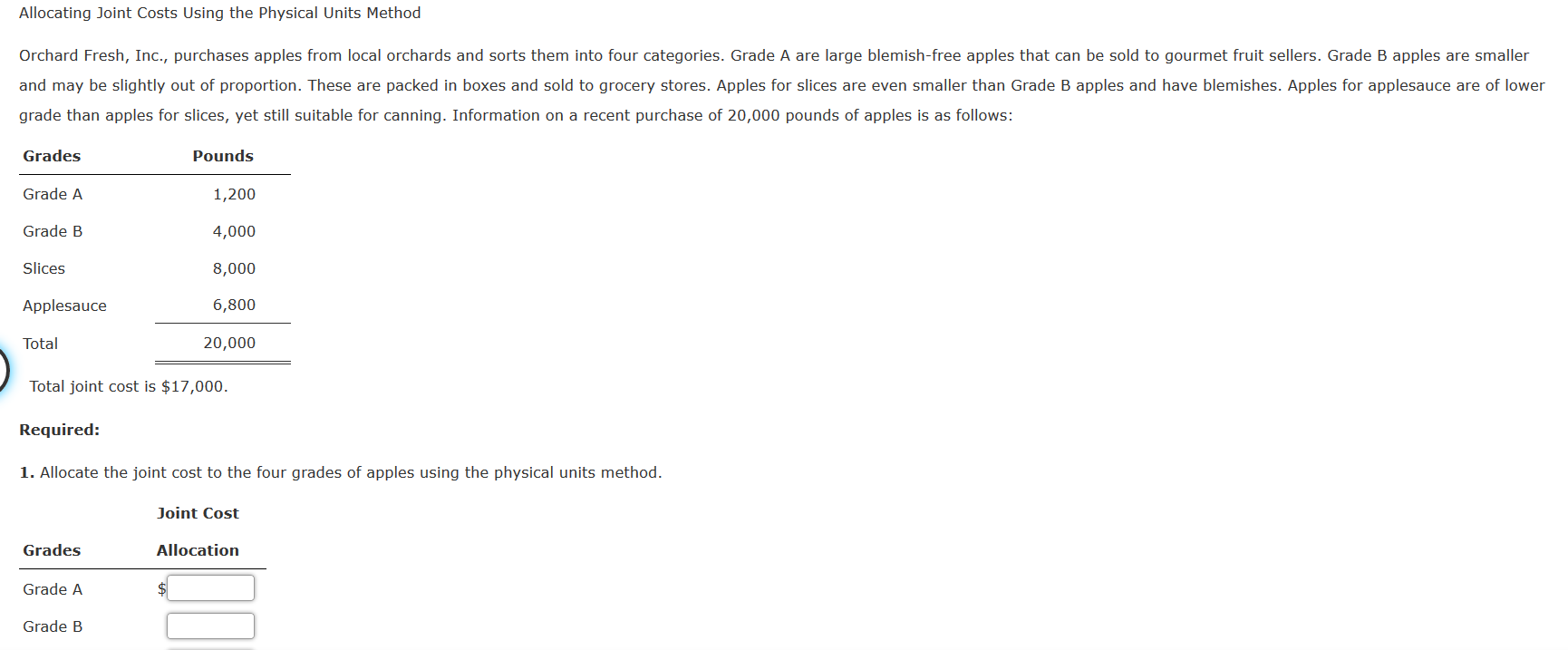
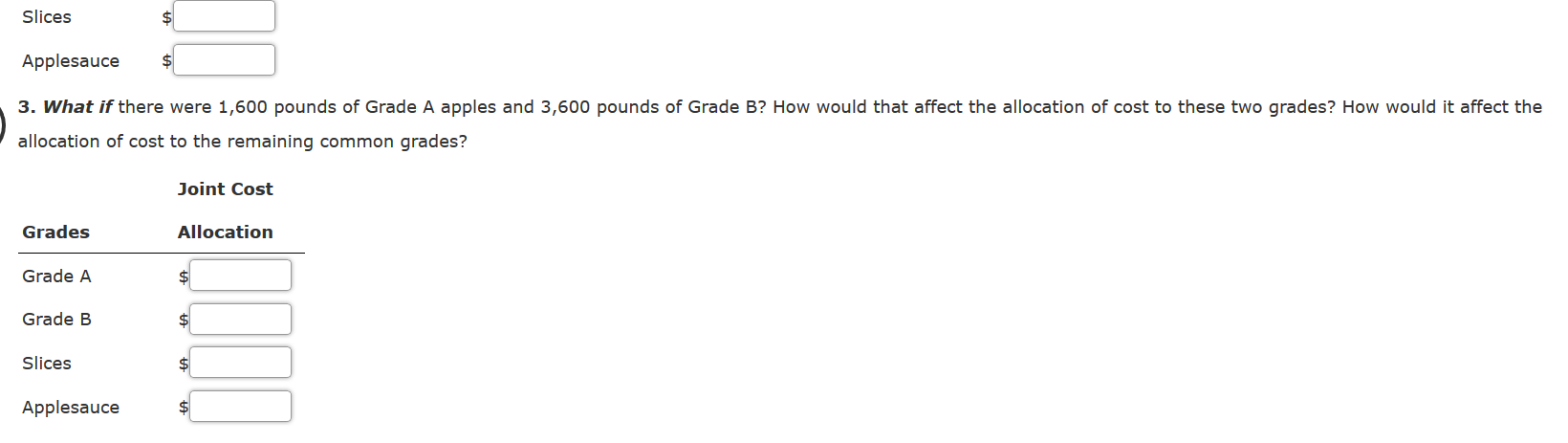
Allocating Joint Costs Using the Physical Units Method Orchard Fresh, Inc., purchases apples from local orchards and sorts them into four categories. Grade A are large blemish-free apples that can be sold to gourmet fruit sellers. Grade B apples are smaller and may be slightly out of proportion. These are packed in boxes and sold to grocery stores. Apples for slices are even smaller than Grade B apples and have blemishes. Apples for applesauce are of lower grade than apples for slices, yet still suitable for canning. Information on a recent purchase of 20,000 pounds of apples is as follows: Grades Pounds Grade A 1,200 Grade B 4,000 Slices 8,000 Applesauce 6,800 Total 20,000 Total joint cost is $17,000. Required: 1. Allocate the joint cost to the four grades of apples using the physical units method. Joint Cost Grades Allocation Grade A Grade B Slices $ Applesauce 3. What if there were 1,600 pounds of Grade A apples and 3,600 pounds of Grade B? How would that affect the allocation of cost to these two grades? How would it affect the allocation of cost to the remaining common grades? Joint Cost Grades Allocation Grade A Grade B LI Slices Applesauce
Step by Step Solution
There are 3 Steps involved in it

Get step-by-step solutions from verified subject matter experts
 Study Help