







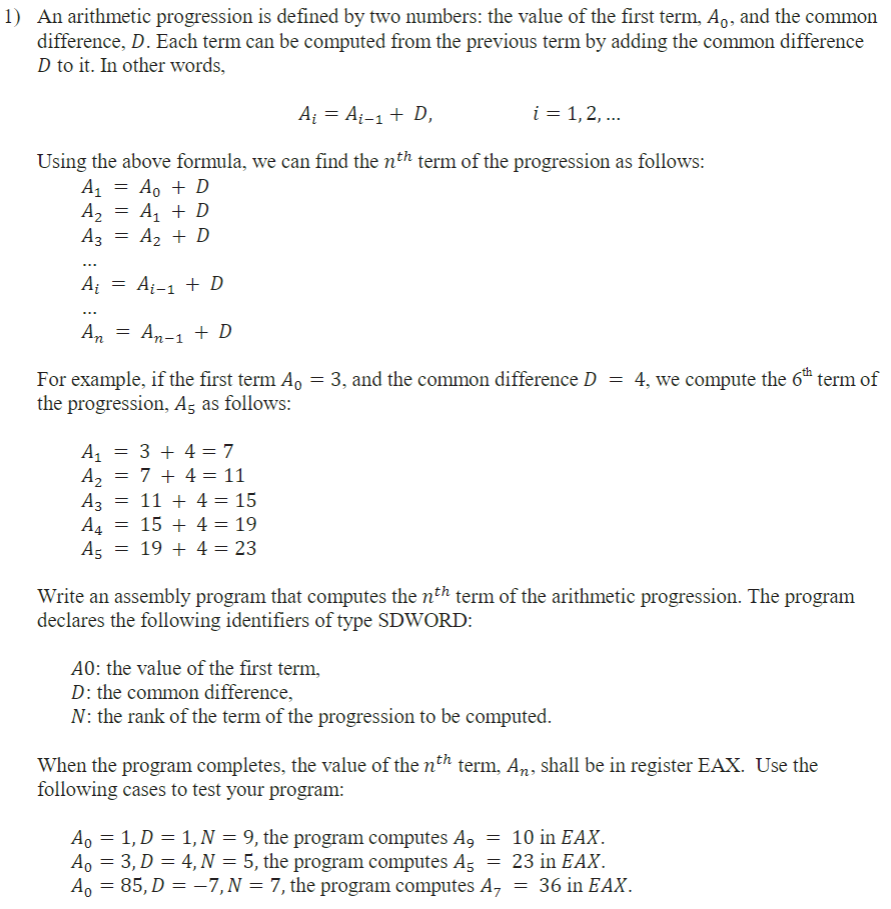
Question: An arithmetic progression is defined by two numbers: the value of the first term, A 0 , and the common difference, D . Each term
An arithmetic progression is defined by two numbers: the value of the first term, and the common
difference, Each term can be computed from the previous term by adding the common difference
to it In other words,
dots
Using the above formula, we can find the term of the progression as follows:
cdots
cdots
For example, if the first term and the common difference we compute the term of
the progression, as follows:
Write an assembly program that computes the term of the arithmetic progression. The program
declares the following identifiers of type SDWORD:
: the value of the first term,
: the common difference,
: the rank of the term of the progression to be computed.
When the program completes, the value of the term, shall be in register EAX. Use the
following cases to test your program:
the program computes inEAx.
the program computes inEAx.
the program computes EAx.
Step by Step Solution
There are 3 Steps involved in it
1 Expert Approved Answer
Step: 1 Unlock

Question Has Been Solved by an Expert!
Get step-by-step solutions from verified subject matter experts
Step: 2 Unlock
Step: 3 Unlock
 Study Help