Question: Analyze the case study and answer the question in your own words 5 points in 1990s, Nestle faced significant challenges in its market growth. Despite
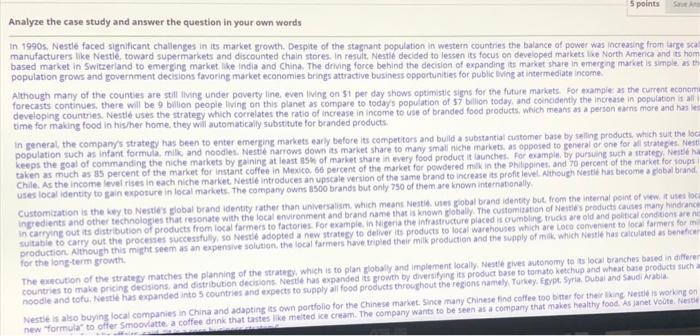
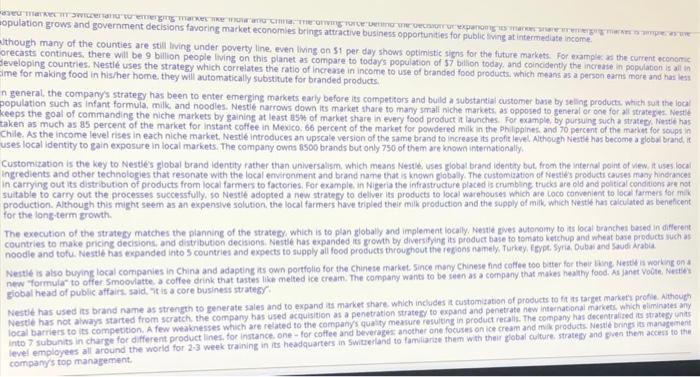
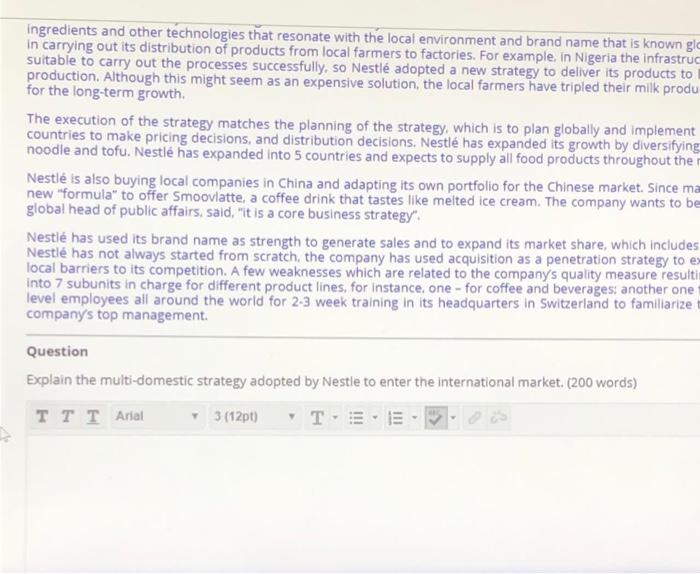
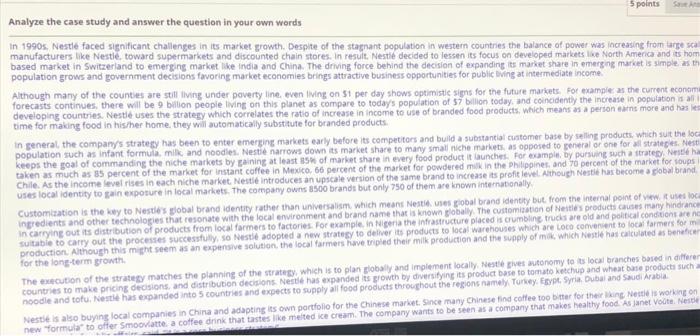
Analyze the case study and answer the question in your own words 5 points in 1990s, Nestle faced significant challenges in its market growth. Despite of the stagnant population in western countries the balance of power was increasing from large sca manufacturers like Nestle toward supermarkets and discounted chain stores, in result. Nestl decided to lessen its focus on developed markets like North America and its hom based market in Switzerland to emerging market like India and China. The driving force behind the decision of expanding its market share in emerging market is simple as th population grows and government decisions favoring market economies brings attractive business opportunities for public living at intermediate income Although many of the counties are still living under poverty line, even living on 31 per day shows optimistic signs for the future markets. For example as the current econom forecasts continues, there will be 9 billion people living on this planet as compare to today's population of 57 billion today and coincidently the increase in population is all developing countries. Nestle uses the strategy which correlates the ratio of increase in income to use of branded food products, which means as a person carns more and has les time for making food in his/her home they will automatically substitute for branded products in general, the company's strategy has been to enter emerging markets early before its competitors and build a substantial customer base by selling products, which suit the loca population such as infant formula, milk and noodles Nestle narrows down its market share to many small niche markets as opposed to general or one for strategies. Nest keeps the goal of commanding the niche markets by gaining at least as of market share in every food product it unches. For example, by pursuing such a strategi taken as much as 85 percent of the market for instant coffee in Mexico 66 percent of the market for powdered milk in the Philippines and 70 percent of the market for soups Chile. As the income level rises in each niche market. Neste introduces an upscale version of the same brand to increase its profit level Although Nestle has become a global brand uses local identity to gain expoture in local markets. The company owns 500 brands but only 750 of them are known internationally Customization is the key to Nestle's global brand identity rather than universalism which means Nesti ses gobal brand identity but from the Internal point of ww. uses loca Ingredients and other technologies that resonate with the local environment and brand name that is known globally. The customization of Neste products causes many hindrance in carrying out its distribution of products from local farmers to factories. For example, in Nigeria the Infrastructure placed is crumbling truds are old and political conditionare suitable to carry out the processes successfully, so Nestle adopted a new strategy to deliver its products to local warehouses which are Loco convento former for production Although this might seem as an expensive solution, the local farmers have tripled their milk production and the supply of mik which Nestle has calculated as for the long-term growth The execution of the strategy matches the planning of the strategy, which is to plan globally and implement locally. Neste gives autonomy to local branches based in differ countries to make pricing decisions, and distribution decisions Nestle has expanded its growth by diversifying its product base to tomato Ketchup and wheat base products such noodle and tofu. Nestle has expanded into 5 countries and expects to supply all food products throughout the regions namely Turkey. Egypt.Syria Dubai and Saudi Arabia Neste is also buying local companies in China and adapting its own portfolio for the Chinese market. Since many Chinese find coffee toober for the Networking on new formulato offer Smoovitte a coffee drink that tastes like melted ice cream. The company wants to be seen as a company that makes healthy food. As net vote. Neste Analyze the case study and answer the question in your own words 5 points in 1990s, Nestle faced significant challenges in its market growth. Despite of the stagnant population in western countries the balance of power was increasing from large sca manufacturers like Nestle toward supermarkets and discounted chain stores, in result. Nestl decided to lessen its focus on developed markets like North America and its hom based market in Switzerland to emerging market like India and China. The driving force behind the decision of expanding its market share in emerging market is simple as th population grows and government decisions favoring market economies brings attractive business opportunities for public living at intermediate income Although many of the counties are still living under poverty line, even living on 31 per day shows optimistic signs for the future markets. For example as the current econom forecasts continues, there will be 9 billion people living on this planet as compare to today's population of 57 billion today and coincidently the increase in population is all developing countries. Nestle uses the strategy which correlates the ratio of increase in income to use of branded food products, which means as a person carns more and has les time for making food in his/her home they will automatically substitute for branded products in general, the company's strategy has been to enter emerging markets early before its competitors and build a substantial customer base by selling products, which suit the loca population such as infant formula, milk and noodles Nestle narrows down its market share to many small niche markets as opposed to general or one for strategies. Nest keeps the goal of commanding the niche markets by gaining at least as of market share in every food product it unches. For example, by pursuing such a strategi taken as much as 85 percent of the market for instant coffee in Mexico 66 percent of the market for powdered milk in the Philippines and 70 percent of the market for soups Chile. As the income level rises in each niche market. Neste introduces an upscale version of the same brand to increase its profit level Although Nestle has become a global brand uses local identity to gain expoture in local markets. The company owns 500 brands but only 750 of them are known internationally Customization is the key to Nestle's global brand identity rather than universalism which means Nesti ses gobal brand identity but from the Internal point of ww. uses loca Ingredients and other technologies that resonate with the local environment and brand name that is known globally. The customization of Neste products causes many hindrance in carrying out its distribution of products from local farmers to factories. For example, in Nigeria the Infrastructure placed is crumbling truds are old and political conditionare suitable to carry out the processes successfully, so Nestle adopted a new strategy to deliver its products to local warehouses which are Loco convento former for production Although this might seem as an expensive solution, the local farmers have tripled their milk production and the supply of mik which Nestle has calculated as for the long-term growth The execution of the strategy matches the planning of the strategy, which is to plan globally and implement locally. Neste gives autonomy to local branches based in differ countries to make pricing decisions, and distribution decisions Nestle has expanded its growth by diversifying its product base to tomato Ketchup and wheat base products such noodle and tofu. Nestle has expanded into 5 countries and expects to supply all food products throughout the regions namely Turkey. Egypt.Syria Dubai and Saudi Arabia Neste is also buying local companies in China and adapting its own portfolio for the Chinese market. Since many Chinese find coffee toober for the Networking on new formulato offer Smoovitte a coffee drink that tastes like melted ice cream. The company wants to be seen as a company that makes healthy food. As net vote. Neste TRT SWIM CODE opulation grows and government decisions favoring market economies brings attractive business opportunities for public living at intermediate income though many of the counties are still living under poverty line, even living on 51 per day shows optimistic signs for the future markets. For example the current economic orecasts continues there will be 9 billion people living on this planet as compare to today's population of 57 billion today and coincidently the increase in population is all in Developing countries. Nestle uses the strategy which correlates the ratio of increase in income to use of branded food products, which means as a person earn more and has less Sme for making food in his/her home, they will automatically substitute for branded products n general, the company's strategy has been to enter emerging markets early before its competitors and build a substantial customer base by selling products which suit the local population such as Infant formula, milk and noodles. Nestle narrows down its market share to many small niche markets, as opposed to general or one for all strategies. Nestle keeps the goal of commanding the niche markets by gaining at least 5 of market share in every food product it launches. For example, by pursuing such a strate, estas taken as much as 85 percent of the market for instant coffee in Mexico 66 percent of the market for powdered milk in the Philippines and 70 percent of the market for soups in Chile. As the income level rises in each niche market. Nestle introduces an upscale version of the same brand to increase its profit level. Although Nestle has become a global brand, it uses local identity to gain exposure in local markets. The company owns 500 brands but only 750 of them are known internationally Customization is the key to Nestle's global brand Identity rather than universalism which means Nestle uses global brand identity but from the internal point of view. It uses local Ingredients and other technologies that resonate with the local environment and brand name that is known plobally. The customization of Nestles products causes many hindrancet in carrying out its distribution of products from local farmers to factories. For example, in Nigeria the infrastructure placed is crumbing trucks are old and political conditions are not suitable to carry out the processes successfully, so Nestl adopted a new strategy to deliver its products to local warehouses which are Loco convenient to local farmersformik production. Although this might seem as an expensive solution the local farmers have tripled their milk production and the supply of milk which Nestle has calculated as beneficent for the long-term growth The execution of the strategy matches the planning of the strategy, which is to plan globally and implement locally. Neste pe autonomy to its focal branches based in different countries to make pricing decisions, and distribution decisions. Nestle has expanded its growth by diversifying its product base to tomato Ketchup and wheat base products such as noodle and tofu. Nestle has expanded into 5 countries and expects to supply all food products throughout the regions namely, Turkey, ftypt. Syria Outus and Saudi Arabia Nestle is also buying local companies in China and adapting its own portfolio for the Chinese market. Since many Chinese find coffee too bitter for their ing Net is working on a new formular to offer Smoovitte a coffee drink that tastes like melted ice cream. The company wants to be seen as a company that makes healthy food. Asjanet Vott. Nettet global head of public affairs, said is a core business Strategy Nestle has used its brand name as strength to generate sales and to expand its market share which includes it customization of products to its target markets profile Although Nestle has not always started from scratch the company has used acquisition as a penetration strategy to expand and penetrate new International markets, which eliminates any local barriers to its competition. A few weaknesses which are related to the company's quality measure resulting in product recalls. The company has decentralized its strategy units into 7 subunits in charge for different product lines for instance, one for coffee and beverages another one focuses on ice cream and milk products. Neste brings its management level employees all around the world for 2-3 week training in its headquarters in Switzerland to familiare them with the pobal culture strategy and pen them acons to the company's top management ingredients and other technologies that resonate with the local environment and brand name that is known gic in carrying out its distribution of products from local farmers to factories. For example, in Nigeria the infrastruc suitable to carry out the processes successfully, so Nestl adopted a new strategy to deliver its products to production. Although this might seem as an expensive solution, the local farmers have tripled their milk produ for the long-term growth. The execution of the strategy matches the planning of the strategy, which is to plan globally and implement countries to make pricing decisions, and distribution decisions. Nestl has expanded its growth by diversifying noodle and tofu. Nestl has expanded into 5 countries and expects to supply all food products throughout the Nestl is also buying local companies in China and adapting its own portfolio for the Chinese market. Since ma new "formula" to offer Smoovlatte, a coffee drink that tastes like melted ice cream. The company wants to be global head of public affairs, said, "it is a core business strategy": Nestl has used its brand name as strength to generate sales and to expand its market share, which includes Nestl has not always started from scratch the company has used acquisition as a penetration strategy to ex local barriers to its competition. A few weaknesses which are related to the company's quality measure resulti into 7 subunits in charge for different product lines, for instance, one - for coffee and beverages: another one level employees all around the world for 2-3 week training in its headquarters in Switzerland to familiarize company's top management. Question Explain the multi-domestic strategy adopted by Nestle to enter the international market. (200 words) TT T Arial 3 (12pt) TE









 Study Help