







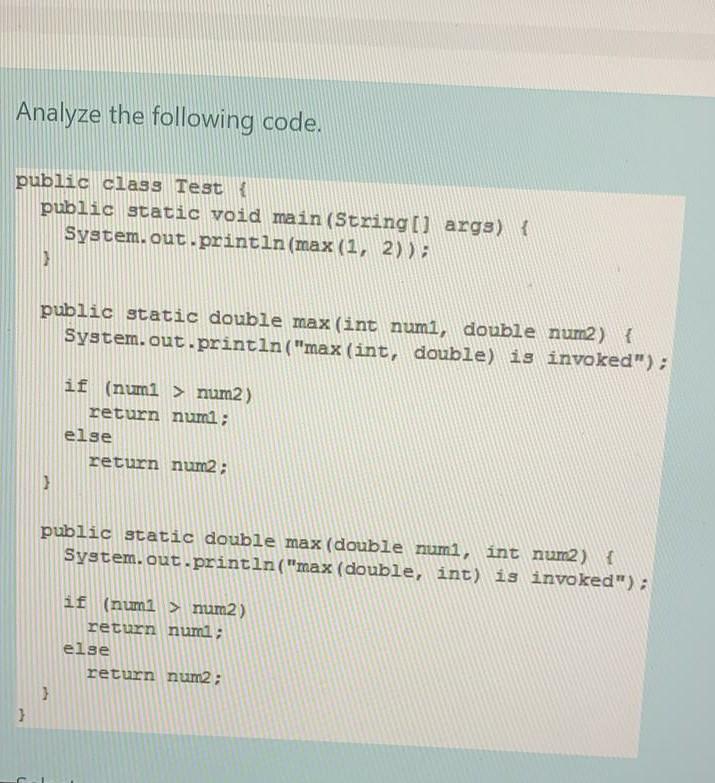
Question: Analyze the following code. public class Test { public static void main(String[] args) { System.out.println(max(1, 2)); public static double max (int numi, double num2) {
![main(String[] args) { System.out.println(max(1, 2)); public static double max (int numi, double](https://dsd5zvtm8ll6.cloudfront.net/si.experts.images/questions/2024/09/66fa429d4c6a4_08466fa429cc6188.jpg)
Analyze the following code. public class Test { public static void main(String[] args) { System.out.println(max(1, 2)); public static double max (int numi, double num2) { System.out.println("max (int, double) is invoked"); if (numi > num2) return num; else return num2; ) public static double max (double numi, int nur2) System.out.println("max (double, int) is invoked"); if (num > num2) return num; else return num2; } 3 else return num2; } } Select one: A. The program cannot compile because the compiler cannot determine which max method should be invoked. B. The program runs and prints 2 followed by "max(double, int)" is invoked. C. The program runs and prints 2 followed by "max(int, double)" is invoked. D. The program cannot compile because you cannot have the print statement in a non-void method. E. The program runs and prints "max(int, double) is invoked" followed by 2
Step by Step Solution
There are 3 Steps involved in it
To analyze the code lets correct the issues and then check which method is invoked ... View full answer

Get step-by-step solutions from verified subject matter experts
 Study Help